
Putin Discusses Expanding Economic Ties with Thailand and Singapore
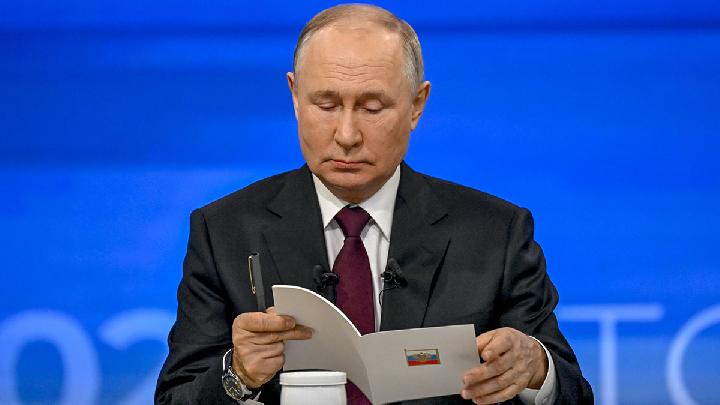
Putin Discusses Expanding Economic Ties – On Thursday, June 18, Russian President Vladimir Putin engaged in separate dialogues with Thai Prime Minister Anutin Charnvirakul and Singaporean Prime Minister Lawrence Wong during the ASEAN-Russia Commemorative Summit in Kazan. These meetings focused on strengthening bilateral relationships and exploring new avenues for economic collaboration. The summit provided a platform for leaders to address regional and global challenges while solidifying ties with key partners in Southeast Asia.
Focus on Trade, Energy, and Security
During his conversation with Anutin, Putin and the Thai leader emphasized enhancing cooperation in trade, energy, and security. According to a report from the Thai Enquirer, cited by ANTARA, the discussions highlighted the mutual interest in deepening economic integration. Both nations acknowledged the growing importance of energy security amid geopolitical uncertainties, particularly the effects of Middle East tensions on global markets. This issue was noted as a critical factor influencing supply chain stability and trade dynamics.
“Thailand values Russia’s contributions to advancing clean energy initiatives, liquefied natural gas (LNG) projects, and fertilizer production,” stated Anutin in a statement released after the meeting. The Thai government expressed enthusiasm for expanding partnerships in petrochemicals and other strategic industries, aiming to diversify its economic landscape.
Putin and Anutin also agreed to continue negotiations on a free trade agreement between Thailand and the Eurasian Economic Union (EAEU). This pact is seen as a cornerstone for fostering long-term economic resilience and reducing dependency on other trade blocs. The leaders underscored the need for sustained dialogue to address challenges and capitalize on emerging opportunities.
Collaboration in Diverse Sectors
The discussions extended beyond traditional trade areas to include defense, public health, science, and technology. Both countries explored joint ventures in artificial intelligence and cybersecurity, with a particular focus on combating online fraud. These initiatives reflect a strategic shift toward integrating technological advancements into economic partnerships, ensuring mutual benefits in innovation and security.
Putin and Anutin also committed to promoting cultural and tourism exchanges ahead of the 130th anniversary of diplomatic relations between Russia and Thailand in 2027. Anutin highlighted the potential for increased Russian tourist arrivals, predicting nearly two million visitors to Thailand in 2025. This projection signals optimism for revitalizing the travel sector and fostering people-to-people connections.
Singaporean Perspectives and Regional Engagement
Meanwhile, Putin met with Singaporean Prime Minister Lawrence Wong to review bilateral ties and regional cooperation. Wong reiterated Singapore’s stance on Ukraine, emphasizing the nation’s commitment to respecting the sovereignty and territorial integrity of all countries. His position, shared on the social media platform X, reflected a balanced approach to geopolitical issues while maintaining economic stability.
Wong also visited Kazan for the first time, where he met with Rustam Minnikhanov, the leader of the Republic of Tatarstan. In a post on X, he noted that Minnikhanov recalled his historic meeting with Singapore’s first Prime Minister, Lee Kuan Yew, and the enduring friendships formed over decades. This reference underscored the deep historical ties between Singapore and Russia, highlighting the Republic of Tatarstan’s role in bridging cultural and political connections.
Economic Data and Trade Partnerships
Trade figures between Russia and Thailand have shown steady growth, with bilateral exchanges reaching approximately US$1.5 billion in recent years. According to the Thai-Russian Chamber of Commerce and Industry, these numbers are expected to rise as new agreements and investments take shape. In contrast, Singapore remains one of Russia’s most significant trading partners in Southeast Asia, with bilateral trade surpassing US$4 billion annually, as reported by the Russian Ministry of Economic Development and Singaporean government data.
The robust trade relationship between Russia and Singapore is attributed to their shared emphasis on efficiency and innovation in economic policies. This partnership has been instrumental in facilitating infrastructure development, technology transfer, and investment flows. Both nations continue to prioritize this alliance as a model for future collaborations.
Strategic Objectives and Future Goals
Putin and Wong outlined specific objectives for enhancing economic ties, including expanding infrastructure projects, promoting joint research in emerging technologies, and strengthening education exchanges. These goals are aligned with the broader aim of creating a more interconnected and resilient economic network across the Asia-Pacific region.
Additionally, the leaders emphasized the importance of public health cooperation, particularly in addressing pandemics and healthcare innovations. This commitment to joint efforts in health and science underscores the evolving nature of their partnership, which now encompasses a wider range of sectors beyond traditional trade.
Broader Implications for Regional Stability
The summit discussions also touched on the role of Russia in Southeast Asia’s economic development. With the region experiencing rapid industrialization and urbanization, the leaders saw opportunities to align with Southeast Asian nations’ growth trajectories. Putin’s engagement with both Thailand and Singapore highlights Russia’s proactive approach to securing a foothold in the region’s expanding markets.
Analysts suggest that these meetings are part of a larger strategy to diversify Russia’s economic alliances, reducing reliance on Western markets. By deepening partnerships with Southeast Asian countries, Russia aims to bolster its influence and ensure a more stable supply chain for critical resources and goods.
As the ASEAN-Russia summit concludes, the agreements reached with Thailand and Singapore are viewed as pivotal steps toward a more integrated economic landscape. These collaborations not only address immediate challenges but also lay the groundwork for sustained growth and mutual prosperity. The focus on innovation, security, and cultural exchanges reflects a comprehensive vision for the future of Russia’s economic diplomacy in the region.
Read: Indonesia Explores Russian Floating Nuclear Plants, Oil Imports
Click here to get the latest news updates from Tempo on Google News.