What Does Refugee Protection Look Like in Indonesia?
esia? What Does Refugee Protection Look Like - In the wake of global displacement crises, Indonesia has emerged as a key player in offering refuge and support
What Does Refugee Protection Look Like in Indonesia?
Tempatdonasi.com – In the wake of global displacement crises, Indonesia has emerged as a key player in offering refuge and support to those fleeing conflict and persecution. The United Nations High Commissioner for Refugees (UNHCR) has acknowledged the country’s significant role, highlighting its humanitarian efforts and the sense of shared responsibility it embodies. Hendrik Therik, a UNHCR Indonesia spokesperson, emphasized this commitment in a statement shared with Antara, Jakarta, on Sunday, June 21, 2026. “Indonesia’s dedication to humanitarian efforts has created safe environments and opportunities for displaced individuals, while demonstrating the importance of collective action in addressing refugee needs,” he said.
Global Trends and Long-Term Displacement
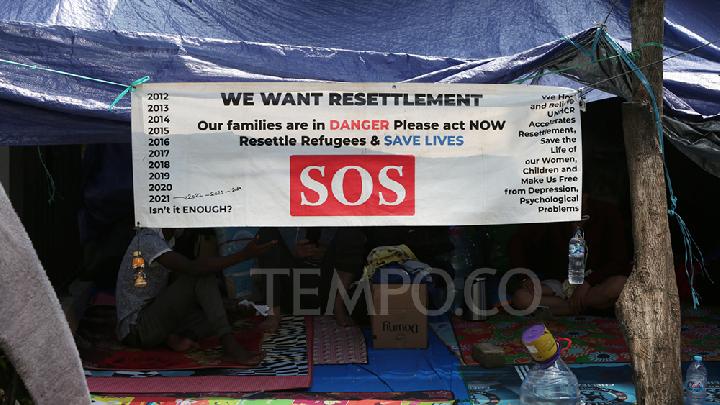
According to the UNHCR Global Trends report, the majority of refugees worldwide—seven out of every ten—remain in long-term displacement. These individuals often spend years in host countries, seeking sustainable solutions to their plight. While humanitarian aid provides immediate relief, it falls short of enabling long-term recovery. UNHCR noted that such aid, though essential, does not fully empower refugees to rebuild their lives, emphasizing the need for more comprehensive support systems.
This challenge is mirrored in Indonesia, where many refugees have settled for extended periods. The UNHCR highlighted that the country’s approach must evolve beyond temporary aid to include pathways for permanent integration. “Refugees in Indonesia are not just recipients of help; they are active participants in their own transformation,” said Emily Bojovic, a Senior Protection Officer at UNHCR. She pointed out that opportunities for refugees to leverage their skills, pursue education, and engage in community activities are critical for their resilience and future.
Individual Stories and Community Impact
Among the 12,000 refugees and asylum seekers currently in Indonesia, two stand out as exemplars of resilience and contribution: Amed and Amina. Amed, a community leader from a refugee group, has established programs to assist fellow displaced individuals in adjusting to life in Indonesia. His efforts include informal learning initiatives for refugee children, fostering a sense of stability and growth in an otherwise uncertain environment.
“Amed’s work demonstrates how grassroots leadership can transform challenges into opportunities for collective progress,” noted Bojovic. “His initiatives not only support education but also create a foundation for long-term self-reliance.”
Amina, a mother and wife from Afghanistan, has taken on the role of a karate coach, using her skills to empower her community. Her programs aim to build confidence and resilience among refugees, offering both physical and emotional support. Together, Amed and Amina represent the broader impact of refugee-led organizations, which provide informal education, skill training, and social cohesion initiatives.
“When refugees are given the chance to realize their potential, they become vital contributors to the communities they join,” Bojovic added. “This mutual support is essential for creating a sustainable and inclusive society.”
The UNHCR also expressed gratitude toward Indonesia for its steadfast commitment to refugee protection, especially in a world where asylum rights are increasingly under threat. Hendrik Therik reiterated that Indonesia has long been a symbol of humanity for displaced people, offering them shelter and hope for decades.
Legal Framework and Challenges
Despite its efforts, Indonesia has not ratified the 1951 Refugee Convention or the 1967 Protocol, which establish international standards for refugee protection. Arie Afriansyah, an international law lecturer at the University of Indonesia, explained that this absence limits the country’s legal capacity to address the complex needs of refugees. “Indonesia’s current legal framework, primarily based on Presidential Regulation (Perpres) No. 125 of 2016, provides a starting point but lacks the depth required for long-term solutions,” he said.
Afriansyah highlighted that the regulation, while helpful in the initial stages, does not fully address critical issues such as legal status, employment access, educational opportunities, healthcare, financial stability, and the division of responsibilities between central and regional authorities. “The approach must expand beyond border control to include a holistic strategy that integrates legal, humanitarian, diplomatic, and regional cooperation,” he emphasized.
Furthermore, Afriansyah pointed out that Indonesia’s reliance on Australia for refugee placement is a temporary fix. With Australia accepting a limited number of refugees, this dependence creates a bottleneck, leaving many in prolonged uncertainty. “To ensure a more sustainable future, Indonesia must diversify its strategies and promote long-term solutions such as third-country resettlement and voluntary repatriation,” he said.
Non-refoulement, a core principle of refugee protection, remains a priority for Indonesia. Afriansyah stressed that the country must continue to uphold this standard, ensuring that refugees are not sent back to places where they face persecution or severe threats. “Humanitarian principles are not just guidelines—they are commitments that must be reflected in policy and practice,” he concluded.