
World’s First AI Art Museum Google’s Dataland Opens in Los Angeles
gle's Dataland Unveiled in Los Angeles World s First AI Art Museum - On June 20, 2026, technology giant Google made headlines by launching Dataland, a
World’s First AI Art Museum: Google’s Dataland Unveiled in Los Angeles
Tempatdonasi.com – On June 20, 2026, technology giant Google made headlines by launching Dataland, a groundbreaking artificial intelligence art museum. Located at The Grand LA in Los Angeles, California, the facility spans 2,300 square meters and represents a collaboration with media artist Refik Anadol, a longtime partner of the company since 2016. This innovative space aims to redefine how art is created, experienced, and displayed through the integration of AI-driven technology, marking a significant milestone in the evolution of digital creativity.
The museum’s debut is part of Google’s broader strategy to champion AI’s role in artistic innovation. With its multi-billion-dollar investments in AI research, the company has positioned itself at the forefront of the debate surrounding the technology’s impact on creative industries. “Google’s stance in this discussion is now firmly established,” noted a June 19, 2026, report from Mezha, highlighting the firm’s commitment to blending artificial intelligence with cultural expression. Dataland’s opening signals a new era where technology is not just a tool but a central medium for artistic exploration.
Inaugural Exhibition: “Machine Dreams: Rainforest”
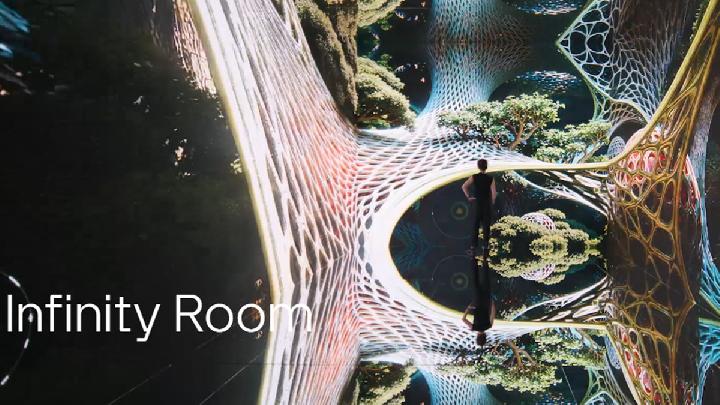
The museum’s first exhibition, titled “Machine Dreams: Rainforest,” showcases the power of AI in generating immersive, dynamic visual experiences. Utilizing an AI system capable of producing real-time imagery up to 1.2 billion pixels, the display transforms into a living artwork that evolves with each visitor’s presence. The exhibit’s design leverages cutting-edge technology to create a fully integrated sensory environment, incorporating soundscapes, emotion-sensing sensors, and algorithmically crafted scents that enhance the visitor’s interaction with the art.
According to Google, the exhibition is powered by the Gemini model, which operates on the company’s Google Cloud infrastructure. This setup ensures that all content is processed within Google’s AI data centers before being transmitted to the museum. The result is a seamless experience where digital creativity is brought to life in real time, without the need for pre-programmed displays. Visitors are not just observers but participants in an ever-changing narrative shaped by machine learning and data-driven insights.
Refik Anadol, who has worked with Google since 2016, played a pivotal role in conceptualizing Dataland. Known for his work at the intersection of AI and art, Anadol has created installations that merge data with aesthetics, often using neural networks to interpret vast datasets and convert them into visual or auditory forms. His collaboration with Google for this project underscores the potential of AI to transcend traditional artistic boundaries and redefine creative processes. The exhibition’s theme, “Rainforest,” is a nod to the natural world and the organic patterns that AI can replicate and reinterpret, offering a unique perspective on environmental and ecological themes through digital means.
Technological Innovation Behind the Experience
Dataland’s design emphasizes the interplay between AI and human creativity. The museum’s infrastructure is built around Google’s Gemini AI model, which is deployed on Google Cloud to handle complex data processing and real-time generation of visuals. This system enables the exhibit to adapt dynamically, responding to environmental factors and visitor interactions to create a personalized experience. For instance, the AI can analyze real-time data from sensors to adjust the intensity of light, the composition of sounds, or the distribution of scents, ensuring that each visit feels distinct and engaging.
The museum’s multi-sensory approach extends beyond visual displays. Visitors are enveloped in immersive soundscapes that mimic the ambient noises of a rainforest, while advanced sensors detect emotional responses, allowing the AI to modify the atmosphere accordingly. For example, if the system identifies signs of calm or curiosity, it might enhance the visual elements to deepen the connection between the audience and the artwork. The algorithmically generated scents, which range from the earthy aroma of soil to the crisp freshness of rain, further amplify the exhibit’s ability to evoke emotions and memories, creating a holistic sensory experience.
Google has positioned Dataland as a hub for innovation, not only in art but also in the broader application of AI technology. The museum serves as a testbed for new AI capabilities, demonstrating how machine learning can be harnessed to create interactive and evolving artworks. This initiative reflects Google’s vision of AI as a creative force that can generate, interpret, and respond to human experiences in real time. By investing heavily in AI infrastructure, the company ensures that such exhibits can be scaled and replicated, potentially influencing the future of digital art worldwide.
Expanding AI Opportunities: The Artist Residency Program
In tandem with the museum’s launch, Google Arts & Culture has introduced the AI Artist Residency program, designed to support emerging creators who integrate AI into their work. The program provides participants with a $25,000 grant, mentorship from Refik Anadol Studio, and access to Google’s advanced machine learning tools. These resources enable artists to experiment with AI-driven techniques, fostering new forms of expression and innovation within the digital arts.
Selected artists will have the opportunity to showcase their creations at Dataland and on the Google Arts & Culture platform for a year, giving their work a global audience. This initiative highlights Google’s ambition to cultivate a new generation of artists who can leverage AI to push creative limits. By offering financial support and technical guidance, the company aims to democratize access to AI technology, ensuring that diverse voices and perspectives are represented in the evolving landscape of digital art.
Dataland’s opening also raises questions about the role of AI in shaping cultural narratives. As the first of its kind, the museum challenges traditional notions of authorship and creativity, blurring the lines between human and machine-generated art. While some critics argue that AI could diminish the role of human intuition in art, others see it as a revolutionary tool that expands the possibilities of creative expression. The success of Dataland may influence how institutions and artists embrace AI, potentially leading to a future where digital intelligence becomes an essential component of the artistic process.
With its focus on technological advancement and artistic innovation, Dataland stands as a testament to the growing synergy between AI and the arts. As visitors explore its ever-changing exhibits, they are invited to engage with a new form of creativity that is both data-driven and emotionally resonant. The museum’s impact is expected to extend beyond its physical walls, inspiring other institutions to adopt similar approaches and accelerating the integration of AI into the world of art. As the first AI art museum, Dataland is not just a space for displaying digital works—it is a living experiment in the future of creativity itself.
Read more about the intersection of AI and art in our coverage of how technology is reshaping cultural experiences. Stay updated with the latest news from Tempo on Google News.