
Court Sets Next Week for Nadiem Makarim Sentencing Hearing
Court Sets Next Week for Nadiem Makarim Sentencing Hearing Court Sets Next Week for Nadiem - Jakarta, June 23, 2026 – The Corruption Court in Central Jakarta
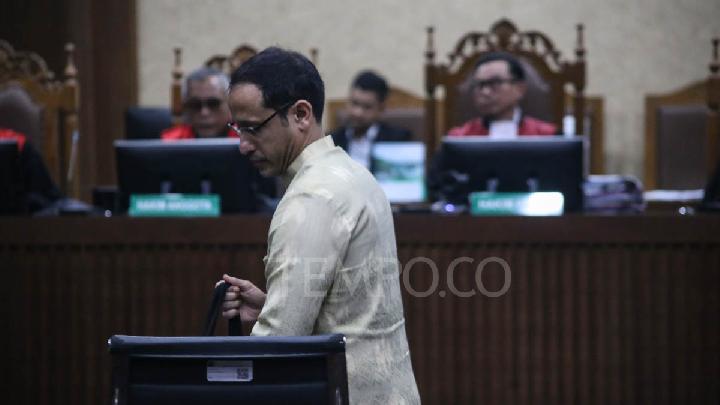
Court Sets Next Week for Nadiem Makarim Sentencing Hearing
Tempatdonasi.com – Jakarta, June 23, 2026 – The Corruption Court in Central Jakarta District Court has announced that the final verdict in the case against Nadiem Makarim, the former Minister of Education, Culture, Research, and Technology, will be delivered on Tuesday, June 30, 2026. This date follows the completion of the trial process, which concluded on the same day. The court’s decision marks the culmination of a legal proceeding that has spanned several months, with the panel of judges now preparing to render their judgment after a week of deliberation.
Verdict Deliberation Process
Presiding Judge Purwanto S. Abdullah confirmed that the judges would take the necessary time to finalize the verdict, emphasizing the importance of thorough evaluation before presenting it to the public. “We need time to draft it, so the verdict will be read on Tuesday, June 30, 2026,” Purwanto stated during the trial session. This statement came as the court concluded its hearings, ensuring that all critical evidence and arguments had been fully examined by the panel.
“We need time to draft it, so the verdict will be read on Tuesday, June 30, 2026,” Purwanto said during the trial on Tuesday, June 23, 2026.
The judge also highlighted that the panel would review all arguments, evidence, and opinions submitted during the trial, ensuring fairness and transparency in the decision-making process. “Now the panel of judges, with a clear conscience and firm conviction, is deliberating to render the decision and uphold justice through the reading of the verdict,” he added. This reassurance comes amid speculation about the potential outcomes of the case, which has drawn significant public attention.
Final Defense and Previous Sentence
Nadiem Makarim concluded his defense on Tuesday, June 23, 2026, with a final rejoinder addressing the prosecutor’s arguments. This plea followed the initial charges leveled against him, which included allegations of misuse of public funds and conflict of interest in the procurement of Chromebook devices. The previous sentence, handed down earlier, had resulted in an 18-year prison term, a fine of Rp1 billion, and an additional 190 days of substitute imprisonment. He was also ordered to compensate a total of Rp5.68 trillion, covering Rp809 billion in direct enrichment and Rp4.8 trillion in indirect financial benefits to affiliated entities.
The charges stem from the accusation that Nadiem enriched himself and 12 private companies—vendors of Chromebook devices—by influencing procurement decisions in favor of his business interests. According to the prosecution, the Chromebook procurement was a strategic move to pressure Google into increasing its investments and deposits into PT Aplikasi Karya Anak Bangsa (AKAB), the company founded by Nadiem. After the merger of Gojek and Tokopedia in 2021, AKAB was rebranded as PT GoTo Gojek Tokopedia, a key entity in the case.
Prosecution’s Legal Grounds
The prosecutor’s case hinges on Nadiem’s alleged violation of Article 603 of the Corruption Law, combined with Article 18 of the same legal framework, and Article 20 letter c of Law Number 1 of 2023 on the Criminal Code (KUHP). Additionally, the charges cite Article 2, paragraph 1, and Article 3 of the Corruption Eradication Law, alongside Article 55, paragraph 1, of the KUHP. These articles collectively outline the legal basis for accusations of personal enrichment and financial harm to the state.
According to the prosecution, the procurement of Chromebook devices caused a total loss of Rp2.18 trillion to the state. This figure includes Rp1.56 trillion in losses from the purchase of Chromebook laptops, as reported by the Financial and Development Supervisory Board (BPKP). An additional Rp621.38 billion in losses was attributed to the procurement of Chrome Device Management services, calculated using the lowest exchange rate from August 2020 to December 2022, which equates to approximately US$44.05 million.
The prosecutors argued that Nadiem’s actions were not merely incidental but deliberately designed to benefit his business ventures. They claimed that the Chromebook selection was exclusively driven by Nadiem’s personal interests, aiming to secure favorable terms from Google and inflate the company’s investments. This, they asserted, created a conflict between his public duties and private financial gains, thereby violating the principles of transparency and accountability.
Implications of the Case
The case has sparked widespread debate about the integrity of public procurement processes in Indonesia. Critics argue that the inclusion of Chromebook devices in the ministry’s budget, which amounted to less than 1% of the total allocation, highlights the potential for corruption in high-profile contracts. Meanwhile, supporters of Nadiem point to the complexity of the procurement decisions and the role of strategic partnerships in driving technological advancement.
The financial figures in question—particularly the Rp809.59 billion enrichment for Nadiem and the Rp4.8 trillion allocated to private companies—underscore the scale of the alleged mismanagement. These amounts, when combined, represent a significant portion of the state’s budget, raising concerns about the efficiency and fairness of public spending. The prosecution has also emphasized that the substitution of prison time with fines and compensation is a standard measure in such cases, though the duration and severity of the penalties remain under scrutiny.
Public Reaction and Media Coverage
The announcement of the verdict date has generated considerable interest among the public and media outlets. Analysts are closely monitoring the case, as it may set a precedent for similar corruption charges involving high-ranking officials. The case also serves as a reminder of the challenges in balancing public policy goals with financial oversight, especially in sectors involving technology and international partnerships.
Media coverage has highlighted the historical context of Nadiem’s tenure, noting his role in advancing digital education initiatives and his subsequent leadership in GoTo Gojek Tokopedia. While some praise his contributions to innovation, others question whether his decisions in the ministry were influenced by personal or corporate interests. The verdict is expected to provide clarity on these matters, with the court’s final judgment likely to be a pivotal moment in the legal saga.
Read: Nadiem Makarim: Chromebook Cost Under 1 Percent of Ministry’s Budget
Click here to get the latest news updates from Tempo on Google News.