Singapore Think Tank Warns of Severe Haze Risk in Southeast Asia
Singapore Think Tank Warns of Severe Haze Risk in Southeast Asia Singapore Think Tank Warns of Severe - On June 24, the Singapore Institute of International
Singapore Think Tank Warns of Severe Haze Risk in Southeast Asia
Tempatdonasi.com – On June 24, the Singapore Institute of International Affairs (SIIA) released its Haze Outlook 2026 report, cautioning that Southeast Asia could face a significant threat from intense transboundary haze events in the coming months. The think tank, based in Singapore, has issued a “Red” risk rating, the second such alert since its annual assessment began in 2019. This warning spans Brunei, Indonesia, Malaysia, and Singapore, as reported by local news agency ANTARA.
The report highlights that the recurrence of positive El Nino and Indian Ocean Dipole (IOD) conditions may create a perfect storm of environmental challenges. These climate patterns, which are expected to intensify in August and September, are projected to bring prolonged periods of heat and dryness, significantly raising the likelihood of forest and land fires. Such conditions are known to exacerbate existing vulnerabilities in the region, where peatland degradation and deforestation have become persistent issues.
According to the SIIA, the current climate trends could lead to an increase in fire outbreaks, driven by both natural and human factors. The think tank emphasizes that while El Nino and IOD are primary contributors, socio-economic pressures also play a critical role. For instance, the growing demand for agricultural products and biofuels has created economic incentives for clearing land, often through slash-and-burn methods. This practice, though efficient, releases large quantities of smoke and particulate matter into the atmosphere, worsening air quality and creating a feedback loop of environmental degradation.
Furthermore, the report underscores the need for stronger regional collaboration. It calls on ASEAN countries to enhance their coordination mechanisms, particularly in monitoring and responding to fire outbreaks. The SIIA suggests that increased funding for early warning systems and cross-border firefighting efforts is essential to mitigate the crisis. Without these measures, the region risks experiencing haze episodes that could last longer and be more severe than previous years.
Experts warn that the combination of climate change and unsustainable land-use practices could push the region into a recurring cycle of haze pollution. In recent years, Southeast Asia has seen episodes of severe air quality degradation, with Indonesia’s peat fires being a major source of transboundary haze. The report notes that the 2026 outlook is particularly concerning due to the叠加 of natural climate phenomena with anthropogenic activities, making the situation more complex than ever before.
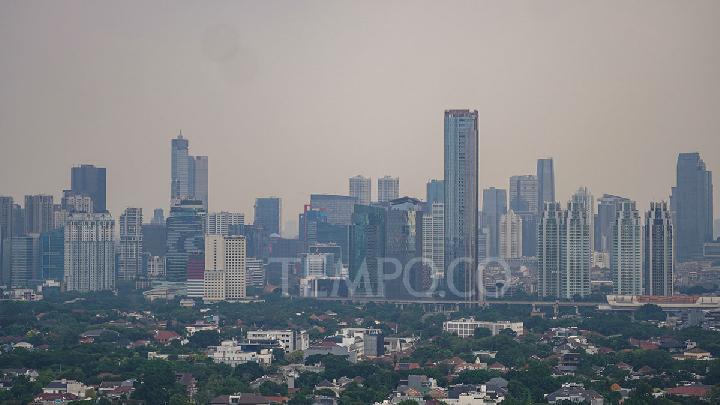
One of the key concerns raised by the SIIA is the potential for prolonged haze exposure, which can have long-term health impacts. The think tank references studies indicating that prolonged exposure to high levels of PM2.5 particles, a major component of haze, increases the risk of respiratory diseases, cardiovascular issues, and even premature death. In densely populated cities like Jakarta, where air quality has frequently ranked among the worst globally, the effects could be particularly pronounced.
Environmental scientists have also pointed out that the 2026 forecast aligns with historical patterns. For example, the 2015-2016 El Nino event led to one of the most severe haze episodes in recent history, with smoke drifting across multiple countries and affecting millions of people. The SIIA’s warning suggests that similar conditions could return, emphasizing the importance of proactive measures. “The interplay between climate anomalies and human activities is a critical factor in the recurrence of haze events,” stated Dr. Lena Tan, a lead researcher in the report. “Without urgent intervention, we may see a repeat of the 2015 crisis.”
Additionally, the report highlights the role of agricultural expansion in contributing to the problem. With Southeast Asia’s population growing and urbanization increasing, the demand for arable land has risen. This has led to the conversion of forests and peatlands into plantations, often without adequate environmental safeguards. The SIIA warns that if current trends continue, the region’s ability to manage fires and reduce emissions could be further strained.
The think tank also points to the challenges of implementing effective prevention strategies. While many countries have established laws to control land fires, enforcement remains inconsistent. The report calls for a more unified approach, including stricter penalties for illegal burning and incentives for sustainable land management. It further recommends the creation of a centralized regional monitoring system to track fire activity in real time and coordinate responses across borders.
Moreover, the SIIA highlights the economic implications of prolonged haze. Poor air quality can lead to reduced productivity, with health-related absenteeism and increased healthcare costs. The report estimates that the 2015 haze episode cost the region billions in lost economic output, a figure that could rise if similar events occur again. “Haze is not just an environmental issue—it has significant economic and social consequences,” noted a SIIA policy analyst. “Investing in prevention is cheaper than dealing with the aftermath.”
Regional leaders have been urged to take the warning seriously, as the report outlines specific steps to address the crisis. These include improving communication between countries, ensuring that data on fire outbreaks and air quality is shared promptly, and launching public awareness campaigns to encourage community participation in prevention efforts. The SIIA also advocates for the use of technology, such as satellite monitoring and predictive modeling, to anticipate and manage fire risks more effectively.
As the peak hazard period approaches, the SIIA’s findings serve as a reminder of the fragility of Southeast Asia’s environment. The think tank’s “Red” rating is a clear indication that the region is at the highest level of risk, with the potential for widespread environmental and health impacts. If the combination of climate conditions and land-use pressures is not addressed, the consequences could be dire, affecting not only the immediate region but also global trade and tourism sectors that rely on Southeast Asia’s natural resources and climate stability.
Read:
Wear a mask, Jakarta ranks third for worst air quality worldwide
Click here to get the latest news updates from Tempo on Google News