BEM UBK Bribery: Is Protest Funding Transparency Warranted?
BEM UBK Bribery: Is Protest Funding Transparency Warranted? BEM UBK Bribery - On social media, a video has spread widely, revealing that members of the Bung
BEM UBK Bribery: Is Protest Funding Transparency Warranted?
Tempatdonasi.com – On social media, a video has spread widely, revealing that members of the Bung Karno University Student Executive Board (BEM UBK) accepted a bribe, following a wave of student-led demonstrations in Jakarta. The university responded swiftly, revoking the student status of several BEM members, including those from the Law Faculty. This action was taken after Muhammad Abdi Maludin, a representative of the Law Faculty BEM, provided a direct admission about receiving Rp20 million in bribes.
According to Daniel Panda, the Vice Rector III at the university, the decision to remove their status came after Abdi confirmed the corruption allegations during a press conference held in Central Jakarta on Tuesday, June 23, 2026. The vice rector emphasized that the bribe was delivered by a law faculty graduate through the police. This individual had requested that the student leaders avoid protesting near the Presidential Palace, instead directing them to relocate the demonstration to the parliament complex. However, the students declined the suggestion, continuing their protest in the Horse Statue area despite the financial incentive.
Abdi stated during the press conference that the bribe was handed over in the early hours of the day, indicating a covert transaction. This confession has raised questions about the integrity of the protest organizers and the potential influence of external funding on their actions. The incident has also prompted scrutiny into the transparency of financial mechanisms used during student-led movements, with critics arguing that such practices undermine the credibility of the protests.
Political Scrutiny and Public Accountability
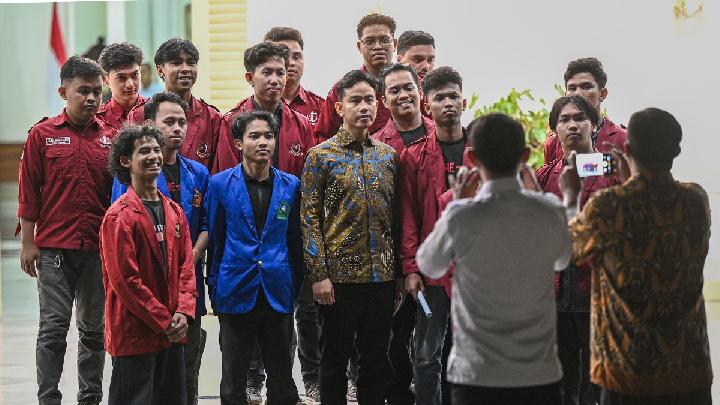
In response to the allegations, Deddy Sitorus, the chair of the Indonesian Democratic Party of Struggle (PDI-P), has called on Vice President Gibran Rakabuming Raka to clarify the flow of funds and his involvement with the student representatives. Sitorus highlighted the need for transparency, noting that Gibran’s meeting with the BEM UBK members at the Vice Presidential Palace has fueled speculation about the source of their financial support. “It is impossible that he does not know. But he needs to speak up,” Sitorus remarked at the DPR Complex in Jakarta on the same day, June 23, 2026.
Gibran’s office has yet to issue a formal statement, though his special staff, Tina Talisa, has not responded to Tempo’s confirmation request via WhatsApp as of Wednesday, June 24, 2026. This silence has intensified public debate over whether the vice president’s association with the student board implies endorsement of the alleged bribes. Meanwhile, the broader issue of protest funding remains a focal point for analysts and activists alike.
Understanding the Sources of Protest Funding
Siska Barimbing, a researcher at the Indonesia Forum for Budget Transparency (FITRA), provided insight into the typical funding mechanisms behind student demonstrations. She explained that protest money is generally raised through grassroots efforts, such as fundraising by civil organizations or alliances. According to Barimbing, the state or regional budgets do not directly fund these protests, making the transparency of the financial process dependent on the organizers’ internal mechanisms. “Public budget has clear rules and allocations, but there is no standardized term for protest funding,” she noted on Wednesday, June 24, 2026.
Barimbing argued that while the source of protest money may not be tied to government funds, the lack of a defined nomenclature creates ambiguity. She emphasized that institutions suspected of providing financial backing should be held accountable, particularly when the funds appear to influence protest activities. This perspective aligns with the current controversy, as the Rp20 million bribe has sparked debates about the independence of student movements and their potential alignment with political interests.
Some critics view the incident as a breach of trust, questioning whether the student board’s actions were genuinely driven by public concerns or financial incentives. The connection between the bribe and the decision to shift protest locations has drawn particular attention. While the students initially resisted moving their demonstrations, they eventually accepted the Rp20 million, which may have influenced their choice of venue. This raises the possibility that external funding played a role in shaping the protest’s trajectory, potentially altering its message or focus.
Broader Implications for Protest Movements
As the controversy unfolds, the case of BEM UBK highlights the growing need for transparency in protest financing. With no official framework governing these funds, organizers are often left to self-regulate, creating opportunities for manipulation or corruption. Barimbing’s comments underscore this challenge, stressing that without clear accountability measures, the legitimacy of student protests could be undermined.
Protest funding also has implications for public perception. When demonstrations are associated with bribes, it may erode the trust of the general public in the students’ demands. This is especially significant in Indonesia, where student movements have historically played a key role in shaping political discourse. The question of whether these protests are purely grassroots or influenced by external actors remains a critical debate.
The controversy surrounding the BEM UBK’s bribery has further intensified the scrutiny of political figures linked to the protests. Gibran’s invitation to meet with student representatives has been interpreted as a sign of political engagement, but it also raises questions about his awareness of the financial transactions. While some argue that his involvement is neutral, others suggest it could imply tacit approval of the bribes.
Conclusion and Ongoing Investigations
As the university and political actors continue to address the allegations, the issue of protest funding transparency has gained renewed attention. The Rp20 million bribe serves as a catalyst for broader discussions about the role of financial support in shaping student activism. With the Vice Presidential Special Staff yet to respond to Tempo’s inquiries, the investigation into the matter remains ongoing.
Meanwhile, the students’ decision to accept the bribe, despite their initial resistance to relocating the protest, highlights the complex interplay between financial incentives and political strategy. As the situation evolves, the focus will likely remain on whether these actions compromise the authenticity of the student movement and the need for stronger oversight mechanisms in protest funding.
Andi Adam contributed to the writing of this article. Read: UBK Says Student Leaders Received Rp20 Million Bribe Via Police Click here to get the latest news updates from Tempo on Google News.