
Over 73,000 Palestinians Killed in Gaza Genocide by Israel
Over 73,000 Palestinians Killed in Gaza Genocide by Israel Over 73 000 Palestinians Killed in Gaza - As of June 28, 2026, the Palestinian Ministry of Health
Over 73,000 Palestinians Killed in Gaza Genocide by Israel
Tempatdonasi.com – As of June 28, 2026, the Palestinian Ministry of Health reported that 73,058 civilians have perished in Gaza since Israel initiated its military operation on October 7, 2023. In addition to the deaths, 173,488 individuals have sustained injuries, with the majority of casualties attributed to airstrikes, artillery bombardments, and ground offensives. The data, which includes both confirmed and reported figures, highlights the escalating toll on the population, particularly in densely populated urban areas.
Rescue Efforts and Trapped Victims
Despite ongoing efforts to recover bodies, rescue teams continue to uncover 786 remains in the rubble of destroyed homes and buildings. According to medical personnel, hundreds of victims are still buried beneath collapsed structures, unable to reach the surface. Ambulance crews and emergency responders face significant challenges in accessing these areas due to the extensive destruction and limited mobility in the region.
“We strongly condemn the occupation’s systematic policies of targeting and destroying the Palestinian people,” the statement from the Gaza Government Media Office declared. The report emphasized the urgent need for mediators and backing nations of the ceasefire to ensure Israel adheres to its commitments and halts the ongoing violations.
The Ministry’s statement also noted that 3,465 breaches of the agreement had been recorded during the ceasefire period. These violations include indiscriminate attacks on civilian infrastructure, the displacement of families, and the restriction of humanitarian aid. The data underscores the frustration of Palestinian authorities, who argue that the ceasefire has not brought the promised respite.
Tragedy in Deir el-Balah
On June 29, 2026, an Israeli airstrike in Deir el-Balah, central Gaza, resulted in the deaths of at least three individuals, including an eight-year-old child. Health officials confirmed that Ali Fayez Isbaitan, Hassan Salman al-Hanajra, and Malik Wael Abu Shaweesh—identified as the child—were among the casualties. The attack targeted a residential area near the Wadi Salqa Bridge on Baraka Street, leaving several others with critical injuries.
Al-Aqsa Martyrs Hospital documented the incident, revealing that the child’s death occurred in a family home that was hit by a missile. The hospital also reported that multiple survivors were transported to nearby medical facilities, though the exact number of injured remains under evaluation. The attack has reignited concerns about the safety of Palestinian children, who have become frequent victims of the conflict.
Israeli Forces Advance Under Ceasefire
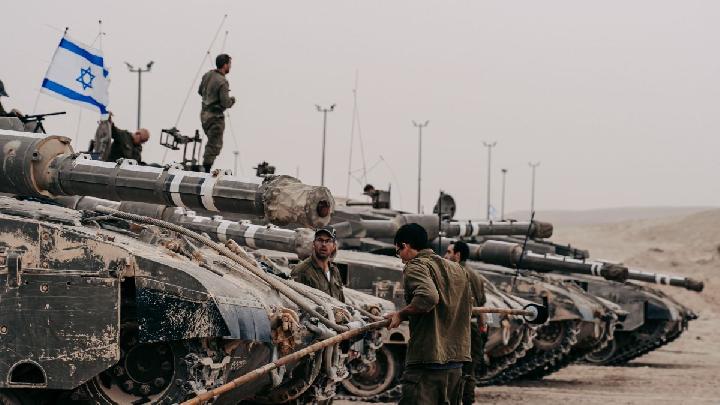
Even as the ceasefire was in effect, Israeli military vehicles moved through Salah al-Din Street in the Nuseirat refugee camp, a key area in central Gaza. The advance, accompanied by gunfire and artillery strikes, intensified during the early hours of June 28, 2026. Turkish news agency Anadolu described the scene as one of chaos, with civilians fleeing their homes as troops took control of strategic positions.
Meanwhile, in Beit Lahiya, northern Gaza, an artillery strike injured two individuals. The attack, which occurred during a lull in hostilities, has prompted questions about the effectiveness of the ceasefire in curbing violence. Despite the agreement, Israeli forces have continued to conduct operations, targeting both military and civilian locations.
Occupation Expands Beyond the Yellow Line
The Israeli military’s occupation has grown significantly since the ceasefire was established. Initially covering 53% of Gaza’s territory, the “Yellow Line” boundary has been extended to 64% by March 2026, according to the Gaza Government Media Office. This expansion has led to the issuance of forced evacuation orders, displacing thousands of families from their homes.
Reports indicate that Israeli tanks and armored vehicles have shifted the markers of the Yellow Line westward by approximately 150 meters, effectively increasing the area under control. This move has raised alarms among Palestinian leaders, who accuse Israel of using the ceasefire as a pretext to consolidate its grip on the territory. Prime Minister Benjamin Netanyahu has endorsed the expansion, stating that the military should occupy 70% of the Gaza Strip to secure lasting stability.
The policy of expanding occupation has sparked widespread criticism, with Palestinian officials arguing that it violates international law and endangers civilian lives. The shift in boundaries has also disrupted essential services, including access to water and electricity, further exacerbating the humanitarian crisis. Analysts warn that the continued occupation may lead to a prolonged conflict, with no clear path to resolution in sight.
International Response and Ongoing Challenges
While the ceasefire was intended to provide a temporary pause in hostilities, it has not prevented the escalation of violence. Reports from the ground suggest that Israeli forces have launched coordinated attacks on multiple fronts, targeting both military installations and residential neighborhoods. The pattern of attacks has raised concerns about the systematic nature of the campaign, with critics labeling it as a genocide against the Palestinian population.
International mediators, including the United Nations and regional actors, have been urged to take stronger action against Israel’s violations. The Palestinian Ministry of Health has called for immediate measures to protect civilians, citing the disproportionate impact of military operations on the population. Meanwhile, the situation in Gaza remains precarious, with families living in fear of further attacks and the loss of basic necessities.
Amid the ongoing conflict, the toll on human life has been staggering. The combination of airstrikes, ground assaults, and artillery strikes has left a trail of devastation across the enclave. The Ministry of Health’s latest figures, which reflect the cumulative impact of the war, underscore the need for a comprehensive end to hostilities and a commitment to protecting civilian lives. As the situation continues to evolve, the international community faces mounting pressure to address the crisis and hold Israel accountable for its actions.
Read more about the long-term effects of the conflict on Gazan communities. Stay updated with the latest news from Tempo on Google News.