Will Mojtaba Khamenei Attend His Father’s Funeral?
Will Mojtaba Khamenei Attend His Father's Funeral? Will Mojtaba Khamenei Attend His Father - The funeral of Iran's late Supreme Leader Ayatollah Ali Khamenei
Will Mojtaba Khamenei Attend His Father’s Funeral?
Tempatdonasi.com – The funeral of Iran’s late Supreme Leader Ayatollah Ali Khamenei is set to commence in Tehran on July 4, more than four months after his death during the early stages of the Iran war. The event has been framed by Iranian authorities as a pivotal moment of national and religious unity, with ceremonies planned across multiple locations, including Tehran, Qom, Iraq, and ultimately Mashhad, where his remains are expected to be interred on July 9. State-backed organizers have emphasized the logistical scale of the proceedings, highlighting preparations for massive crowds, extensive accommodation, and participation from both domestic and international attendees. While some official estimates suggest millions may gather, the exact numbers remain uncertain due to the challenges of verifying such projections in advance.
A Delayed Tradition
The timing of the funeral has sparked debate among religious scholars, as Shiite Islamic customs typically prioritize swift burial following death. Vahid Heroabadi, a former Shiite cleric based in Europe and a critic of the Islamic Republic, expressed concern over the prolonged interval between Khamenei’s passing and the start of the rites. “In Islamic jurisprudence, there is a strong emphasis on burying the dead without delay,” he told DW. “This is often cited in religious education as an example of an obligation that must be fulfilled immediately.” Heroabadi’s remarks highlight the tension between traditional practices and the political orchestration of the event, raising questions about whether the delay serves symbolic or logistical purposes.
The Absence of Mojtaba Khamenei
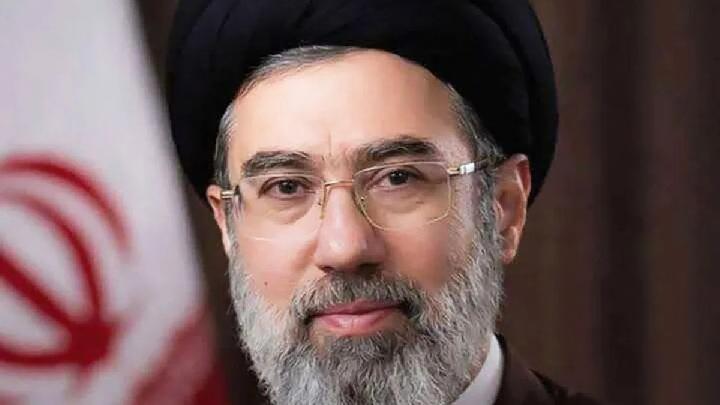
Central to the funeral’s significance is the question of Mojtaba Khamenei’s presence. As the son who inherited the leadership following his father’s death, his absence from the ceremonies has drawn attention. Iranian officials have not yet confirmed whether he will participate in any stage of the event, leaving the public in suspense. Ali Akbar Pourjamshidian, head of the national funeral committee, stated that Mojtaba’s attendance is not within the committee’s authority, with any announcement expected to come from the commander-in-chief’s office or the leader’s own administration.
Mojtaba Khamenei has been largely out of sight for months, absent from events tied to his family. This includes the symbolic funeral for his wife, Zahra Haddad Adel, where no audio or video message from him was released. Speculation about his health has been widespread, with reports in Iranian and international media suggesting he was injured in the same attack that killed his father. While the exact nature of his condition remains unverified, his absence has fueled speculation about both his physical state and his political role in the aftermath of the leadership transition.
Symbolic Role in the Rites
The decision of Mojtaba Khamenei to attend or skip the funeral may influence the selection of the prayer leader, a role of considerable symbolic weight in Shiite tradition. According to the faith, the individual leading the funeral prayer for a senior religious figure is viewed as a key figure in the community’s spiritual continuity. Iranian authorities have not yet disclosed who will hold this position, adding another layer of uncertainty to the proceedings. The choice could signal Mojtaba’s readiness to assume his father’s mantle or reflect a deliberate effort to distance himself from the event.
International Delegations and Geopolitical Significance
The funeral is anticipated to draw a wide array of international delegations, underscoring its role as a diplomatic stage. Interior Minister Eskandar Momeni has confirmed that high-ranking officials, including presidents, prime ministers, and parliamentary leaders, are expected to attend. Iranian officials report that representatives from over 30 countries have pledged participation, with India among those planning to send a senior delegation. For analysts, the composition of the guest list may carry as much political weight as the size of the crowds, with each presence or absence interpreted as a statement about Iran’s strategic direction.
Some experts argue that the funeral could serve as a platform to reaffirm Iran’s alignment with eastern powers, particularly Russia. Ahmad Vakhshiteh, a senior lecturer at RUDN University in Moscow, noted that Ali Khamenei’s opposition to the United States and his broader “Look East” policy were instrumental in strengthening ties with Russia. “The future of Iran–Russia relations will depend on the new power structure’s approach to the West, economic priorities, and regional security,” Vakhshiteh added. This perspective suggests that the funeral might not only honor Khamenei but also reinforce Iran’s geopolitical strategy in a shifting global landscape.
Uncertainties in Leadership Transition
As a long-serving leader, Ali Khamenei held a central position in Iran’s political and security framework for over three decades. His passing has raised questions about the implications for the country’s future, with analysts offering divergent views. While some believe the transition will maintain the status quo, others suggest it may usher in a new era of governance. Mojtaba’s potential role in this shift is particularly intriguing, given his father’s influence and the ambiguity surrounding his own involvement.
Despite his prominence, Mojtaba Khamenei’s absence has left a void in the narrative of continuity. His reluctance to publicly engage, whether due to health concerns or political considerations, could shape perceptions of his leadership style. The funeral, therefore, serves as a critical test for Mojtaba’s ability to connect with the public and assert his authority. Iranian officials, however, remain tight-lipped about his current status, leaving room for speculation about his readiness to take the helm.
Analysts also note that the funeral may become a focal point for assessing the stability of Iran’s power dynamics. The event is not only a religious observance but a strategic opportunity to consolidate support and project a unified front. As the ceremonies unfold, the interplay between tradition and modernity, loyalty and independence, will likely dominate discussions both within Iran and among its international allies. The absence or presence of Mojtaba Khamenei at this moment could be seen as a harbinger of the path the Islamic Republic will take in the years to come.
In the context of the war and the succession, the funeral ceremonies represent a blend of mourning and statecraft. They are designed to honor Khamenei’s legacy while also reinforcing the authority of his son. The inclusion of global delegations, such as those from India and Russia, further underscores the event’s role in diplomatic relations. Yet, the uncertainty surrounding Mojtaba’s attendance adds an element of unpredictability, prompting observers to consider the broader implications for Iran’s future leadership and political direction.
As preparations continue, the event remains a symbol of both continuity and change. The delay in the burial rites, the absence of Mojtaba Khamenei, and the geopolitical significance of the gathering all contribute to a complex narrative. Whether the ceremonies will be a unifying moment or a reflection of internal divisions is yet to be determined, but the stakes are clear: this is more than a funeral—it is a statement about Iran’s path forward in a rapidly evolving world.