How Prabowo Designates Spread of LGBTQ Culture as ‘Nonmilitary Threat’
How Prabowo Subianto Classifies LGBTQ Cultural Dissemination as a Nonmilitary Threat How Prabowo Designates Spread of LGBTQ - President Prabowo Subianto has
How Prabowo Subianto Classifies LGBTQ Cultural Dissemination as a Nonmilitary Threat
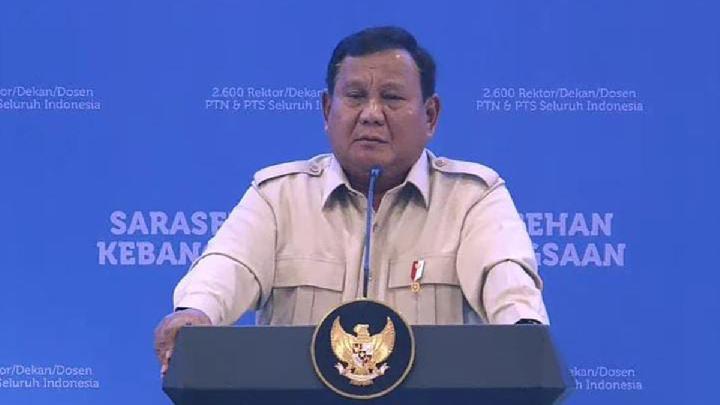
Tempatdonasi.com – President Prabowo Subianto has integrated the spread of Lesbian, Gay, Bisexual, Transgender, and Queer (LGBTQ) culture into the framework of nonmilitary threats under Presidential Regulation No. 111 of 2025. This regulation, enacted on October 24, 2025, outlines the 2025-2029 General Policy for National Defense. The move marks a significant shift in how the government perceives societal influences within the broader context of national security. By categorizing LGBTQ cultural dissemination as a nonmilitary threat, Prabowo signals its role in shaping the country’s defense priorities through ideological and social lenses.
Threat Analysis in the Regulation
Within the appendices of the regulation, the categorization of LGBTQ cultural dissemination as a nonmilitary threat is detailed under the “Factors Affecting the General Policy on National Defense” section. Specifically, this classification appears in the “Threat Analysis” subsection, which defines various challenges to the nation’s stability. The regulation emphasizes that nonmilitary threats encompass a range of activities that may undermine the state’s sovereignty, territorial integrity, and the safety of its citizens, even without direct military involvement.
“Nonmilitary threats are those that involve unarmed efforts or actions capable of jeopardizing the state’s sovereignty, territorial integrity, and the security of the entire nation,”
the document states. This framework positions LGBTQ cultural spread as a societal force that could erode national values, according to the administration. The inclusion of this category reflects a broader strategy to address ideological shifts that might challenge traditional norms and social cohesion. The regulation also lists other nonmilitary threats, such as economic crises, cyber-attacks, and the proliferation of illegal drugs, underscoring the multifaceted nature of national defense concerns.
Three Categories of National Defense Threats
The regulation divides threats to national defense into three distinct types: military, nonmilitary, and hybrid. While military threats are typically associated with direct attacks on armed forces or strategic assets, nonmilitary threats focus on indirect influences that threaten the state’s stability. Hybrid threats, meanwhile, combine elements of both categories, such as terrorism linked to economic or technological vulnerabilities. This tripartite classification allows the government to prioritize and address different forms of risk systematically.
Nonmilitary threats are defined as activities that pose risks to the nation’s integrity through ideological, political, or social mechanisms. The regulation highlights how such threats can emerge from the spread of forbidden ideologies, the weakening of nationalism, and the promotion of radicalism. It also includes the impact of global warming, disease outbreaks, and the exploitation of natural resources as part of this category. By listing these threats, the policy underscores the interconnectedness of environmental, cultural, and economic challenges in national defense planning.
The Role of the Regulation in National Defense Strategy
Presidential Regulation No. 111 of 2025 was developed as an implementing rule for Article 13 paragraph (2) of Law No. 3 of 2002 on state defense. The regulation serves as a guide for managing the National Defense System, as stated in Article 2 paragraph (1). This provision explains that the 2025-2029 General Policy for National Defense provides a roadmap for the planning, execution, and oversight of the country’s defense initiatives. The policy aims to align defense strategies with evolving societal and geopolitical dynamics.
Article 3 paragraph (1) of the regulation further clarifies that the general state defense policy includes general provisions, factors influencing the defense strategy, core policy points, solutions to mitigate risks, and concluding remarks. Notably, Article 3 paragraph (3) specifies that the 2025-2029 General Policy for National Defense is included as an appendix, making it an essential component of the regulation. This integration ensures that all defense-related considerations are unified under a single legal framework, providing clarity for both policymakers and enforcement agencies.
“The 2025-2029 General Policy for National Defense, as outlined in paragraph (1), is an integral part of this Presidential Regulation,”
the document states. This highlights the policy’s comprehensive approach, linking cultural and ideological concerns to the nation’s security apparatus. By framing LGBTQ culture as a nonmilitary threat, the regulation aligns with a growing trend in Indonesia to view social movements as potential risks to national identity and unity.
Context and Implications of the Classification
The decision to include LGBTQ cultural dissemination in the nonmilitary threat category has sparked debate among experts and activists. While the government argues that such cultural influences could weaken traditional values and national cohesion, critics contend that this classification risks overextending the scope of national defense to include social and cultural shifts. The regulation’s inclusion of the spread of atheism and separatism as nonmilitary threats further illustrates the government’s emphasis on ideological alignment as a key defense concern.
Prabowo’s policy also addresses the role of technology and media in national security. The spread of LGBTQ culture through digital platforms, such as online content and social media, is seen as a tool that could influence public opinion and challenge existing societal norms. This perspective aligns with the government’s broader focus on combating misinformation and ideological infiltration. However, it raises questions about the balance between cultural diversity and national unity in Indonesia’s defense strategy.
Additional nonmilitary threats listed in the regulation include vulnerabilities in nuclear, biological, chemical, and radioactive facilities, as well as the rise of cyber threats. These factors demonstrate the government’s awareness of modern security challenges that extend beyond traditional military boundaries. The inclusion of LGBTQ culture in this list signals an intentional effort to address societal concerns that may have long-term implications for national stability.
Indonesia’s stance on LGBTQ issues has historically been shaped by religious and cultural values, with recent policies reflecting a more assertive approach to safeguarding these norms. The classification of LGBTQ cultural dissemination as a nonmilitary threat may be part of a broader strategy to reinforce conservative values while maintaining the country’s defense priorities. This move also aligns with Prabowo’s political agenda, which emphasizes national pride and social order as foundational to Indonesia’s progress.
Broader National Defense Objectives
The regulation’s emphasis on nonmilitary threats underscores the government’s commitment to addressing risks from all sectors of society. By including the spread of LGBTQ culture in this category, the administration aims to ensure that cultural influences are monitored and managed as part of the national defense system. This approach may also serve to justify policies that restrict LGBTQ rights, positioning them as measures to protect the nation’s moral and social foundations.
As part of its defense strategy, the regulation outlines specific actions to counter nonmilitary threats. These include legislative measures to regulate media content, public safety initiatives to address social unrest, and technological interventions to monitor online activities. The inclusion of LGBTQ culture in this framework suggests that the government views the movement as a potential catalyst for broader societal changes that could impact national defense objectives.
Readers interested in the intersection of culture and national security may also explore related discussions, such as the role of international organizations in shaping Indonesia’s policies. For instance, a recent fact check on the CIA’s assessment of Indonesia’s LGBTQ population highlights the global context of such classifications. Those seeking further updates on this and other national defense policies can stay informed through Tempo’s Google News platform, which provides real-time coverage of Indonesian politics and security issues.