Indonesian Foreign Minister, MPR Chief to Attend Khamenei Funeral
Indonesian Foreign Minister and MPR Chief to Attend Khamenei’s Funeral Indonesian Foreign Minister MPR Chief to Attend - Indonesia has confirmed its
Indonesian Foreign Minister and MPR Chief to Attend Khamenei’s Funeral
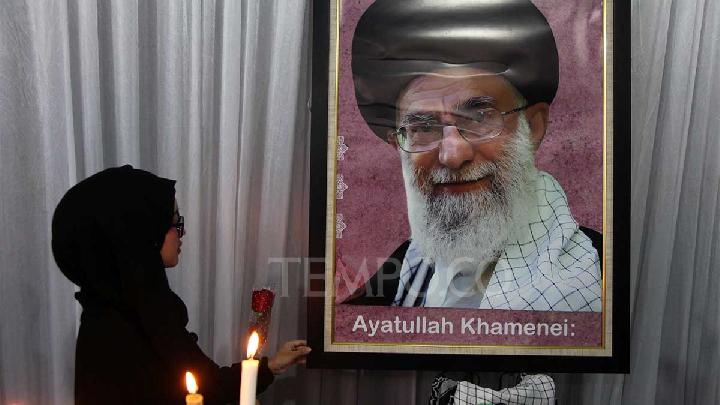
Tempatdonasi.com – Indonesia has confirmed its participation in the funeral of Ayatollah Ali Khamenei, the late Supreme Leader of Iran, as the country prepares to send a high-level delegation to Tehran. The mission will include Indonesian Foreign Minister Sugiono and Ahmad Muzani, the head of the People’s Consultative Assembly (MPR), who are set to depart for Iran on July 9. This decision follows a last-minute adjustment in the original plan, which had initially envisioned only the ambassador to Iran, Rolliansyah Soemirat, representing the nation at the ceremonies.
Sugiono revealed that the Indonesian government had communicated its intention to send the delegation to the Iranian authorities, awaiting final confirmation of the event’s logistics. “We are still waiting for details regarding the time and venue for our participation in the funeral ceremony,” he stated during a press briefing in East Jakarta on July 6. The revised arrangement came as a surprise, with Tehran specifying that only officials holding positions above that of ambassador would be permitted to attend the event.
The change in protocol was announced just one day prior to the funeral’s commencement, on July 2, according to Sugiono. This abrupt update left Indonesia with limited time to adjust its diplomatic representation. Initially, the country had expected the ambassador to lead the delegation, as the invitation was received during preparations for a series of state visits by foreign leaders to Jakarta. However, the requirement for higher-ranking officials to attend necessitated a quick reorganization of the team.
Khamenei, who passed away on February 28 in a joint U.S.-Israeli attack on his residence, was survived by several family members, including his daughter, son-in-law, grandsons, and young granddaughters. His son, Mojtaba Khamenei, sustained injuries in the assault and was later sworn in as Iran’s new supreme leader. The funeral, a significant event for both the nation and its religious community, has drawn widespread attention from global leaders and dignitaries.
The official funeral ceremonies began on Saturday, July 4, at the Imam Khomeini Mosalla Complex in Tehran. This marked the start of a series of tributes that will span the weekend. A spokesperson for Iran’s funeral committee noted that the schedule remains flexible, though the main public ceremony was held on Saturday morning. Sugiono confirmed that Iranian authorities are now ready to welcome the Indonesian delegation, with the event’s timeline finalized after the last-minute directive.
International Participation in the Ceremony
Representatives from multiple countries have already arrived in Tehran to honor Khamenei’s memory. Among the attendees are Dmitry Medvedev, who served as a proxy for Russian President Vladimir Putin, Turkish Vice President Cevdet Yilmaz, and Iraqi President Nizar Amidi. Additionally, Iraq’s Parliament Speaker, Mohammed al-Halbousi, joined the gathering. These leaders, along with others, are participating in the mourning process that reflects Khamenei’s influence across the region.
The funeral processions have been meticulously planned, with a ceremonial route set to extend from Tehran to the holy city of Qom on July 7. From there, the delegation will travel to Iraq, where further memorial events are scheduled in Baghdad, Najaf, and Karbala. These locations hold deep religious significance for Shia Muslims, underscoring the spiritual nature of the proceedings. Political and religious leaders from across the globe are expected to take part in the tributes before the final rites conclude.
Public memorial events on July 4 and 5 were the first steps in the mourning process, drawing large crowds to the Imam Khomeini Mosalla Complex. The main procession on July 6 featured a formal display of respect, with dignitaries lining the streets of Tehran. Sugiono noted that the coordination with Iran has been smooth, despite the tight timeline. The Indonesian delegation’s arrival on July 9 will coincide with the final burial at the Imam Ali Reza Mausoleum Complex in Mashhad, one of the most sacred sites in Shia Islam.
Khamenei’s death has had a profound impact on Iran’s political and religious landscape. As a revered figure, his passing has prompted a nationwide outpouring of grief, with citizens and officials alike participating in the rituals that mark his legacy. The funeral, organized by Iran’s government, has become a symbol of unity and reverence for the late leader. Indonesia’s involvement in the event highlights the country’s diplomatic commitment to maintaining strong ties with Iran, even in the wake of international tensions.
The Indonesian delegation’s presence underscores the importance of regional diplomacy in the Middle East. Sugiono emphasized that the participation of high-ranking officials reflects the nation’s recognition of Khamenei’s contributions to global affairs. “This is a meaningful opportunity to demonstrate solidarity with Iran during a critical period,” he added, highlighting the symbolic weight of the event.
As the funeral schedule progresses, the focus remains on honoring Khamenei’s memory through a combination of public ceremonies and private tributes. The Indonesian government’s decision to send Sugiono and Muzani signals a renewed emphasis on bilateral relations, particularly in light of recent geopolitical developments. The delegation’s arrival in Tehran will be a key moment in this effort, as it underscores Indonesia’s willingness to engage with Iran on a high level.
The funeral has also provided a platform for international dialogue. With leaders from Russia, Turkey, and Iraq joining the procession, the event has fostered connections among nations with diverse political ideologies. Sugiono expressed hope that the gathering will strengthen Indonesia’s ties with these countries, reinforcing the nation’s role as a bridge between different regions. “We aim to use this occasion to deepen our partnerships and discuss shared interests,” he said.
Geni Al Aziz, a contributor to the article, highlighted the significance of the event in shaping the future of Iran’s leadership. The transition from Khamenei to his son Mojtaba Khamenei has been marked by a blend of tradition and modernity, with the funeral serving as a testament to the stability of the country’s political structure. As the final rites unfold, the global community will watch closely to see how the event influences Iran’s next steps.
News of the funeral has been widely covered, with updates from international media outlets like Anadolu. The ceremonies have drawn not only political leaders but also religious figures, emphasizing the spiritual and ceremonial aspects of the event. Sugiono’s presence alongside Muzani adds a layer of national significance, ensuring that Indonesia’s voice is heard in the collective mourning of Khamenei’s legacy.