
Indonesia, Singapore Agree to Build Joint Military Training Facilities
Indonesia and Singapore Set to Enhance Defense Ties with Joint Training Facilities Indonesia Singapore Agree to Build Joint - On July 6, 2026, during a
Indonesia and Singapore Set to Enhance Defense Ties with Joint Training Facilities
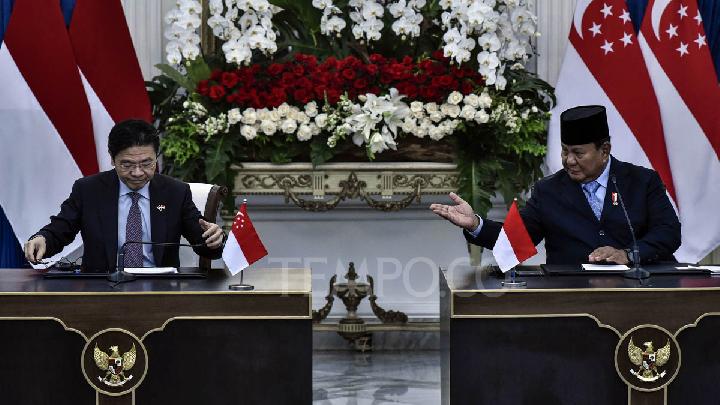
Tempatdonasi.com – On July 6, 2026, during a high-level meeting at Jakarta’s Merdeka Palace, Indonesian President Prabowo Subianto and Singaporean Prime Minister Lawrence Wong unveiled plans to establish cooperative military training facilities. This agreement marks a pivotal moment in bilateral defense collaboration, aiming to deepen strategic partnerships and strengthen regional security frameworks.
Strategic Meeting at Merdeka Palace
The meeting, held in the heart of Jakarta, brought together leaders from both nations to discuss a range of initiatives. Wong emphasized the importance of the joint project, highlighting its potential to foster joint capabilities and mutual trust. Prabowo, meanwhile, underscored the broader implications for Indonesia’s defense modernization efforts, aligning them with Singapore’s advanced military infrastructure.
Military Training Facilities Overview
The proposed facilities will be constructed in two key locations: Baturaja, West Kalimantan, and the Siabu Air Weapons Range. These sites were chosen for their strategic advantages, including proximity to maritime trade routes and access to diverse training environments. The collaboration is expected to facilitate shared exercises, joint logistical support, and synchronized operational planning between the Singapore Armed Forces (SAF) and Indonesia’s National Armed Forces (TNI).
“This initiative will offer valuable opportunities for collaborative training,” Wong stated, “which aims to reinforce bilateral defense ties and enhance regional security.”
Prabowo added that the partnership would not only improve military readiness but also serve as a model for future international defense projects. The facilities are anticipated to play a role in addressing shared challenges, such as maritime defense and counterterrorism, in the Indo-Pacific region.
Energy Collaboration and Cross-Border Projects
Following discussions on defense, the leaders turned their attention to energy cooperation. Wong noted that Middle East conflicts have prompted Singapore to reassess its energy resilience, creating a renewed focus on diversifying energy sources. He pointed to Indonesia’s vast renewable energy potential, which includes solar, wind, and geothermal resources, as a key area for collaboration.
“Indonesia has enormous renewable energy potential,” Wong remarked, “which we aim to harness through shared initiatives.”
Prabowo highlighted the role of BPI Danantara in facilitating cross-border electricity trade, stressing its importance in commercializing energy partnerships. The agreement will enable Indonesia to export surplus power to Singapore, supporting both nations’ energy demands and reducing dependency on fossil fuels.
Project Details and Partnerships
On the same day, Danantara, the Indonesian energy investment firm, signed three memorandums of understanding (MoUs) with Singaporean entities to accelerate the development of cross-border electricity projects. These partnerships will focus on creating a 3.4 gigawatt combined capacity by 2035, a target set to align with both countries’ sustainability goals.
Danantara has entered into agreements with Keppel Electric and Sembcorp Utilities, a subsidiary of Sembcorp Industries, to explore the purchase of low-carbon electricity. Additionally, an MoU with Singapore Energy Interconnection will streamline information exchange and technical cooperation for the expansion of interconnection networks.
“This will provide a clear roadmap for negotiations and discussions among the parties to pave the way for cross-border electricity projects,” Wong said, noting the significance of these partnerships for regional energy integration.
The collaboration is expected to create a framework for long-term energy trade, with the first major project being the development of one of Indonesia’s largest solar power plants in Morowali, Central Sulawesi. Wong revealed that further initiatives will follow, including investments in wind and geothermal energy.
Danantara’s Role in Energy Expansion
Danantara Investment Management (DIM), the firm leading Indonesia’s cross-border energy efforts, has positioned itself as a critical player in the region’s green transition. CEO Rosan Roeslani explained that the electricity exported to Singapore will originate from newly developed generation capacity, separate from domestic supply systems. This ensures that the projects contribute to Indonesia’s green industrialization without compromising local energy needs.
“This project will serve as a catalyst for Indonesia’s green industrialization,” Roeslani said, “with interconnection with Singapore representing a tangible step toward broader strategic transformation.”
The energy interconnection is also seen as a cornerstone for the ASEAN power grid, which aims to unify energy markets across Southeast Asia. Wong highlighted that the collaboration will bolster regional energy resilience, creating a more interconnected and sustainable power infrastructure.
Broader Implications for Regional Cooperation
The joint military and energy initiatives underscore a dual focus on security and sustainability in Indonesia-Singapore relations. By combining military expertise with renewable energy innovation, the two nations seek to address both immediate and long-term challenges. This approach reflects a strategic shift toward multilateral partnerships, where shared infrastructure and resource management play central roles.
Experts suggest that such collaborations could set a precedent for other ASEAN countries to follow. The military facilities in Baturaja and Siabu may become hubs for regional training programs, while the energy projects could reduce carbon footprints and create new economic opportunities. Both leaders expressed confidence in the partnership’s ability to deliver tangible benefits for their citizens and strengthen the region’s collective security.
Future Prospects and Regional Impact
With the 3.4 gigawatt target in mind, the energy projects are expected to catalyze investment in Indonesia’s renewable sector. Wong emphasized that Singapore’s interest in these ventures aligns with its goal to transition to cleaner energy sources, while Indonesia gains access to international capital and technology.
“This will also become an important foundation for the ASEAN power grid,” Wong said, “strengthening energy resilience across our region.”
Prabowo added that the military training facilities will complement these efforts, ensuring that both defense and energy sectors contribute to national and regional stability. As the projects progress, they may also foster cultural and diplomatic exchanges, further embedding the two nations in a cohesive regional framework.
Conclusion: A Synergistic Approach to Partnership
The agreements announced on July 6, 2026, represent a significant leap in Indonesia-Singapore collaboration. By integrating military training with energy infrastructure, the two countries are setting a model for how strategic alliances can address multiple challenges simultaneously. This dual focus on security and sustainability not only enhances bilateral relations but also positions both nations as leaders in regional development.
As Danantara and Singapore Energy Interconnections move forward with their projects, the success of these initiatives will hinge on efficient implementation and mutual trust. The joint facilities and energy networks are expected to lay the groundwork for future cooperation, ensuring that Indonesia and Singapore remain at the forefront of regional progress.
Further Reading
For more insights into the energy collaboration between Indonesia and Singapore, readers can explore the recent MoUs signed by Danantara and Singaporean firms. These agreements are anticipated to play a vital role in shaping the future of cross-border energy trade and military cooperation in the region.