
Never Let Independent Power Plants Die
Facilities Face Abandonment Crisis Never Let Independent Power Plants Die - Despite their potential, numerous community-driven renewable energy installations
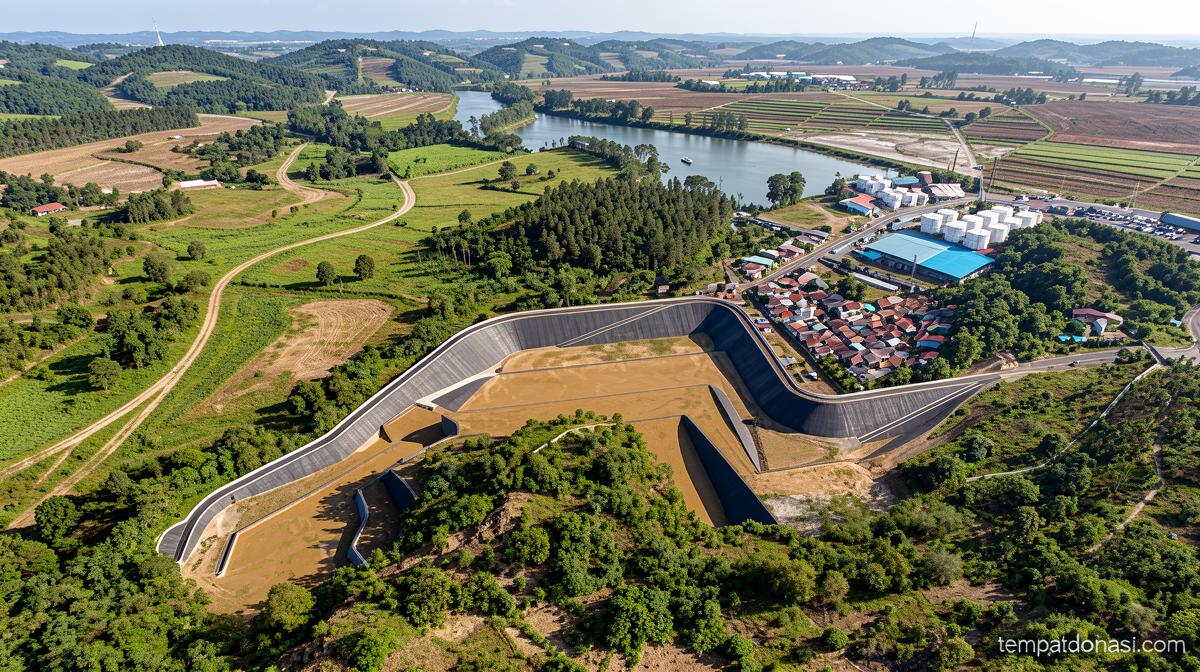
Community Renewable Energy Facilities Face Abandonment Crisis
Tempatdonasi.com – Despite their potential, numerous community-driven renewable energy installations across Indonesia are struggling to survive. This decline stems largely from insufficient commitment by both the government and the State Electricity Company, commonly known as PLN. These once-thriving facilities now exist in a precarious state—alive but barely holding on. According to recent assessments, over thirty power generators operated by local communities are currently experiencing difficulties. While some continue functioning, others have been completely left to deteriorate. Additionally, several facilities that previously supplied power to PLN’s network have seen their purchasing agreements lapse.
A Case of Unpaid Electricity
The situation affecting Jasa Peduli Kasih Cooperative illustrates this broader problem. Operating a micro-hydro installation in Kamanggih Village, located in East Sumba within East Nusa Tenggara province, this cooperative has faced considerable challenges. For an entire three-year period, electricity generated by their facility has flowed continuously into PLN’s distribution network without receiving any compensation. The cooperative’s leadership now confronts a difficult dilemma: disconnecting the supply would disrupt power for local residents, yet maintaining operations means absorbing all costs independently.
Contract Non-Renewal Creates Financial Strain
Research conducted by the Institute for Essential Services Reform revealed comparable difficulties affecting multiple community-operated power stations. Initially, PLN purchased electricity produced by these grassroots generators. However, once the company’s infrastructure extended into villages and households transitioned to becoming direct PLN customers, the purchasing arrangements were not extended. Consequently, installations that had previously served as the primary electricity source for entire villages experienced significant revenue losses.
The underlying issue is not the physical expansion of PLN’s network itself. Rather, institutional failures have prevented the creation of mechanisms ensuring community generators remain integrated within the national electricity framework. Assets constructed through state allocations, international grants, or local contributions have consequently lost their intended purpose and remain underutilized.
International Models Offer Solutions
Experiences from various nations show that national grids need not eliminate communal power generation. Small-scale installations can successfully connect to larger networks, evolving from local village providers into renewable energy suppliers. State utilities acquire this electricity through standardized contracts and streamlined procedures. Unfortunately, Indonesia has yet to adopt this approach. Community-based renewable energy facilities lack clear positioning within the 2025–2034 Electricity Supply Business Plan, known locally as RUPTL. Without definitive interconnection guidelines and secured purchasing commitments, these installations face uncertain futures determined individually rather than systematically.
Meanwhile, substantial opportunities exist for large-scale renewable initiatives and private sector participants. The ongoing energy transition demonstrates considerably more favor toward major capital investments than toward communities that championed energy independence decades earlier. Many communal installations originated from government initiatives and were constructed utilizing state budgets or assistance from international donor organizations. Permitting these facilities to decline represents a waste of accumulated investment and collective community effort.
Policy Gaps Persist
Even the Ministry of Energy and Mineral Resources’ Energy Patriot Program does not adequately address this challenge. Although mentorship initiatives and energy potential mapping exercises provide value, operational facilities require regulatory frameworks guaranteeing their continued viability and ability to sell generated power.
Community generators should not be viewed as competitors to PLN. Their existence actually enhances local power reliability and provides alternative energy sources during main grid disruptions. Recent occurrences of repeated blackouts across multiple regions highlight the critical importance of an energy system that does not depend exclusively on a single major infrastructure provider.
The government must incorporate community-based renewable energy installations into comprehensive national electricity planning. PLN similarly needs to establish interconnection standards and develop specialized power purchase agreements tailored for small-scale operations. Ultimately, the public deserves recognition as legitimate electricity producers within the renewable energy sector.
Community generators are not competitors to PLN. Their presence actually strengthens local power supplies and serves as an alternative energy source when the main grid experiences disruptions.
Read the Complete Story in Tempo English Magazine