
Purbaya’s Goals for the Rp400tn SAL Bank Transfer
Minister Purbaya Outlines Vision for Rp400 Trillion Liquidity Injection into Banking Sector Purbaya s Goals for the Rp400tn - Finance Minister Purbaya Yudhi
Minister Purbaya Outlines Vision for Rp400 Trillion Liquidity Injection into Banking Sector
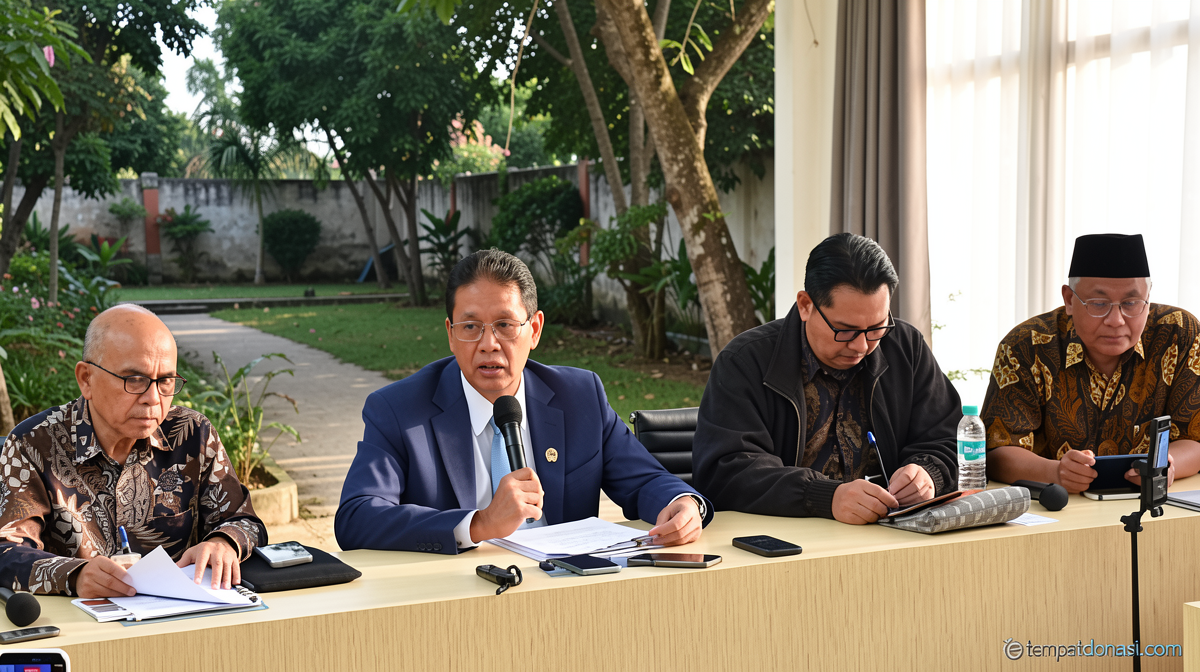
Tempatdonasi.com – Finance Minister Purbaya Yudhi Sadewa has articulated a comprehensive strategy centered on channeling Rp400 trillion in excess budget balance funds from Bank Indonesia directly into the domestic banking system. This substantial capital movement aims to create additional breathing space for financial institutions to expand their lending activities, thereby fostering renewed economic expansion across Indonesia.
A New Approach to Economic Stimulation
During a public lecture held at the State Finance Polytechnic STAN in Jakarta on Friday, July 10, 2026, the minister emphasized that this strategic placement of funds represents a fundamental shift in how the government manages economic momentum. Rather than relying exclusively on traditional fiscal mechanisms, Purbaya highlighted cash management as a powerful instrument capable of revitalizing broader economic activity.
“So I placed Rp400 trillion in the banking sector, which will strengthen liquidity conditions so that they can provide credits and the economy can grow again,” he explained during the event, as reported in an official press release.
The timing of this intervention proved particularly significant. Purbaya noted that the fund placement occurred during a period when economic activities experienced a noticeable slowdown throughout May and June of this year. By injecting liquidity precisely when market conditions warranted it, the government sought to counteract downward pressures on growth.
Complementing State Expenditure
According to the Finance Minister, this cash management strategy serves as a vital complement to conventional state expenditures outlined in the State Revenue and Expenditure Budget, known locally as APBN. He pointed out that government spending traditionally accounts for only approximately 7 to 10 percent of national economic activities. Consequently, the remaining 90 percent—driven primarily by private sector engagement—remains largely untapped potential.
I see that cash management, the government’s financial management, can significantly influence the Indonesian economy. It can revive 90 percent of the economy, in addition to direct expenditures that contribute 7-10 percent, he stated during his remarks.
This new approach represents a deliberate effort to optimize how state cash is managed, ensuring that the majority of economic activity receives adequate support through improved financial mechanisms rather than relying solely on direct government spending.
Strengthening Monetary Foundations
The capital injection into the banking sector carries multiple benefits beyond simply increasing available credit. The Finance Minister explained that this fund placement simultaneously increases the monetary base, referred to as M0, which supports more effective transmission of monetary policy. Importantly, this process maintains the institutional independence of Bank Indonesia while achieving broader economic objectives.
Looking ahead, Purbaya indicated that the government would no longer depend exclusively on state expenditures as the primary engine for economic growth. Instead, cash management would become an integral component of fiscal policy, offering greater flexibility and responsiveness to changing economic conditions.
So, in the future, fiscal (policy) is not only about government spending as it can directly influence the economy with better cash management, he emphasized during a press conference at the Ministry of Finance office on Friday, June 26, 2026.
Evolution of the SAL Fund Strategy
The current Rp400 trillion arrangement builds upon an earlier initiative. Purbaya initially began transferring approximately Rp200 trillion in government funds from Bank Indonesia to state-owned banks on September 12, 2025. As the maturity date for these funds approached, widespread reports emerged suggesting that the SAL funds would be gradually withdrawn from the banking system.
The state treasurer confirmed that the phased withdrawal was indeed underway. However, following consultations with leaders of the Association of State-Owned Banks, known as Himbara, Purbaya made the decision to reverse course and inject additional capital into the financial system.
There is still Rp170 trillion left there, so I returned it to bring it back to Rp200 trillion for the long term, added another Rp100 trillion for perhaps three to four months, and then added another flexible Rp100 trillion, he detailed during his explanation.
This layered approach demonstrates the government’s commitment to maintaining adequate liquidity levels while preserving flexibility to adjust based on evolving economic needs. The combination of long-term placement, medium-term additions, and flexible components creates a robust framework for supporting banking sector stability and credit expansion.
As Indonesia navigates its economic trajectory, this innovative approach to cash management signals a departure from conventional fiscal strategies, positioning the government to harness the full potential of private sector activity while maintaining strong monetary foundations through coordinated financial management.