
How Did China Overtake US in Global Favorability After 20 Years?
urpasses America in Worldwide Favorability Ratings How Did China Overtake US in Global - For an extended period, the United States maintained a more positive
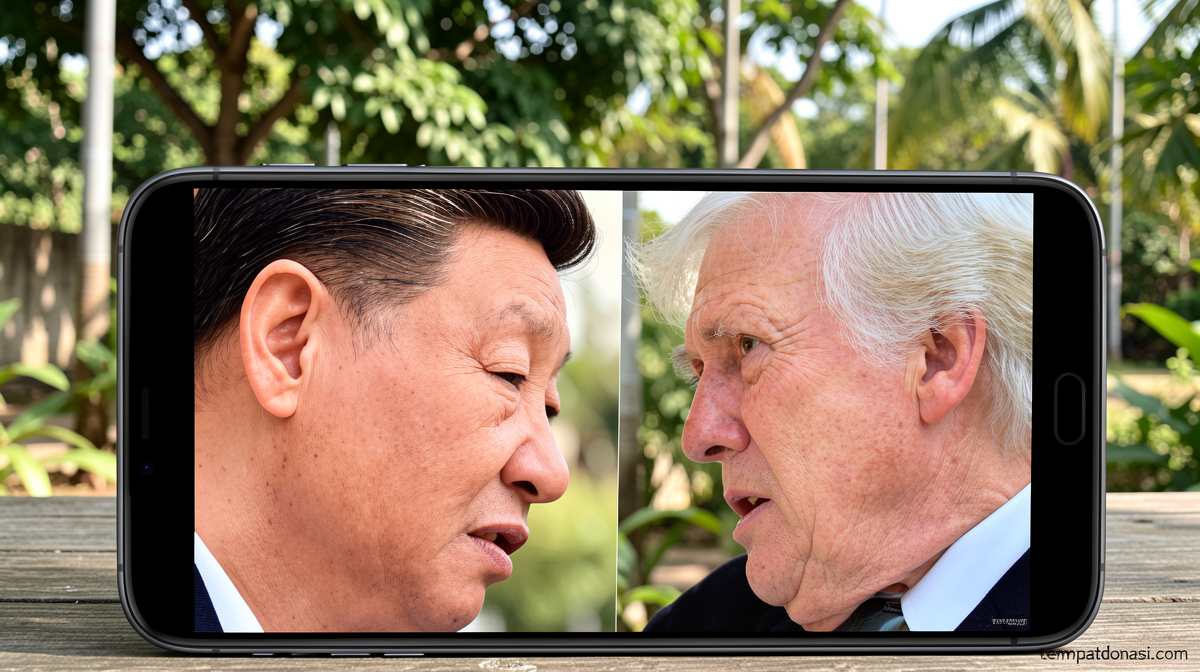
Shifting Global Perceptions: China Surpasses America in Worldwide Favorability Ratings
Tempatdonasi.com – For an extended period, the United States maintained a more positive international reputation compared to China. Nevertheless, recent findings from the Pew Research Center reveal a notable transformation in global sentiment, with Beijing now receiving more favorable assessments than Washington for the first time in approximately twenty years. According to a CNA report published on Thursday, July 16, citizens across 25 of 36 surveyed nations and territories express greater optimism toward China than toward the United States. This group encompasses Canada, Mexico, and numerous prominent European nations. Conversely, merely six countries continue to favor the American position over China’s. The investigation additionally uncovered that participants in 22 of the 36 nations possess stronger confidence in Chinese President Xi Jinping compared to U.S. President Donald Trump. These nations include Canada, Mexico, France, Germany, and the United Kingdom. Despite this shift, trust in both leaders remains modest across many regions.
Understanding the Transformation in Global Opinion
“This represents the inaugural occasion in approximately two decades of Pew tracking worldwide attitudes that China receives more positive evaluations than the United States,” explained Laura Silver, who serves as director of Global Attitudes Research at Pew and contributed as one of the study’s authors. Silver observed that perspectives toward Beijing and Washington had occasionally aligned in previous eras, yet China had never previously achieved ratings substantially exceeding those of the U.S. She attributed this change to diminishing recollections of the COVID-19 pandemic alongside deteriorating international assessments of America. “There existed a genuine connection between the war’s outbreak and the perception that the US is not actively contributing to peace and stability, resulting in diminished confidence in Donald Trump,” she noted. Silver further emphasized that conflicts with traditional allies, Trump’s statements concerning Greenland and Canada, alongside American approaches to Middle Eastern disputes, have collectively weakened international backing for Washington. “The United States has undertaken considerable global engagement over recent months and years that fails to register positively on the international stage,” she commented. In contrast, China seems to have gained advantages from both declining pandemic-related criticism and favorable comparisons with America. “Compared to other nations, China is increasingly viewed as a dependable partner. It is more frequently recognized as contributing to worldwide peace and stability,” Silver stated.
Allies Reassessing Their Positions
Public sentiment has transformed considerably within several American partner nations, with Canada showing particularly dramatic changes. The investigation revealed that merely 33 percent of Canadians currently maintain favorable opinions of the United States, representing a decline from 57 percent recorded in 2023. Within the identical timeframe, positive assessments of China climbed from 14 percent to 44 percent. Multiple European nations, encompassing France, Germany, Spain, Italy, Sweden, and the Netherlands, have similarly grown less enthusiastic about American relations. Within the United Kingdom, where approximately six out of ten individuals viewed the U.S. favorably in 2023, respondents now perceive China and the United States as equally positioned. Three years prior, America held a 32-percentage-point lead over China.
Nations Maintaining American Preference
Among the six countries continuing to favor the United States over China, Israel demonstrates the strongest preference, with roughly eight out of ten respondents expressing positive views of the U.S., compared to merely 19 percent for China. Additional nations maintaining American preference include Japan, India, South Korea, the Philippines, and Poland, though favorable opinions of Washington have decreased in numerous of these locations as well. The Pew analysis additionally indicated that America continues to outperform China regarding perceptions of individual freedom respect, although this distinction has contracted substantially since 2021. Researchers attribute this narrowing primarily to increasing doubt concerning whether the American government genuinely honors the personal liberties of its own citizens. The comprehensive survey encompassed more than 42,000 participants across 35 countries, supplemented by respondents from the West Bank and East Jerusalem. Statistical margins of error varied between 2.3 and 5.5 percentage points depending on the specific nation surveyed.