

Minister Pigai Challenges Komnas HAM’s Human Rights Violation Findings in MBG Program
Minister Pigai Responds to Human Rights – On June 17, 2026, Indonesian Human Rights Minister Natalius Pigai voiced his disagreement with the National Commission on Human Rights (Komnas HAM) regarding claims of human rights violations in the implementation of the Free Nutritious Meal (MBG) program. The controversy has sparked debate about the alignment of Komnas HAM’s findings with the principles of human rights, as Pigai emphasized the importance of context in assessing such issues.
Context of the MBG Program and Initial Findings
Komnas HAM commissioner Uli Parulian Sihombing had previously announced on June 15 that the commission had identified potential human rights violations during the MBG program’s rollout. This flagship initiative, part of President Prabowo Subianto’s administration, aims to provide nutritious meals to underprivileged communities. Sihombing outlined eight key concerns, including the excessive number of beneficiaries and unclear institutional responsibilities.
“Based on these initial findings, Komnas HAM found strong indications of human rights violations in the implementation of the MBG project,” said Uli.
Pigai, however, contested Komnas HAM’s stance, arguing that their statement was misaligned with the actual stage of the MBG program. He pointed out that the project is still in the construction phase, which means its evaluation should focus on the process rather than premature conclusions. “The assessment of human rights violations should occur once the program is fully operational,” he asserted.
Relevance of the Statement and Human Rights Principles
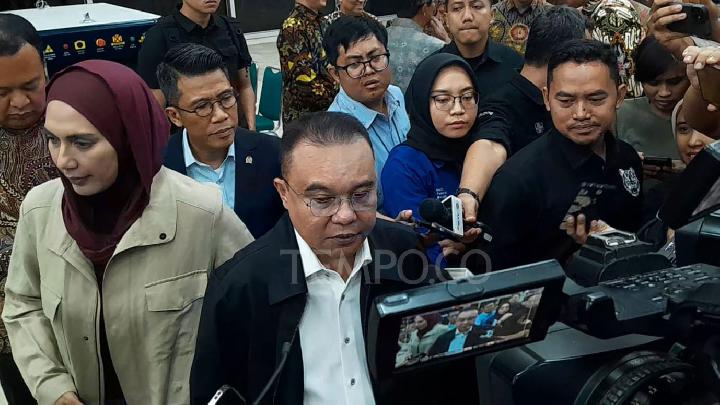
During a meeting at the Parliament Complex in Jakarta on June 17, Pigai criticized Komnas HAM’s findings as irrelevant to the current phase of the MBG program. He claimed that the commission had not clearly defined the nature of the violations, instead labeling them as criminal or managerial issues without sufficient evidence. “That’s why I said Komnas HAM doesn’t understand human rights principles,” Pigai remarked.
He further highlighted that human rights violations require a structured approach, grounded in established mechanisms and legal frameworks. According to Pigai, the current stage of the MBG program—still under development—does not warrant a definitive classification of rights breaches. “Determining whether something violates human rights demands a step-by-step evaluation,” he explained, stressing the importance of waiting for the project to reach its final stage before conducting a comprehensive review.
Addressing Specific Concerns
Komnas HAM’s report focused on several issues, including the large number of beneficiaries and ambiguities in authority division. Uli Parulian Sihombing noted that the MBG program could have been more effective if it targeted specific groups, such as those in the 3T (terpencil, terisolasi, terbelakang) areas and the 3B (butuh bantuan, butuh bantuan, butuh bantuan) groups, who are most in need. “The program’s application would be more targeted and efficient if it prioritized these vulnerable populations,” he stated.
“One of them is the excessively large number of beneficiaries. Uli said that the MBG application would be more effective and targeted if it focused on specific groups, such as those in the 3T areas and the 3B groups, who are in great need of nutritious food.”
Pigai acknowledged the challenges in the MBG program but disagreed with the interpretation of these issues as human rights violations. He pointed out that while incidents like poisoning were noted, they did not constitute a systemic breach of rights. “Poisoning is not part of the construction phase but a mistake in implementation that can be corrected gradually,” he clarified.
He also critiqued the composition of Komnas HAM, suggesting that its members lacked the necessary expertise in human rights. “How come the commissioners are not from a human rights background?” he questioned, implying that the commission’s understanding of the subject was incomplete. This critique underscored his argument that the findings were premature and not rooted in a thorough analysis of the program’s progress.
Implications of the Dispute
The debate over Komnas HAM’s findings highlights the differing perspectives on how to evaluate the MBG program’s impact. While Komnas HAM emphasizes the need for accountability, Pigai argues that the program’s developmental phase requires a more nuanced approach. He stressed that the goal of the MBG initiative is to provide essential services to those in need, and premature accusations could overshadow its objectives.
“In the context of the MBG dispute, Komnas HAM should issue a statement that identifies criminal violations, mismanagement, or misleading practices during its implementation,” Pigai reiterated. “Otherwise, their findings appear to be more about political statements than factual assessments.”
This disagreement has intensified discussions about the role of Komnas HAM in monitoring public programs. Critics argue that the commission’s findings could influence public perception and policy decisions, while supporters defend its right to highlight concerns even during the early stages of implementation. Pigai’s comments, however, emphasize the need for a balanced evaluation that considers the program’s current status and future potential.
As the MBG program continues to expand, the controversy surrounding its human rights implications is likely to persist. The commission’s initial findings, though well-intentioned, may face scrutiny for their timing and scope. Meanwhile, Pigai’s defense of the program’s progress serves as a reminder of the importance of context in assessing public initiatives.
Read: Why Can’t Prabowo’s MBG Program Be Halted, According to the Palace?
Click here to get the latest news updates from Tempo on Google News.