Global Oil Prices Plunge Below US$80: What Happens?
lobal Oil Prices Plunge Below US$80: What Happens? Global Oil Prices Plunge Below US 80 - On June 25, 2026, the global oil market experienced a significant
Global Oil Prices Plunge Below US$80: What Happens?
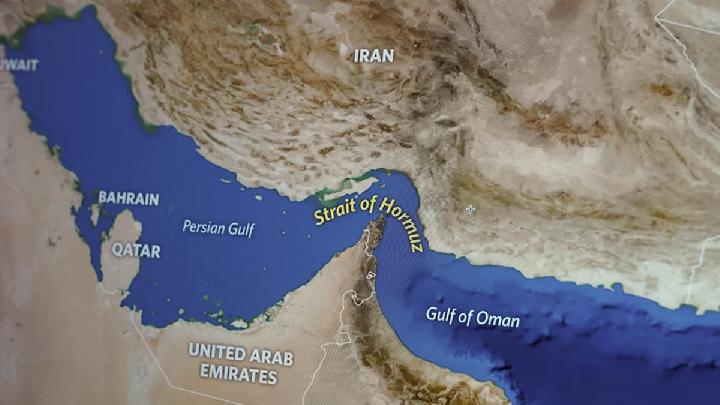
Tempatdonasi.com – On June 25, 2026, the global oil market experienced a significant downturn as prices fell below the US$80 mark. This shift was primarily driven by the reopening of the Strait of Hormuz, a critical shipping route that had previously been a source of tension. The easing of disruptions in the waterway allowed for smoother oil transportation, which immediately impacted market dynamics. According to data from Trading Economics, the price of crude oil stood at US$69 per barrel on that day, while Brent crude oil remained at US$72 per barrel. This development marks a notable correction in a market that had been fluctuating due to geopolitical uncertainties and supply-demand imbalances.
Expert Insights on the Price Drop
Ibrahim Assuaibi, Director of PT Traze Andalan Futures, provided a detailed explanation of the factors behind the decline. In an official statement, he emphasized that the normalization of traffic through the Strait of Hormuz played a pivotal role in the price drop. “The reopening of the waterway has restored confidence in the supply chain,” Assuaibi noted. “This has led to a substantial decrease in crude oil prices as market participants anticipate stable production levels.” His analysis highlights the interconnected nature of global oil markets, where regional events can have far-reaching consequences.
“With the opening of the Strait of Hormuz, smooth transport has led to a significant drop in crude oil prices,” he said.
Assuaibi further elaborated that the price decline is compounded by broader market conditions. He pointed out an increase in global oil supply, which has risen to 103.3 million barrels per day from the prior level of 103.1 million. This growth in supply, coupled with a slight reduction in demand, has created a surplus that pressures prices. The demand figure, which had previously hovered around 100 million barrels per day, has now dipped below that threshold, adding to the downward trend.
Market Implications and Future Outlook
The drop in oil prices has sparked discussions about its potential effects on various sectors. Assuaibi forecasted that prices could decrease further to US$65 per barrel in the coming week, a projection he believes will persist beyond July. Such a decline could lead to lower energy costs for consumers and businesses, but it may also challenge oil-producing nations that rely heavily on stable revenue streams. The expert warned that the situation requires careful monitoring, as market volatility can quickly shift with new developments.
“Ibrahim projected that crude oil prices could drop to US$65 per barrel next week, a condition that he expects to continue past July.”
Additionally, the price drop has prompted calls for policy adjustments. Assuaibi urged the government to consider measures to reduce the cost of non-subsidized fuel. “Because the price has fallen below the state budget benchmark of US$70 per barrel, despite the continued weakening of the rupiah,” he argued. This recommendation underscores the need for alignment between market realities and domestic economic strategies, particularly in regions where fuel prices heavily influence household budgets and industrial activity.
Broader Economic Impact
The fluctuations in oil prices have broader implications for the global economy. Lower oil prices can stimulate economic growth by reducing transportation and production costs, but they can also strain oil exporters, many of which depend on consistent revenue to fund public services and infrastructure projects. For instance, countries in the Middle East, which are major oil producers, may face challenges in maintaining their economic stability if prices remain low for extended periods. This situation could lead to adjustments in energy policies, such as increased investment in renewable sources or subsidies to offset the impact on consumers.
On the other hand, oil-importing nations like Indonesia may benefit from the price drop, as it eases the burden on their trade balances and consumer spending. However, the long-term effects depend on how the market evolves. Assuaibi’s projection suggests that the current trend is likely to continue, but it also depends on factors such as OPEC production decisions, geopolitical stability, and economic growth in key consumer regions. For example, if demand in Asia and Europe remains steady, the oversupply issue might ease, potentially stabilizing prices.
Moreover, the weakening of the rupiah has added to the complexity of the situation. While the price of crude oil is below the US$70 benchmark, the depreciation of the currency could still impact the domestic economy. This dual challenge—low oil prices and a weak currency—requires coordinated efforts to mitigate its effects. Assuaibi’s statement reflects the importance of balancing external market forces with internal economic conditions to ensure sustainable growth.
Historical Context and Market Trends
Historically, the Strait of Hormuz has been a focal point of global oil trade, with over 20% of the world’s oil passing through it daily. The waterway’s reopening after a period of uncertainty has not only restored confidence in supply but also highlighted the market’s sensitivity to geopolitical risks. This event serves as a reminder of how critical infrastructure can influence energy markets, even in the absence of direct conflict. Investors and analysts are now closely watching whether this trend signals a long-term shift or a temporary correction.
Looking at the broader market, the price drop aligns with recent patterns of volatility. In 2025, the oil market had seen similar fluctuations due to factors such as increased production from the U.S. shale industry and slowing demand from China and India. The current situation, however, is unique in its timing and the specific role of the Strait of Hormuz in accelerating the decline. Analysts are divided on whether this is a sign of a deeper market correction or a seasonal adjustment. Nevertheless, the consensus is that the combination of supply growth and demand contraction is a key driver.
The next few weeks will be crucial in determining the trajectory of oil prices. If the supply surplus continues and demand remains stagnant, prices may fall further, potentially reaching the US$65 level Assuaibi mentioned. Conversely, if geopolitical tensions resurface or OPEC decides to cut production, the market could stabilize or even rebound. For now, the focus remains on the reopening of the Strait of Hormuz and its impact on global energy markets. As the world watches the oil price trend, the interplay between supply, demand, and geopolitical factors will shape the outcome in the coming months.
Meanwhile, the article “Which Countries Depend on Middle East Oil the Most?” offers additional insights into the regional dynamics of oil dependence. It explores how nations in Asia, Africa, and Europe rely on Middle Eastern oil supplies, making the Strait of Hormuz a vital artery for their economies. This context reinforces the significance of the current price drop, as it affects not only the global market but also the livelihoods of countries with deep ties to the region’s production.
For investors, the declining prices present both opportunities and risks. While cheaper energy costs can boost economic activity, they also reduce profit margins for oil companies. The long-term outlook for the market will depend on how producers respond to the price drop, whether through increased output or cost-cutting measures. In the meantime, consumers may enjoy lower prices at the pump, but the challenge for policymakers is to ensure that this benefit translates into broader economic resilience.
As the world grapples with these changes, the oil market continues to be a barometer of global economic health. The recent plunge below US$80 per barrel underscores the delicate balance between supply, demand, and geopolitical stability. With the Strait of Hormuz now open and the market adjusting to new conditions, the focus shifts to how these factors will influence the path of oil prices in the months ahead.