Police Reopen Roadblocks After Student Protest in Central Jakarta
onstrations Conclude in Central Jakarta Police Reopen Roadblocks After Student Protest - On the evening of June 12, 2026, law enforcement in Central Jakarta
Police Lift Roadblocks as Student Demonstrations Conclude in Central Jakarta
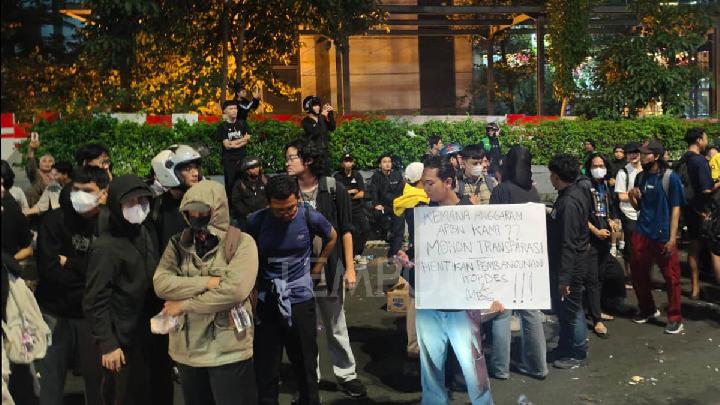
Tempatdonasi.com – On the evening of June 12, 2026, law enforcement in Central Jakarta, specifically the Dukuh Atas area along M.H. Thamrin Street, began dismantling temporary barriers that had been erected earlier in the day to halt student protesters from advancing toward the Hotel Indonesia (HI) Roundabout. The roadblocks, which had restricted traffic for several hours, were removed around 8:45 p.m. WIB, marking the end of a protest that had drawn significant attention from both local and national observers.
The student-led demonstration, which had initially gathered momentum in Semanggi, faced challenges when their vehicles were blocked from proceeding further toward the HI Roundabout. This prompted the organizers to shift tactics, setting up barricades to control the flow of demonstrators. By the time the police lifted the barriers, the streets had largely cleared, though a smaller group of protesters remained at the scene to voice their concerns.
Demands for Policy Change
The protest, under the banner “Towards a Bankrupt Indonesia,” was organized by a coalition of university student groups. Participants carried posters criticizing government policies, particularly the Free Nutritious Meals program (MBG) and the Red and White Village Cooperative initiative. These programs, which had been implemented to address food insecurity and rural development, were seen by some as inefficient or mismanaged. The demonstrators also called on passing motorists to honk their support, a symbolic gesture aimed at amplifying their presence in the public eye.
“We want the government to recognize the economic struggles we face,” said Tama, a motorcyclist who joined the protest despite the late hour. “Fuel prices have skyrocketed, and we can’t afford to ignore this anymore.”
The students’ demands extended beyond immediate economic issues. They urged an end to what they described as wasteful state spending, a reduction in the prices of essential goods and fuel, the termination of the MBG and village cooperative programs, and a reevaluation of the military’s role in civilian governance. These calls reflected a broader frustration with policies perceived as favoring elites while neglecting the common populace.
Broader Public Involvement
While the protest was primarily student-driven, it drew participation from other segments of society. Workers, including those from the informal sector, and online motorcycle taxi drivers were among those who gathered at the site. This cross-section of the population underscored the widespread concern over rising living costs and economic inequality. According to Tama, the decision to join the demonstration was influenced by the escalating cost of fuel, a key issue that resonated with both students and laborers.
As the police cleared the roadblocks, the mood in the area shifted. Although some protesters dispersed, others opted to stay behind, allowing authorities to monitor their activities. This decision was likely a strategic move to ensure their message was heard even after the initial confrontation. The presence of police throughout the night provided a sense of security for the remaining demonstrators, though tensions lingered as they continued to express their grievances.
East Jakarta Demonstrations
Meanwhile, in East Jakarta, a separate wave of student protests took place in the Rawamangun area, where hundreds of participants from Jakarta State University (UNJ) marched under the banner “UNJ Against Alliance.” The demonstration, which began at the campus, traversed the neighborhood, carrying banners and delivering speeches that outlined their key demands. These included measures such as strengthening the rupiah, reducing the cost of fuel and staple items, and ensuring that 20% of the state budget was effectively allocated to education.
The protest highlighted a growing sense of urgency among young Indonesians. With ten specific demands, the students sought to address a range of issues, from economic stability to social equity. Their focus on education, the economy, and social justice reflected a desire for systemic change, rather than isolated reforms. Action coordinator Ronggo Dharma emphasized that the coalition would continue to push for these demands unless the government demonstrated a willingness to respond.
Context and Implications
The protests in Central and East Jakarta were part of a larger movement that had been gaining traction over recent months. The student groups, which had formed a unified front, were inspired by a combination of economic hardship and political disillusionment. The MBG program, while intended to provide free meals to underprivileged students, had become a symbol of government inefficiency. Similarly, the village cooperative initiative, aimed at empowering rural communities, was criticized for its lack of tangible benefits.
As the roadblocks were removed and traffic resumed, the event marked a significant moment in the ongoing dialogue between youth activists and policymakers. The police’s decision to reopen the area signaled a temporary resolution, but the underlying issues remained unresolved. Demonstrators expressed hope that the government would take their demands seriously, while also acknowledging the need for sustained pressure to achieve meaningful change.
Ronggo Dharma, speaking at the UNJ protest, stated that the coalition would remain active regardless of the government’s response. “We are not here to disrupt, but to demand accountability,” he said. “If our voices are ignored, we will not stop until the policies that hurt the people are reformed.”
The events of June 12, 2026, demonstrated the power of collective action in shaping public discourse. With both students and workers participating, the protests transcended traditional boundaries, uniting diverse groups under a common cause. As the night wore on, the energy of the demonstrators remained high, with many believing that their efforts could catalyze broader societal shifts.
Local authorities, while acknowledging the protesters’ right to express their views, emphasized the importance of maintaining order. The lifting of the roadblocks was described as a balanced approach to address both the demonstrators’ concerns and the city’s transportation needs. However, the protest’s organizers noted that the government’s response would determine whether the movement gained momentum or faded into obscurity.
In the aftermath, the focus shifted to the next steps. The coalition planned to organize follow-up events, including public forums and media campaigns, to keep the conversation alive. Supporters from both regions expressed optimism that the protests would lead to concrete policy changes, while critics warned of the potential for unrest if the government failed to act.
With the roadblocks gone and the protesters still present, the night of June 12 became a turning point in the movement. The students’ resolve and the public’s solidarity highlighted the growing influence of youth-led activism in Indonesia. As the sun set over Central Jakarta, the echoes of their demands lingered, reminding all that the fight for economic and social justice was far from over.
Hendrik Yaputra and Epi Susanti contributed to this report. For more updates, visit Tempo’s Google News page.