Indonesia Teams Up With Pindad to Produce 3-Kg CNG Cylinders
Indonesia's Ministry of Energy and Mineral Resources has entered into a strategic collaboration with state-owned defense manufacturer PT Pindad to produce
Indonesia Teams Up With Pindad to Produce: Indonesia and Pindad Forge Partnership for Compact CNG Cylinder Production Tempatdonasi.com – Indonesia's
Indonesia and Pindad Forge Partnership for Compact CNG Cylinder Production
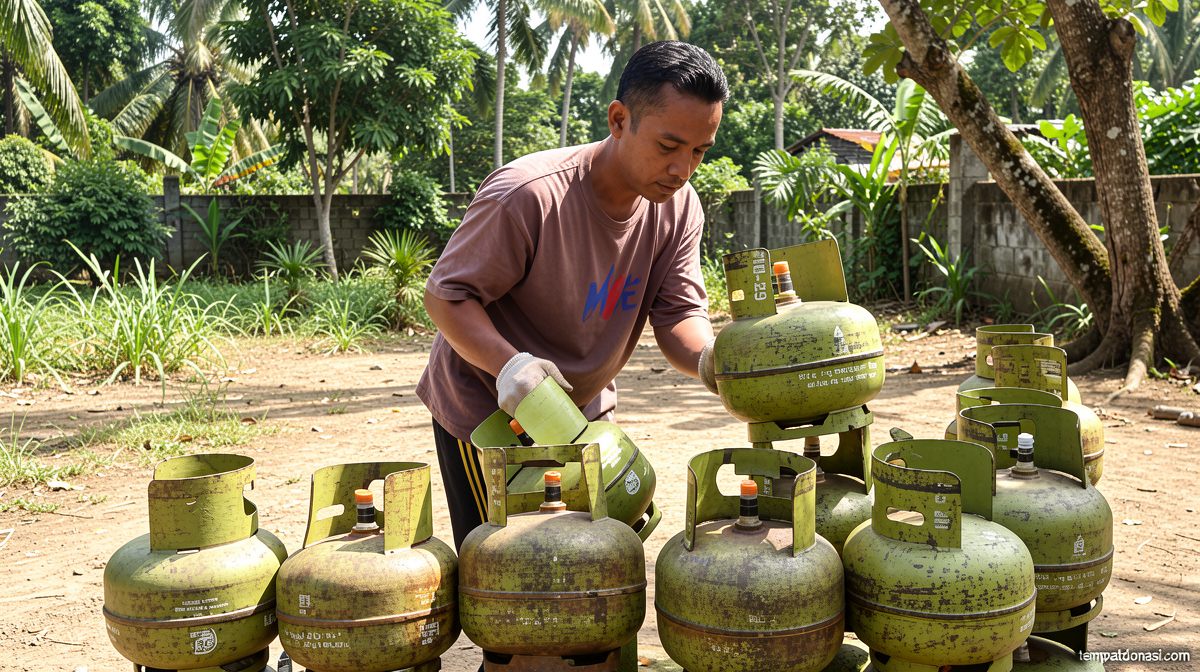
Tempatdonasi.com – Indonesia’s Ministry of Energy and Mineral Resources has entered into a strategic collaboration with state-owned defense manufacturer PT Pindad to produce smaller compressed natural gas cylinders. This initiative, announced by Energy and Mineral Resources Minister Bahlil Lahadalia, aims to revolutionize how natural gas is distributed and utilized across the archipelago.
Partnership Announcement and Timeline
The minister revealed this development during the opening ceremony of the Global Hydrogen Ecosystem Summit & Exhibition 2026, which took place in Jakarta on Tuesday. According to Minister Bahlil, the domestic manufacturing capacity will significantly increase once the prototype validation phase currently underway in China concludes successfully.
“We will collaborate with Pindad later. Once (the trials in China) are completed there, we will take further action,” Bahlil said.
Laode Sulaeman, who serves as the Director General of Oil and Gas within the ministry, provided additional details regarding the testing schedule. He confirmed that the prototype samples of the 3-kilogram CNG cylinders are anticipated to finish their evaluation period in China by the conclusion of July. Following this milestone, the cylinders will be transported to Indonesia’s Oil and Gas Testing Center, known locally as Lemigas, where they will undergo comprehensive safety certification procedures.
Pilot Programs and Regional Implementation
After securing the necessary certifications, the government intends to launch the 3-kg CNG canisters through regional pilot initiatives. These trials will initially target metropolitan areas, with West Java being considered as a primary location for testing.
“The trials will be in major cities first, perhaps West Java,” Laode stated, adding that public trial schemes are currently being finalized to begin next month with a focus on safety standards.
The pilot programs will prioritize establishing robust safety protocols before any broader rollout. This cautious approach ensures that both consumers and commercial operators can trust the new cylinder design under various operating conditions.
Technical Challenges and Innovation
While compressed natural gas has already found applications in commercial hospitality venues and government programs such as the Free Nutritional Meal initiative, its deployment has traditionally relied on much larger containers. Historically, the industry has utilized canisters ranging from 10 to 20 kilograms in capacity.
Minister Bahlil acknowledged that reducing the cylinder size to just 3 kilograms introduces significant engineering obstacles. The primary challenge stems from pressure requirements. Compressed natural gas must be maintained at pressures between 200 and 250 bar to function effectively. In contrast, conventional 3-kilogram liquefied petroleum gas cylinders typically operate at much lower pressures, ranging from 5 to 10 bar.
This substantial difference in pressure specifications demands specialized manufacturing techniques and materials to ensure the smaller cylinders can safely contain the gas without compromising structural integrity. The engineering team must address issues related to material strength, valve design, and pressure distribution to create a reliable product.
Strategic Energy Goals
Despite these technical complexities, the minister emphasized that the trials will proceed as part of a broader governmental strategy. One of the key objectives is to diminish Indonesia’s reliance on imported liquefied petroleum gas. By developing domestic production capabilities for CNG cylinders, the country can enhance its energy security while promoting cleaner fuel alternatives.
The partnership between the energy ministry and Pindad represents a convergence of different sectors. Pindad, traditionally known for defense manufacturing, brings expertise in precision engineering and quality control to the energy sector. This cross-industry collaboration could yield innovations that benefit multiple areas of the Indonesian economy.
As the testing phase progresses and pilot programs commence, stakeholders will be watching closely to see how the 3-kg CNG cylinders perform in real-world conditions. Success could pave the way for widespread adoption across residential, commercial, and transportation sectors, contributing to Indonesia’s long-term energy transition goals.
Related SEO Topics
- Home
- Artikel terkait Indonesia Teams Up With Pindad to Produce
- BGN: Masalah Pengadaan Motor Listrik SPPG adalah Mark-up
- Indonesia Probes Free Meals Poisoning After 19 Students Fall Ill in Blora
- BMKG Prakirakan Sebagian Besar Indonesia Hujan Ringan
- Komnas HAM Calls for Independent Body to Manage Corruption Assets
Frequently Asked Questions
What is Indonesia Teams Up With Pindad to Produce?
Indonesia Teams Up With Pindad to Produce is the main topic covered in this article, with practical context to help readers understand the subject clearly.
Why does Indonesia Teams Up With Pindad to Produce matter?
Indonesia Teams Up With Pindad to Produce matters because it helps readers compare options, avoid common mistakes, and make a more informed decision.
How should readers use this Indonesia Teams Up With Pindad to Produce guide?
Use the key points, examples, and related links in this page as a starting point, then review the latest details before making a final decision.