BPS vs. World Bank: Understanding Indonesia’s Poverty Line Figures
A single country, two radically different portraits of its poorest citizens. In April 2026, the World Bank's Macro Poverty Outlook projected that 64.2 percent
Two Poverty Lines, One Nation: Why Indonesia’s Numbers Diverge Sharply from the World Bank’s
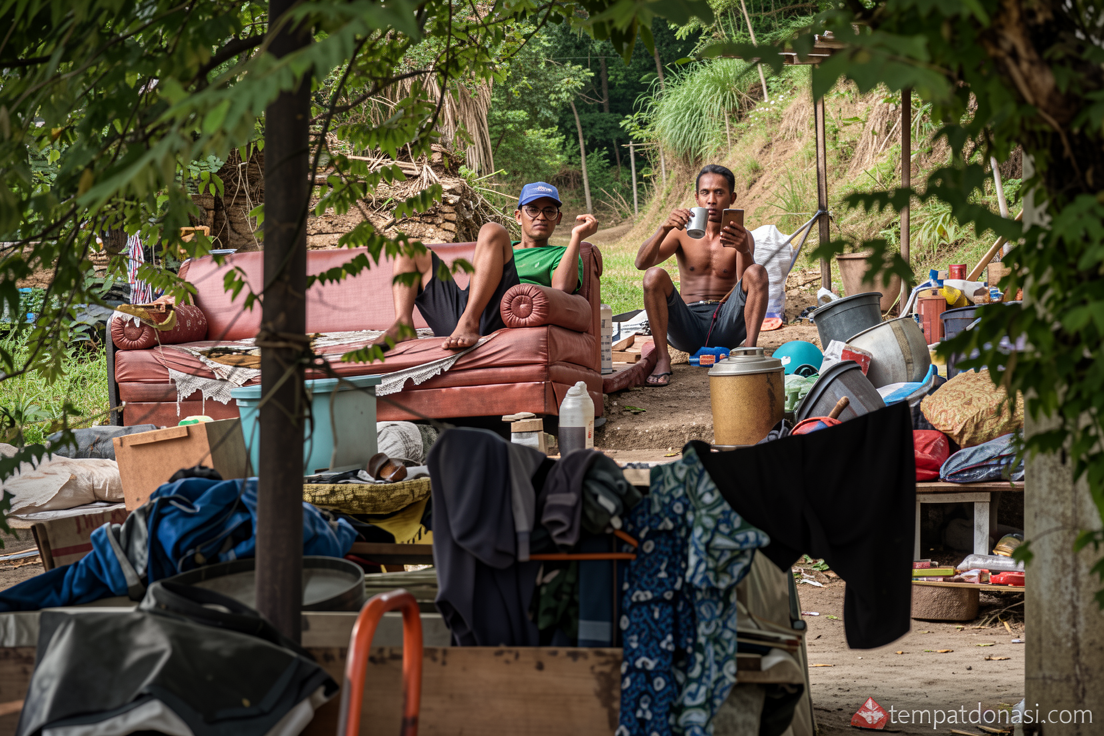
Tempatdonasi.com – A single country, two radically different portraits of its poorest citizens. In April 2026, the World Bank’s Macro Poverty Outlook projected that 64.2 percent of Indonesians lived below a poverty threshold of US$8.30 per person per day. Just months later, Statistics Indonesia (BPS) reported that only 8.07 percent of the population—roughly 22.93 million people—fell below the national poverty line as of March 2026. The gap between those two percentages, exceeding fifty-five points, has prompted official clarification from Jakarta and raised questions about how international benchmarks interact with domestic measurement frameworks.
The World Bank’s Projection and Its Methodology
The 64.2 percent figure appeared in the April 2026 edition of the Macro Poverty Outlook and was explicitly framed as a forward-looking projection for calendar year 2026. It applied a poverty threshold of US$8.30 per capita per day, converted through Purchasing Power Parity (PPP) values anchored to 2021. That threshold sits at the upper end of the World Bank’s tiered international poverty lines: US$3 per day for extreme poverty, US$4.20 for lower-middle-income countries, and US$8.30 for upper-middle-income countries such as Indonesia. The PPP adjustment accounts for differences in what a unit of currency actually buys across borders, rather than relying on the prevailing market exchange rate between the rupiah and the dollar.
M Nashrul Wajdi, BPS Deputy for Social Statistics, addressed the discrepancy in a written statement issued in Jakarta on Wednesday, September 2, 2026. He stressed that the World Bank number was never derived from Indonesia’s own poverty standard.
“The 64.2 percent figure is an estimate of Indonesia’s population whose spending is below US$8.30 per capita per day according to the World Bank. The poverty line is calculated based on the standards set by the World Bank, not the national poverty line used in Indonesia. The value is determined based on poverty standards commonly used in upper-middle-income countries, especially for comparing conditions between countries.”
In other words, the World Bank figure functions as a cross-country comparability metric. Applying that global yardstick to Indonesia inevitably inflates the share of the population classified as poor, because the US$8.30 PPP line reflects the median spending level of upper-middle-income economies rather than the specific consumption needs of Indonesian households.
The World Bank’s Own Guidance on Domestic Policy
Notably, the World Bank itself has drawn a distinction between its international benchmarks and national statistics. On June 13, 2025, the institution published a statement on its official website acknowledging that the poverty line and poverty statistics released by BPS were better suited for informing decision-making and domestic policy within Indonesia. That position underscores that the two sets of numbers serve fundamentally different analytical purposes: one for global comparison, the other for targeted social programming.
How Indonesia Actually Measures Poverty
BPS employs the Cost of Basic Needs (CBN) approach, sometimes called the basic-needs method. Under this framework, the poverty line represents the minimum monthly expenditure required to satisfy both food and non-food essentials. The food component is calibrated to a minimum intake of 2,100 kilocalories per person per day, derived from observed consumption patterns of Indonesian households. The non-food component encompasses housing, education, health care, clothing, and transportation costs.
The empirical backbone of this calculation is the National Socio-Economic Survey (Susenas), which records household expenditure and consumption behavior across the archipelago. Susenas is administered twice a year, giving BPS the frequency needed to keep the poverty line responsive to shifting price levels and consumption realities. Because the survey captures variation by province, district, and city, the resulting poverty line is not a single uniform number but a geographically differentiated threshold that reflects local price structures, consumption habits, and average household size among poor families.
At the national average level, the household poverty line stood at Rp3,091,866 per month as recorded in the March 2026 survey round. Against that domestically calibrated threshold, BPS counted 22.93 million Indonesians—8.07 percent of the population—as living in poverty.
A Briefing That Never Happened
BPS had originally scheduled a press conference for the following day, Thursday, to walk journalists through the methodological differences behind the two figures. The event was ultimately canceled. Favten Ari Pujiastuti, Head of the Bureau of General Affairs and Public Relations, explained in a written note that the cancellation reflected the need to align the agency’s messaging with the timing of the World Bank’s latest publication release and to complete additional technical coordination. The goal, she indicated, was to ensure that any public explanation would be comprehensive rather than piecemeal.
Why the Distinction Matters for Readers and Policymakers
For anyone tracking Indonesia’s social indicators, the coexistence of an 8 percent domestic poverty rate and a 64 percent international-benchmark figure is not a contradiction but a consequence of measurement design. The World Bank’s US$8.30 PPP line asks, “How many Indonesians spend less than the median household in an upper-middle-income economy?” BPS’s CBN line asks, “How many Indonesians cannot afford the minimum basket of food and essentials defined by their own consumption context?” Both questions are legitimate; they simply answer different policy questions. Conflating them—whether in headlines, academic comparisons, or development-funding discussions—risks either understating the scale of economic vulnerability or overstating the failure of domestic social programs. The clarity BPS sought in its canceled briefing, and ultimately delivered through Nashrul’s written statement, points toward a straightforward principle: match the metric to the question being asked.
Related Reading
Frequently Asked Questions
What is BPS vs World Bank?
BPS vs World Bank is the main topic of this guide. The article explains the context, practical details, and next steps readers should understand.
Why does BPS vs World Bank matter?
BPS vs World Bank matters because readers are looking for a useful answer, not just a short summary. Good content should match search intent and help them decide what to do next.