Iran Poised to Exploit Security Vacuum as US Leaves Iraq
The conclusion of the United States military mission in Iraq has intensified concerns in the Kurdistan Region of Iraq, where leaders face renewed pressure
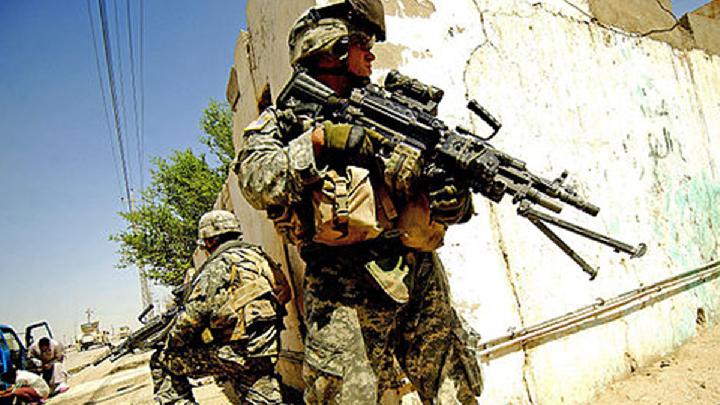
Iran Eyes Greater Influence as US Mission Ends in Iraq
Tempatdonasi.com – The conclusion of the United States military mission in Iraq has intensified concerns in the Kurdistan Region of Iraq, where leaders face renewed pressure from Baghdad, Iran and other neighboring powers. While Iraqi officials in Baghdad welcomed the departure as a major assertion of national authority, the atmosphere in Erbil is far more uneasy.
Prime Minister Ali al-Zaidi declared October 1 a “Day of Sovereignty and Independence,” reflecting the political significance attached to the end of the US role. Tehran, the Islamic Revolutionary Guard Corps and Iran-aligned Shiite armed groups also celebrated the withdrawal. For the Kurdish region, however, the change raises questions about how its autonomy can be protected without the same level of American security support that shaped the past two decades.
A Strategy Focused on Containment
Iran is not necessarily expected to launch a conventional invasion of the Kurdish region. Analysts instead describe a longer-term effort to limit Erbil’s political options, reduce its independent influence and prevent Kurdish institutions from operating with broad room for maneuver.
Hesam Dastpish, a Middle East analyst based in Brussels, characterizes Tehran’s policy toward the Kurdish region as hostile and centered on containment. In his view, the objective is to weaken the Kurdistan Region of Iraq politically until it functions mainly as an administrative structure rather than a powerful autonomous authority.
“Tehran’s goal is to turn the Kurdistan region into an institution with absolutely no room to maneuver,” Dastpish told DW.
Iran has repeatedly carried out strikes inside the Kurdistan Region, saying it was targeting bases used by Iranian Kurdish opposition organizations. Those attacks have reinforced the message that Tehran is willing to use military force across the border when it sees a threat to its interests.
Salahuddin Khadiw, a political analyst in Mahabad, located in Iran’s Kurdish region, argues that Iran and other neighboring states may not seek to abolish Kurdish self-rule outright. Their preferred outcome, he said, is a Kurdistan Region that remains limited, divided and unable to challenge regional power balances.
Iran has cultivated relationships with competing centers of authority in Erbil and Sulaymaniyah. That approach can preserve Tehran’s access throughout the region while reducing the possibility that a single Kurdish leadership will become strong enough to dominate Iran’s western frontier.
Political Division Creates an Opening
The Kurdish region’s internal disputes may be as consequential as the threats coming from outside its borders. The rivalry between the Kurdistan Democratic Party and the Patriotic Union of Kurdistan remains deeply rooted in the political legacy of the 1990s civil war.
That division has often translated into separate political networks, competing priorities and difficulties in presenting a shared Kurdish position. Hiwa Mahmoud Osman, an analyst specializing in Iraqi and Kurdish affairs, says Iran has made extensive use of such divisions during decades of political engagement in Iraq.
“Iran has spent decades mastering political influence inside Iraq,” Osman told DW. “The Kurds’ biggest hurdle is their own fragmentation. Without a united front, foreign powers simply have more room to operate.”
Ardeshir Pashang, a Middle East researcher in Tehran, has warned that persistent disputes among Kurdish leaders could carry far-reaching consequences. If rival factions cannot resolve their differences, the Kurdistan Region could eventually lose its coherence as a political entity.
For residents of the region, this struggle is not solely about high-level diplomacy. The ability of Kurdish authorities to negotiate with Baghdad, maintain public services, protect borders and speak with a unified voice is tied directly to the durability of the region’s autonomy.
Iranian Kurdish Opposition Groups Under Pressure
The presence of Iranian Kurdish opposition organizations in northern Iraq remains one of the most sensitive issues between Erbil and Tehran. These groups have a history of confrontation with Iranian state forces and have found refuge in the Kurdistan Region. Iran has used their presence to justify drone and missile attacks against targets across the border.
Dastpish believes the groups provide Tehran with a recurring rationale for military action. Yet Erbil is unlikely to accept what he calls “total surrender,” since its handling of Kurdish opposition groups affects both its domestic legitimacy and its wider regional relationships.
Kasra Qaredaghi, a political science researcher based in the United States, says these organizations now face a more precarious position. Iran was able to strike their locations even while US forces were still fully present in Iraq. The 2023 border security agreement between Baghdad and Tehran added further pressure for the groups to disarm and relocate.
With the US mission now over, Qaredaghi argues that Erbil has much less leverage to resist Iranian demands. The shift may give Tehran greater capacity to seek concessions on the fate, movement and activities of Iranian Kurdish opposition forces.
Washington Retains Financial Influence
The departure of US troops does not mean Washington has lost every tool of influence in Iraq. American power may increasingly operate through financial systems rather than military deployment, particularly because Iraq’s economy remains closely connected to the US dollar and international banking networks.
Qaredaghi describes the situation as a “realignment of power,” with the United States, Turkey and Saudi Arabia serving as potential counterweights to Iran’s expanding influence. Osman also points to Iraq’s reliance on dollar-based financial channels as a continuing source of US leverage.
That financial connection can shape Baghdad’s room for maneuver in domestic affairs, including matters that affect the Kurdistan Region. The payment of salaries to Kurdish civil servants, for example, can become entangled in wider political and financial negotiations between the regional government and federal authorities.
The emerging security environment therefore leaves the Kurdistan Region facing several simultaneous tests. It must manage its troubled relationship with Baghdad, respond to Iranian pressure, navigate the status of opposition groups and address longstanding internal divisions. The end of the US military mission may mark a symbolic victory for Iraq’s sovereignty, but for Erbil it also begins a period in which political unity and strategic flexibility may become more important than ever.
Related Reading
Frequently Asked Questions
What is Iran Poised to Exploit Security Vacuum?
Iran Poised to Exploit Security Vacuum is the main topic of this guide. The article explains the context, practical details, and next steps readers should understand.
Why does Iran Poised to Exploit Security Vacuum matter?
Iran Poised to Exploit Security Vacuum matters because readers are looking for a useful answer, not just a short summary. Good content should match search intent and help them decide what to do next.