The Mystery of Subandrio’s Role in the September 30 Movement
The events surrounding September 30, 1965 continue to resist a single, settled explanation. The killings of several Indonesian generals, the rapid political
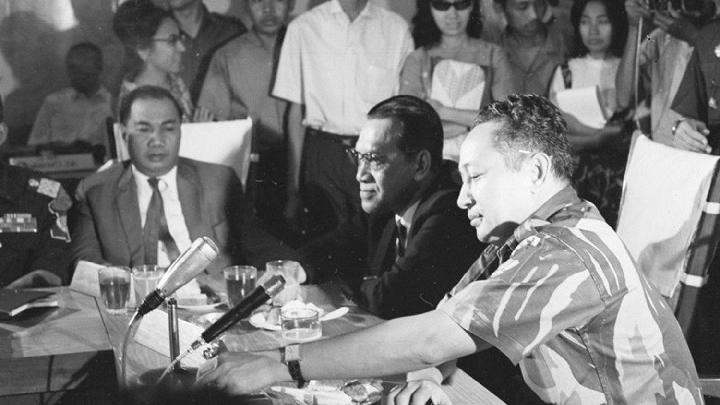
Subandrio’s Unresolved Place in Indonesia’s 1965 Tragedy
Tempatdonasi.com – The events surrounding September 30, 1965 continue to resist a single, settled explanation. The killings of several Indonesian generals, the rapid political shift from Sukarno to Suharto, and the violence that followed transformed the country’s history. Decades later, one of the least resolved questions concerns Subandrio, Sukarno’s close associate and foreign minister during a decisive period of the republic’s early years.
Subandrio was arrested about five months after the political upheaval. He was then portrayed as someone connected to the September 30 Movement, despite not belonging to the Indonesian Communist Party, or PKI, which was repeatedly blamed for the episode. His political background was instead associated with the Indonesian Socialist Party, founded by Sutan Sjahrir before Sukarno dissolved the party in 1960.
His case illustrates how difficult it remains to separate historical evidence from the political narrative imposed after 1965. For years, the New Order presented the September 30 Movement as an attempted overthrow engineered by the PKI and assisted by figures loyal to Sukarno. That interpretation became central to the legitimacy of Suharto’s government and was used to marginalize critics, opponents, and people suspected of sympathizing with the old political order.
A trusted official placed on trial
From 1957 until 1965, Subandrio served as foreign minister and was considered one of Sukarno’s most trusted officials. Although he held the honorary title of air vice marshal, he was not a military officer in the conventional sense. Nonetheless, he was prosecuted before the Extraordinary Military Tribunal.
The proceedings lasted 25 days. Military prosecutors accused him of conspiring with the PKI in a plan to topple Sukarno’s government, but the case did not establish the allegation with convincing proof. Even so, Subandrio received a death sentence. The punishment was later reduced to life imprisonment after an appeal involving the Queen of the United Kingdom.
He remained behind bars for decades before gaining release in 1995. Subandrio died nine years later, at the age of 90. His long imprisonment did not resolve the central historical question: what, if any, role did he actually play in the events of 1965?
The absence of a clear answer matters because his prosecution cannot be viewed separately from the wider consolidation of New Order power. In the years after Suharto rose to prominence, large numbers of Indonesians accused of PKI links or left-wing sympathies faced killing, detention, exile, loss of citizenship, and restrictions on political and economic participation. The effects of those measures have extended far beyond the individuals directly targeted.
A narrative built through accusation
Claims that the PKI alone designed and directed the September 30 Movement were long treated as official truth, even though later scholarship has challenged that certainty. Research published after the 1998 Reformasi period has weakened the New Order’s simplified explanation and highlighted the many unresolved dimensions of the crisis.
This does not make every individual account conclusive. Rather, it underlines the need to distinguish evidence from accusations that served a political purpose. The historical record remains fragmented, while witnesses, documents, and families have often been affected by fear, silence, or the passage of time.
Subandrio’s own experience was also shaped by later campaigns against the Sukarno era. In 1987, the New Order circulated allegations involving hundreds of millions of United States dollars in purported revolutionary funds. Because of his senior position in the former government, Subandrio was presented as a likely figure to possess knowledge of money supposedly held in a Swiss bank.
He rejected the story in media interviews, describing the alleged funds as a fabrication intended to damage the reputation of the Old Order by suggesting that state wealth had been concealed abroad. No conclusive evidence has established that such revolutionary funds existed. Like the accusations surrounding his involvement in 1965, the claim remains unproven.
Why the record remains incomplete
Reconstructing Subandrio’s life and political role is especially challenging. Accounts must be assembled from archival material, surviving interview excerpts, historical studies, and scattered personal testimony. His family and descendants have been reluctant to speak publicly about him. That reluctance reflects both limited information and the enduring risks attached to association with the events of 1965.
For many Indonesian families, history is not merely an academic subject. Labels attached during the New Order could determine employment prospects, civic rights, social standing, and personal safety. The consequences encouraged silence, making later efforts to establish a fuller account more difficult.
Indonesia still formally prohibits Marxism-Leninism, the political and economic doctrine associated with the PKI. This continuing restriction is part of the larger legacy of 1965, when ideological classification became a powerful tool of state control. Understanding that legacy requires more than repeating inherited claims; it requires examining how those claims were produced, circulated, and enforced.
Truth before reconciliation
The unresolved status of Subandrio’s case points to a broader obstacle in efforts toward reconciliation with victims of the 1965 violence. Reconciliation cannot be sustained by omission or by a historical account that leaves fundamental questions unexamined. It depends first on an honest effort to disclose what happened, who made key decisions, and how state power was later used against alleged opponents.
Other countries that confronted periods of mass violence and authoritarian rule, including Germany and South Africa, show that facing a painful past is difficult but necessary for building public trust. Indonesia’s own path will require space for research, testimony, and debate that is not constrained by political dogma.
Current initiatives to rewrite Indonesian history, including work undertaken through the Ministry of Culture during Prabowo Subianto’s administration, have renewed concerns that the New Order version of 1965 could be preserved rather than critically reassessed. If that happens, the distance between official memory and unresolved evidence may grow wider.
Subandrio’s story remains unfinished not because the past is irrelevant, but because it still shapes the present. A serious examination of his case offers no easy verdict. It does, however, make clear that Indonesia’s history of 1965 deserves investigation grounded in evidence, openness, and a willingness to confront uncertainty.
Related Reading
Frequently Asked Questions
What is The Mystery of Subandrio s Role?
The Mystery of Subandrio s Role is the main topic of this guide. The article explains the context, practical details, and next steps readers should understand.
Why does The Mystery of Subandrio s Role matter?
The Mystery of Subandrio s Role matters because readers are looking for a useful answer, not just a short summary. Good content should match search intent and help them decide what to do next.