

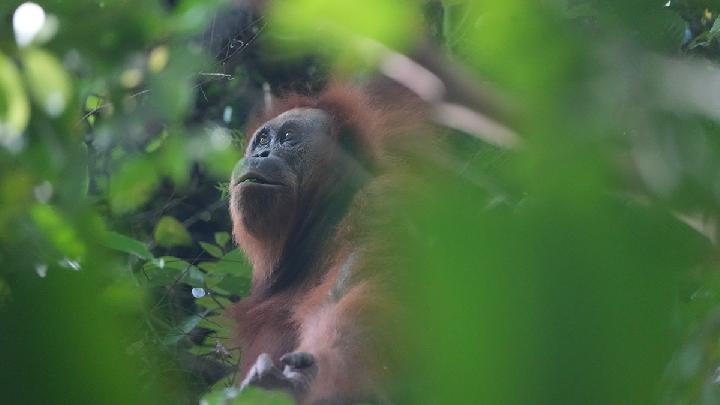
Cyclone Senyar Landslide Kills 7 Percent of Tapanuli Orangutans
Cyclone Senyar Landslide Kills 7 Percent – Extreme weather has dealt a devastating blow to Indonesia’s critically endangered Tapanuli orangutan population. A recent study published in the journal *Current Biology* estimates that approximately 7% of these rare primates were lost after a landslide triggered by Cyclone Senyar in November 2025. The event, which occurred in the western portion of the Batang Toru ecosystem, has raised urgent concerns among conservationists about the survival of this species.
Scientific Analysis of the Catastrophe
Researchers from Borneo Futures and World Weather Attribution confirmed that Cyclone Senyar’s extreme rainfall played a key role in the disaster. Satellite imagery was used to trace the landslide, which was combined with data on orangutan density to calculate the loss. The findings reveal that around 58 individuals perished, representing 11% of the population in the West Block of Batang Toru and 7% of the species’ total wild numbers.
“The loss of this population is a critical setback for a species already teetering on the brink of extinction,” said Erik Meijaard, head scientist at Borneo Futures. “This disaster, paired with ongoing threats like habitat destruction and human-wildlife conflict, highlights the need for a unified conservation strategy backed by sufficient resources.”
The study also identified the environmental toll of the event. Approximately 8,300 hectares of forest—11.7% of the area’s total coverage—were impacted by the landslide. Professor Friederike Otto of Imperial College London emphasized the link between climate change and the loss of biodiversity. “Human-induced climate change amplified the rainfall during Cyclone Senyar by 9 to 50 percent, turning it into a catalyst for destructive landslides,” she explained.
Human-Induced Climate Change as a Catalyst
To assess climate change’s role, scientists employed climate attribution techniques. These methods demonstrated that the cyclone’s rainfall intensity was significantly increased due to global warming. The result was a heightened risk of landslides, which devastated the Batang Toru region and disrupted the orangutans’ habitat.
“This tragedy underscores how climate change is intensifying natural disasters, making them more harmful to vulnerable ecosystems,” Otto added. “The connection between extreme weather and biodiversity loss is now clearer than ever.”
Community Impact and Conservation Urgency
The landslide’s effects extended beyond wildlife. In Tanjung Karang Village, Aceh Tamiang Regency, a flash flood on December 12, 2025, destroyed homes and displaced nearly a million residents. The National Disaster Mitigation Agency (BNPB) reported hundreds of casualties in the affected areas. Meanwhile, conservationists warn that the loss of orangutans could mark the first extinction of a great ape species in modern times.
“Indonesia must secure permanent protection for the Batang Toru Ecosystem to safeguard the future of the Tapanuli orangutan,” said Jatna Supriatna, a biology professor at the University of Indonesia. “International collaboration and increased funding for biodiversity recovery are essential to prevent this extinction.”
Professor Serge Wich of Liverpool John Moores University echoed these concerns, noting that extreme weather events disproportionately affect small, fragmented populations. “The sudden loss of so many apes is heartbreaking,” he remarked. “It’s a stark reminder of how climate extremes can push species toward the edge of survival.”
Landslide Mechanics and Immediate Threats
Landslide expert Dave Petley from Nottingham Trent University provided insights into the event’s mechanics. He noted that the rapid movement of earth and debris was closely tied to the region’s river systems. “The speed and force of the landslide left little time for people or animals to react,” Petley stated. “This highlights the need for early warning systems in vulnerable regions.”
The Batang Toru ecosystem, home to the last remaining Tapanuli orangutans, is a biodiversity hotspot. With fewer than 500 individuals estimated to exist in the wild, the loss of 58 animals represents a significant portion of the population. Conservationists argue that this event has accelerated the urgency of protecting the area from further degradation.
The Tapanuli orangutan, first recognized as a distinct species in 2017, is one of the rarest great apes on Earth. Its habitat, Batang Toru, spans just 217 square kilometers, making it highly susceptible to environmental disruptions. Cyclone Senyar’s impact, combined with deforestation and human encroachment, has created a perfect storm for the species’ survival.
Broader Implications for Climate and Conservation
As the climate continues to shift, the frequency and intensity of extreme weather events are expected to rise. This trend poses a growing threat to ecosystems and species like the Tapanuli orangutan, which depend on stable habitats. The study’s findings suggest that without immediate action, the cumulative effects of climate change and human activities could lead to irreversible losses.
Researchers urge policymakers to prioritize conservation efforts in the Batang Toru region. “The destruction caused by Cyclone Senyar is a wake-up call,” Meijaard noted. “We need to strengthen protections for this ecosystem to ensure the Tapanuli orangutan’s survival.”
Read more about the challenges facing orangutans in the modern era: Orangutans Caught Between FOLU Net Sink and Carbon Profits
As the world watches this ecological crisis unfold, the Tapanuli orangutan stands as a symbol of the delicate balance between nature and human activity. The combined efforts of scientists, conservationists, and governments will determine whether this species can withstand the growing pressures of climate change and habitat loss.