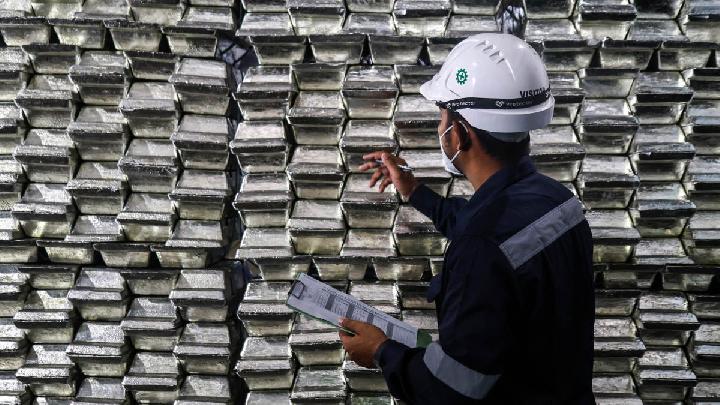
How Indonesia’s Coal Production This Year Compared to 2025
Indonesia produced 423.71 million tons of coal during the first six months of 2026, marking a slower monthly pace than the average seen a year earlier. The
Indonesia’s Coal Output Slows as Government Aligns Supply With Market Conditions
Tempatdonasi.com – Indonesia produced 423.71 million tons of coal during the first six months of 2026, marking a slower monthly pace than the average seen a year earlier. The decline reflects a policy direction that places greater weight on market demand, logistics, domestic needs, and the long-term availability of reserves.
Tri Winarno, Director General of Mineral and Coal at the Ministry of Energy and Mineral Resources, said monthly production in 2026 has been about 8 million tons below the 2025 average. Last year, Indonesia’s coal output reached 817.48 million tons, a level that underscored the country’s central role in regional and global thermal coal trade.
The government’s 2026 planning document sets national production at roughly 600 million tons, substantially below the 2025 result. The lower target signals an effort to avoid producing beyond what markets and domestic supply requirements can absorb.
“Our approach is optimum production, where production must be balanced with the market, market demand, the DMO program, price conditions, logistics, and reserve sustainability,” Tri Winarno said on Thursday, September 10, 2026.
Exports Remain the Largest Destination
Export markets continue to take the largest share of Indonesian coal. By July 2026, 63.82 percent of the year’s production had been directed overseas. Domestic demand accounted for 26.86 percent, while 9.32 percent was allocated to national stockpiles.
The distribution differs slightly from the pattern recorded in 2025. Of last year’s 817.48 million tons, 63.89 percent went to export buyers, 30.2 percent served domestic consumption, and 5.9 percent was held in stock. The larger stockpile share in 2026 may provide additional flexibility as producers and policymakers navigate shifting demand and transport conditions.
Indonesia’s domestic coal policy includes the DMO, or Domestic Market Obligation, framework, which is intended to ensure supplies are available for domestic users while preserving the country’s export business. Balancing the two priorities is especially important when international demand changes or transportation routes face disruptions.
Major Asian Markets Still Shape Demand
Coal demand worldwide is expected to ease modestly over the next five years as renewable energy use expands. Even so, demand in India and across ASEAN may continue growing, including in 2027. China and India remain key destinations for Indonesian coal, making conditions in those economies particularly important for Indonesia’s mining sector.
This outlook helps explain the government’s focus on calibrated production rather than simply pursuing the highest possible volume. Coal producers must weigh overseas demand, domestic requirements, prices, shipping capacity, and the lifespan of mineable reserves. A more measured output level can help prevent supply from outrunning market needs while supporting a steadier operating environment for the industry.
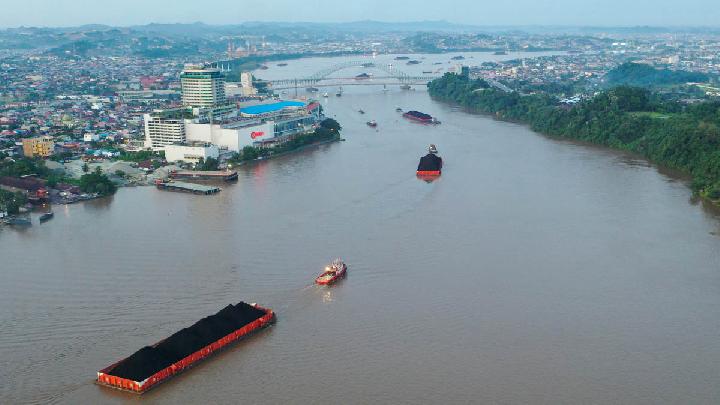
The significance extends beyond mines themselves. Coal moves through a chain involving hauling roads, rivers, barges, ports, and export terminals. When any point in that chain is constrained, production volumes alone do not determine how much coal can reach customers.
Prices Show a Stable-to-Firmer Trend
Coal prices have remained relatively steady in 2026, with a tendency to strengthen alongside demand from major markets. From January through August, the average Reference Coal Price, or HBA, stood at about US$111.8 per ton.
The ministry’s price benchmarks covered several coal grades. HBA I, for coal with a calorific value of 5,300 GAR, was set at US$79.3 per ton. HBA II, measured at 4,100 GAR, was valued at US$54.2 per ton, while HBA III, at 3,400 GAR, stood at US$38.3 per ton.
These benchmarks matter because coal quality varies considerably. Higher calorific values generally indicate more energy content per unit of coal, while lower-grade coal is priced differently and may serve different buyers or power-generation requirements. Separate reference categories therefore provide a clearer picture of pricing across Indonesia’s broad coal output.
Weather Could Affect Distribution Routes
Logistics are also part of the production calculation for 2026. Weather conditions can influence the movement of coal from mining areas to ports, particularly in regions where river transport is a major link in the supply chain.
The Meteorology, Climatology, and Geophysics Agency has forecast a longer dry season in 2026. Lower rainfall could reduce water levels in the Barito and Mahakam Rivers, both important routes used to move coal toward export terminals. If river flow falls, barge operations and shipment timing may be affected.
For Indonesia, the issue illustrates why annual output targets cannot be viewed separately from infrastructure and weather. The country may have substantial production capacity, but the practical delivery of coal depends on whether transport corridors remain reliable and whether supply reaches domestic and overseas customers at the expected time.
With production running below last year’s pace, policymakers are seeking to keep output aligned with real demand and supply-chain capacity. The remainder of 2026 will be shaped by export orders, domestic obligations, coal price movements, and the ability of logistics networks to operate through changing seasonal conditions.
Related Reading
Frequently Asked Questions
What is How Indonesia s Coal Production This?
How Indonesia s Coal Production This is the main topic of this guide. The article explains the context, practical details, and next steps readers should understand.
Why does How Indonesia s Coal Production This matter?
How Indonesia s Coal Production This matters because readers are looking for a useful answer, not just a short summary. Good content should match search intent and help them decide what to do next.