
Illegal Gold Hidden in Suitcase Walls
Indonesia's gold trade has long drawn the attention of organized crime syndicates, but few neighborhoods could have seemed less likely to harbor a clandestine
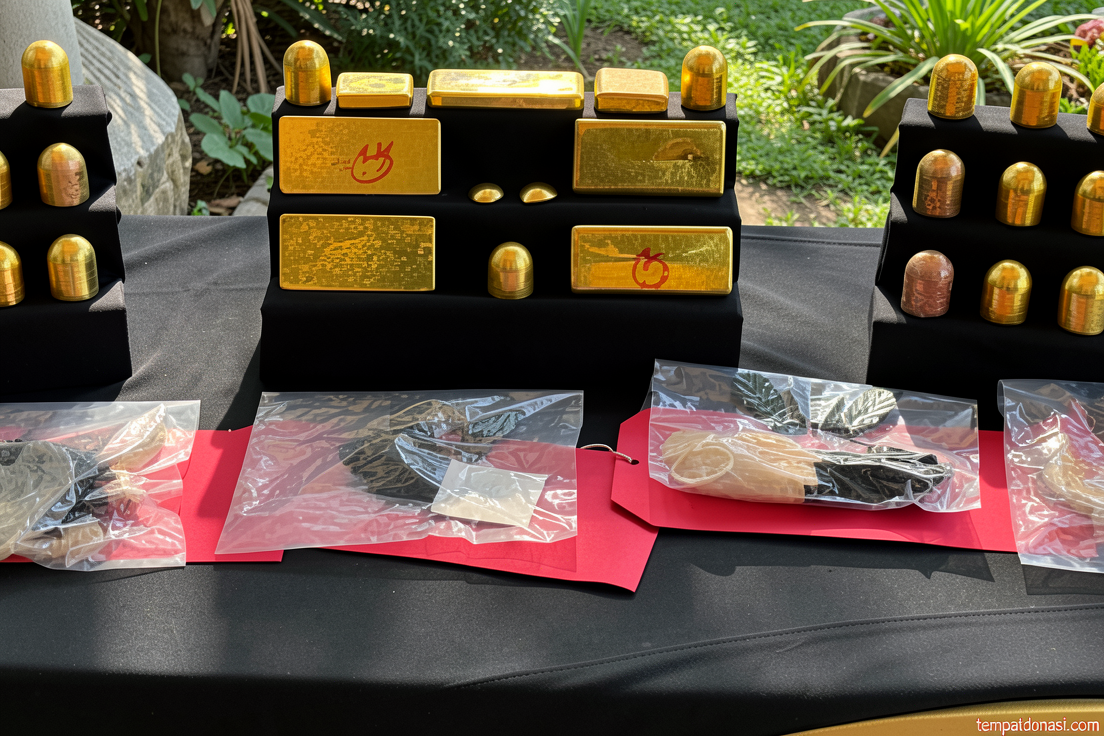
Gold Smuggling Network Exposed in Jakarta’s Most Exclusive Residential District
Tempatdonasi.com – Indonesia’s gold trade has long drawn the attention of organized crime syndicates, but few neighborhoods could have seemed less likely to harbor a clandestine refinery than the manicured streets of Pantai Indah Kapuk, one of Jakarta’s most expensive residential enclaves. Yet that is precisely where police struck on the night of Tuesday, August 25, 2026, when a squad of more than a dozen investigators from the Indonesian National Police’s Criminal Investigation Department (Bareskrim) descended on a two-story white house in an upscale complex within the PIK area. The operation was part of a broader crackdown on an illicit gold-smuggling pipeline with ties to China.
The Raid and Its Immediate Aftermath
The command post for the operation was Brig. Gen. Mohammad Irhamni, who heads the Special Crimes Directorate within Bareskrim. Under his direction, officers moved through every room, closet, and storage space of the property, searching for traces of unlicensed metalwork. What they discovered confirmed that the residence had been functioning as a small-scale gold processing point: instruments for assaying the purity of bullion, calibrated digital scales for weighing refined product, and apparatus capable of melting gold into ingots were all present. Investigators also recovered approximately Rp50 million in cash — roughly US$2,800 at prevailing exchange rates — tucked away inside the premises.
By the time the search was complete, however, the house was already vacant. The tenant, a Chinese national identified in police records only by the initials CGZ, had slipped out before officers arrived. The departure was not accidental. In the weeks preceding the August 25 sweep, Bareskrim had intensified its operations against a web of actors moving unrefined gold through Indonesian ports and borders, and the occupant of the PIK property evidently received word that the net was tightening.
“He may have gotten scared and fled,” Irhamni said the morning after the raid, explaining the empty house to reporters.
Why PIK Became a Cover
The choice of location is telling. Pantai Indah Kapuk, developed over the past two decades on reclaimed land along Jakarta’s northern coastline, has become a magnet for high-net-worth residents, foreign investors, and short-term corporate tenants. Its gated compounds, private roads, and low foot-traffic at night make it comparatively easy to move small quantities of refined metal in and out of a residence without attracting the attention that would greet the same activity in a dense urban kampung. A two-story white house among rows of similar villas draws little curiosity from neighbors, particularly when the occupant keeps a low profile and conducts operations after dark.
Indonesia itself is one of the world’s largest gold producers, with major operations in Sulawesi, Papua, and West Kalimantan. Yet the country’s formal refining capacity has historically lagged behind its mining output, creating a persistent incentive for intermediaries to process ore or concentrate domestically and ship finished product abroad — often to Chinese refineries — without clearing customs duties or paying the excise levies that apply to exported bullion. Smugglers exploit this gap by operating small, mobile melting and assaying setups in rented properties, converting raw material into marketable bars in a matter of hours before moving the product onward.
The Broader Crackdown
The PIK sweep was not an isolated incident. Over the preceding weeks, Bareskrim’s Special Crimes Directorate had escalated a multi-front campaign aimed at dismantling what officials describe as a coordinated smuggling network linking Indonesian gold mines to buyers in mainland China. Earlier actions in the same period targeted shipments at coastal ports and seized unrefined concentrate moving through informal channels. Each seizure has added pressure on the remaining nodes of the pipeline, explaining why the CGZ tenant chose to abandon the PIK property rather than wait for a knock at the door.
The equipment recovered — purity-testing devices, precision scales, and melting apparatus — suggests the operation at the white house was not merely a storage point but an active processing node. Gold must be melted, cast, and assayed before it can be presented to a buyer as certified bullion. The presence of all three categories of gear in a single residence indicates that the tenant was converting lower-grade material into finished product on site, a step that adds significant value and narrows the window in which the operation can be detected.
What Comes Next
With the tenant at large and the physical evidence secured, investigators now face the task of tracing the supply chain in both directions: identifying where the raw gold entered the house and determining where the refined output was destined. The Rp50 million in cash, while modest by the standards of international bullion trade, likely represents working capital for purchasing concentrate or paying local intermediaries. Chinese-language communications, shipping manifests, and bank transfers tied to the CGZ identity will be central to the next phase of the inquiry.
For residents of PIK and neighboring districts, the episode is a reminder that even the most insulated luxury enclaves can become waypoints in illicit supply chains. For Indonesian authorities, it underscores the difficulty of policing a commodity whose value-to-weight ratio makes it extraordinarily easy to conceal in a suitcase, a wall cavity, or the trunk of a sedan — and extraordinarily rewarding to move without paying the state its share.
Related Reading
Frequently Asked Questions
What is Illegal Gold Hidden in Suitcase Walls?
Illegal Gold Hidden in Suitcase Walls is the main topic of this guide. The article explains the context, practical details, and next steps readers should understand.
Why does Illegal Gold Hidden in Suitcase Walls matter?
Illegal Gold Hidden in Suitcase Walls matters because readers are looking for a useful answer, not just a short summary. Good content should match search intent and help them decide what to do next.