Why the US Is Going After the International Criminal Court
ng Campaign Against The Hague's Criminal Court Why the US Is Going After - Two prominent international judicial bodies operate within The Hague, yet they
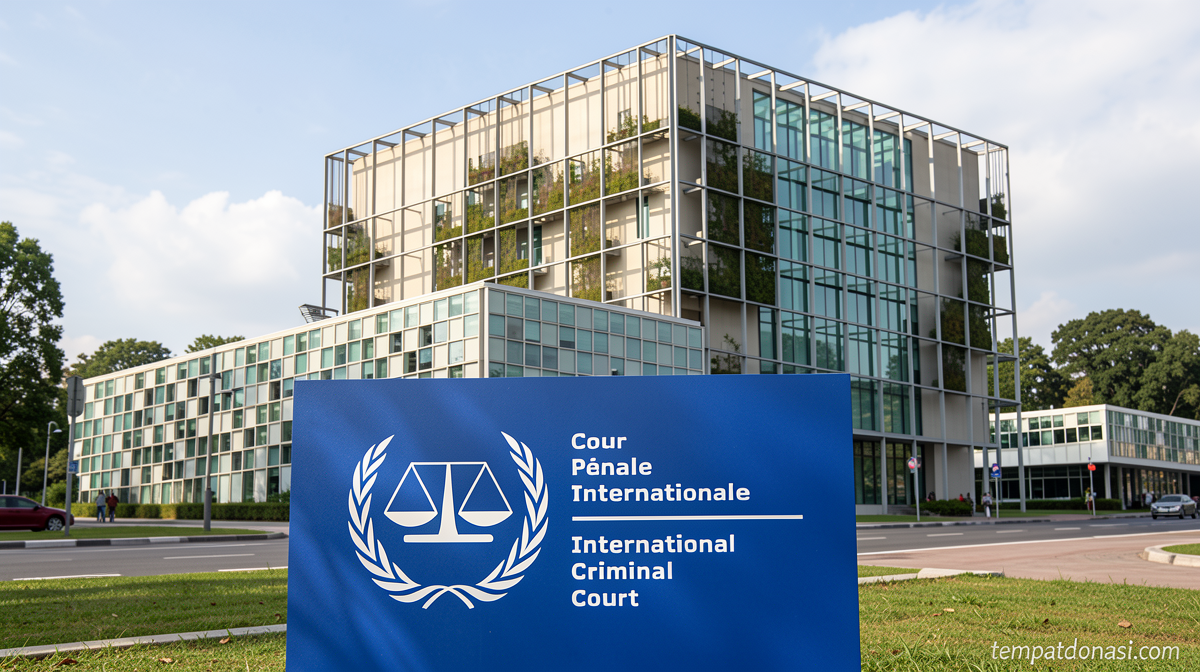
Washington’s Escalating Campaign Against The Hague’s Criminal Court
Tempatdonasi.com – Two prominent international judicial bodies operate within The Hague, yet they frequently become mixed up in public discourse. The International Court of Justice, situated within the renowned Peace Palace, functions as the United Nations’ primary venue for resolving disagreements between sovereign nations. Meanwhile, the International Criminal Court was created in 2002 with a distinct mission: holding individuals accountable for genocide, crimes against humanity, and war crimes. Operating from a contemporary structure built of glass and concrete, the ICC counts 125 nations among its membership—a figure that falls short of the 193 UN member states. Several countries across Asia and North Africa have declined to join, alongside major powers including Russia, China, and the United States.
Recent comments from US Secretary of State Marco Rubio made his target unmistakable when he vowed to tear down the court “brick by brick.” Washington’s State Department subsequently published a comprehensive statement detailing potential actions as part of its broader strategy against the institution. Among the proposed measures are limitations on visas for ICC personnel and enhanced sanctions aimed at the court itself alongside related organizations. Additionally, the United States indicated it would examine more closely nations that continue receiving American aid despite declining to acknowledge the ICC’s legitimacy.
Strategic Pressure on International Justice
While tensions between Washington and the ICC are not new, international legal scholars observe that the current escalation represents a meaningful transformation in approach. Andreas Schüller, who co-directs the International Crimes and Legal Accountability Program at Berlin’s European Center for Constitutional and Human Rights, explained the development to Deutsche Welle.
“What the US and Marco Rubio have now essentially done is make public something that has been going on for more than a year. The US has been using various forms of diplomatic pressure against other countries in an effort to change their positions, and in some cases their voting behavior, toward the ICC.”
Schüller further noted that framing this as an official campaign signals strategic intent with wider reach. Countries outside the ICC membership are being enlisted to assist in applying pressure, demonstrating the campaign’s expanded scope.
Historical Foundations and Current Challenges
The ICC’s origins trace back to lessons learned from history. The Nuremberg trials following World War II, which prosecuted prominent Nazi leaders, established the foundation for modern international criminal law. Subsequent war crimes tribunals addressing conflicts in the former Yugoslavia and genocide in Rwanda strengthened calls for a permanent judicial body.
As an institution, the ICC operates on the principle that no perpetrator should escape accountability. This framework enabled the issuance of arrest warrants for Russian President Vladimir Putin and Israeli Prime Minister Benjamin Netanyahu, despite neither nation being ICC members. Kai Ambos, an international law specialist at the University of Göttingen, emphasized that the core issue involves fundamental accountability across conflicts in Ukraine, Iran, and Gaza.
“It cannot be that such serious crimes are committed, regardless of the conflict, and those primarily responsible — above all government leaders and other figures in power — go unpunished. Nothing happens. That is unacceptable for victims, but ultimately for all of us.”
Concerns About American Citizens
Marco Rubio presented his concerns through a brief video message, arguing that the court threatens America’s entire legal framework. He highlighted Border Patrol agents removing violent offenders and American Marines defending the nation, warning that without action, these individuals would face foreign judges thousands of miles away.
Currently, no cases involving US citizens are pending before the ICC. Most actions by US Immigration and Customs Enforcement occur on American territory, where the court lacks jurisdiction. However, the situation differs regarding targeted killings of alleged drug smugglers in the Caribbean, which former ICC prosecutor Luis Moreno Ocampo characterized in November as potential crimes against humanity.
Kai Ambos expressed concern that a “chilling effect” might intensify, causing ICC prosecutors to exercise greater caution when handling American suspects. Compounding this issue is the problem of over-compliance with sanctions, where international companies may choose to cease operations with the institution entirely.