Amnesty Slams Alleged Military Intervention in Coal Graft Investigation
Amnesty International Indonesia Condemns Military Presence in Coal Corruption Probe Amnesty Slams Alleged Military Intervention in Coal - Amnesty
Amnesty International Indonesia Condemns Military Presence in Coal Corruption Probe
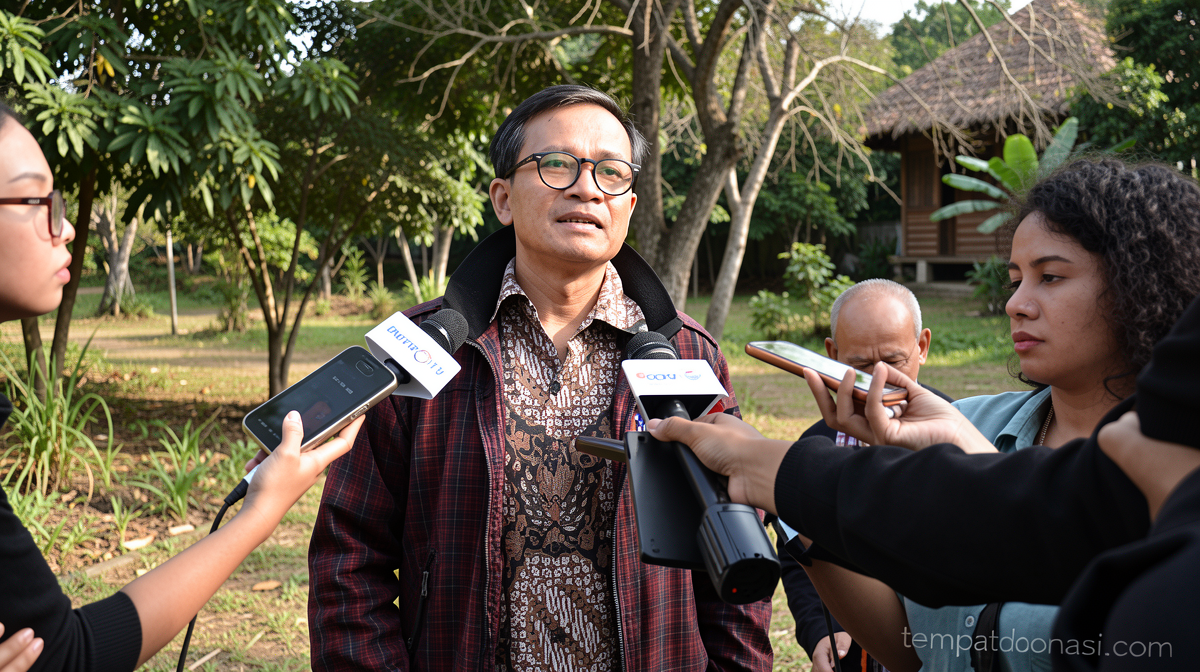
Tempatdonasi.com – Amnesty International Indonesia has issued a strong critique regarding the deployment of military personnel during an active corruption investigation, cautioning that such actions may weaken civilian authority and compromise the rule of law. The organization’s executive director, Usman Hamid, highlighted growing concerns about the Indonesian Military (TNI) personnel positioning themselves around key locations connected to the case.
The deployment involved dozens of military officers stationed near the residence of Deputy Attorney General for Special Crimes Febrie Adriansyah, as well as at the Jakarta Metropolitan Police headquarters. According to Amnesty, this presence raises fundamental questions about military involvement in civilian law enforcement matters and whether it represents an overreach of military authority into domains traditionally managed by civilian institutions.
Concerns About Civilian Supremacy Undermined
Usman Hamid articulated his organization’s position in a written statement released on July 9, emphasizing that the military’s role in this situation extends beyond simple institutional coordination. He noted that the deployment around Febrie Adriansyah’s residence signals potential erosion of civilian supremacy, the rule of law, and human rights protections.
“The military’s involvement in law enforcement, as seen in the deployment around the residence of Jampidsus Febrie Adriansyah, raises serious concerns about the erosion of civilian supremacy, the rule of law, and human rights,” Usman stated in his written communication.
The criticism emerged following police investigators who searched twelve different locations on July 8. These searches formed part of a broader investigation into alleged corruption within coal governance, a case that authorities believe has directly contributed to disruptions in coal supplies and subsequent power outages across multiple regions of Indonesia.
Amnesty International Indonesia stressed that this incident should not be dismissed as mere institutional friction between security agencies. Instead, the organization views it as a potential indicator of military intervention in a civilian legal process, which could set a concerning precedent for future cases.
Legal Questions Surround Military Deployment
One of the central issues raised by Amnesty concerns the legal foundation for the TNI’s actions. The organization questioned whether the military’s deployment was properly justified under Presidential Regulation No. 66 of 2025, which governs the protection of prosecutors during their duties.
“The military has no jurisdiction to intervene, especially if such actions impede civilian judicial processes,” Usman emphasized, pointing out that the use of military personnel during a police investigation could indicate a broader pattern of remilitarization in civilian affairs.
Usman further explained that the military’s involvement appears to blur the traditional separation between the TNI’s defense responsibilities and the law enforcement functions of civilian agencies, including the police and the Attorney General’s Office. This ambiguity, he argued, creates uncertainty about which institution holds primary authority in such matters.
Public Interest and Human Rights Implications
The executive director highlighted that the coal corruption case carries significant public implications beyond institutional dynamics. The alleged corruption is suspected of contributing to electricity shortages that have affected communities across several parts of Indonesia.
Usman argued that these disruptions could potentially constitute violations of the public’s right to an adequate standard of living, a right enshrined in the International Covenant on Economic, Social and Cultural Rights (ICESCR). Indonesia ratified this covenant through Law No. 11 of 2005, establishing a legal framework for protecting these fundamental rights.
“Considering the scale of public losses, law enforcement in this case must proceed transparently, objectively, and free from obstruction and intervention,” Usman declared, calling for accountability in the investigation process.
He also emphasized that the public has a legitimate right to understand why military personnel were deployed in connection with the case, advocating for greater transparency regarding the military’s role.
Official Responses and Denials
Earlier in the week, numerous soldiers were observed guarding Febrie’s residence in South Jakarta while police conducted their searches. Investigators also examined a luxury property in Sentul, Bogor, which was reportedly connected to the deputy attorney general.
Subsequently, dozens of uniformed TNI personnel were reported to have visited the Jakarta Metropolitan Police’s Special Criminal Investigation Directorate headquarters during the early hours of Thursday. The Attorney General’s Office maintained that the military presence was unrelated to the police searches, a position echoed by both the National Police and the Jakarta Metropolitan Police.
TNI headquarters clarified that the deployment at Febrie’s residence was conducted at the request of the Attorney General’s Office under Presidential Regulation No. 66 of 2025, which provides security protection for prosecutors performing their duties. The military also refuted reports suggesting its personnel arrived at the Jakarta Metropolitan Police headquarters while carrying weapons.
As the investigation continues, Amnesty International Indonesia’s concerns highlight the delicate balance between military support and civilian authority in Indonesia’s legal system, with implications that extend beyond this particular case to the broader framework of democratic governance and human rights protection.