Do Prabowo’s Speeches Really Affect the Stock Market? OJK Responds
Do Prabowo's Speeches Truly Influence the Stock Market? OJK Offers Clarity Do Prabowo s Speeches Really Affect - Indonesia's Financial Services Authority
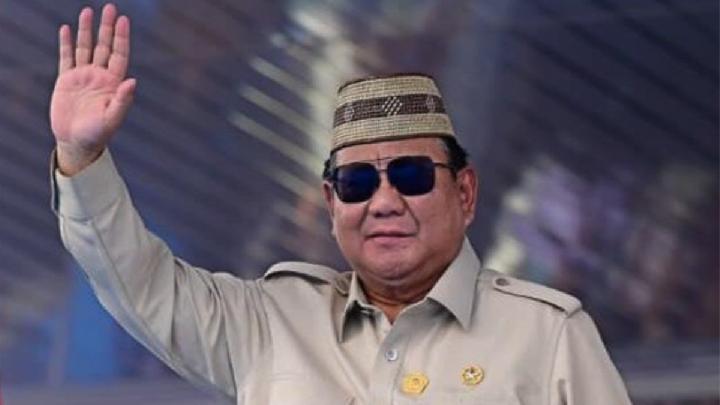
Do Prabowo’s Speeches Truly Influence the Stock Market? OJK Offers Clarity
Tempatdonasi.com – Indonesia’s Financial Services Authority (OJK) has recently addressed widespread online theories suggesting a direct link between President Prabowo Subianto’s public speeches and fluctuations in the country’s benchmark stock index, the Jakarta Composite Index (JCI). The debate has intensified as social media platforms buzz with speculation about how the president’s upcoming appearances in July 2026 might sway investor sentiment. OJK, tasked with overseeing financial markets, has taken steps to clarify the relationship between political rhetoric and market performance.
OJK’s Statement: Rationality Over Rumors
Hasan Fawzi, the head of OJK’s Capital Market Supervision division, has dismissed the idea that Prabowo’s speeches are the primary driver of stock price changes. In a statement delivered at the Indonesia Stock Exchange on June 30, he emphasized the importance of investors basing their decisions on tangible financial data rather than speculative narratives. “While political statements can spark interest, the real factors shaping the market are the fundamentals of individual companies,” Fawzi said, underscoring the role of corporate performance in stock movements.
“In dynamic market conditions, many factors influence stock price movements. But ultimately, behind every four-letter stock ticker is a company with real operational and business activities,” Hasan explained.
Fawzi highlighted that publicly traded companies consistently release financial reports and updates, giving investors access to reliable information. He urged the public to avoid overreacting to rumors and instead focus on analyzing a company’s revenue, profitability, and growth prospects. “Investors should prioritize data-driven decisions over fleeting social media trends,” he added, pointing to the volatility of market reactions in the absence of concrete evidence.
Social Media Fueled the Speculation
The controversy began after an image shared by the Instagram account @stockalpha.id sparked online discussions. The post claimed that Prabowo would deliver 13 speeches in July 2026, fueling speculation about their potential impact on the stock market. While the image itself was not a formal announcement, it captured the imagination of traders and analysts, who debated whether such high-profile appearances could trigger significant shifts in investor behavior.
Some argued that Prabowo’s speeches, particularly those focused on economic policy or industry-specific themes, could influence market confidence. Others dismissed the idea, suggesting that the JCI’s performance is shaped by broader macroeconomic factors, such as inflation rates, interest decisions by the central bank, and global market trends. The OJK’s response aimed to bridge this gap by reinforcing the notion that political discourse, while relevant, is just one of many variables at play in financial markets.
Analyst Perspectives: A Mixed View
Meanwhile, Bhima Yudhistira, an executive director at the Center of Economic and Law Studies, presented a contrasting viewpoint. He acknowledged that presidential speeches can indirectly affect market dynamics by altering investor perceptions of policy direction. “When leaders like Prabowo make statements that hint at potential changes in economic strategy, it can create uncertainty among market participants,” Bhima noted, adding that this uncertainty might lead to more cautious investment behavior.
“When policies change simply because of Prabowo’s speech, this creates uncertainty and increases the cost of doing business,” Bhima warned.
Bhima argued that such shifts could weaken confidence in the government’s economic management, especially if investors interpret the speeches as signals of inconsistent policy. However, he conceded that the extent of this influence depends on the context of the remarks and the existing market environment. “Political communication is powerful, but it needs to be evaluated alongside economic data and company-specific factors,” he said, emphasizing the need for a balanced approach.
Historical Context and Market Behavior
Experts often point to historical patterns to assess the influence of political figures on stock markets. In Indonesia, past administrations have seen fluctuations tied to presidential announcements, such as pledges to boost infrastructure spending or reform financial regulations. However, these movements typically occur in tandem with broader economic indicators rather than in isolation. For instance, during the 2020 pandemic crisis, the JCI dipped sharply due to global lockdowns and supply chain disruptions, not directly because of political speeches.
Fawzi’s remarks align with this historical context, suggesting that while political figures can shape market narratives, the JCI’s trajectory is more closely tied to corporate earnings and sector-specific performance. He cited the example of tech companies, whose stock prices often respond to innovations and quarterly results rather than political rhetoric. “Investors should ask: Does the speech address actual business challenges or merely stir emotions?” Fawzi posed, urging a more analytical mindset.
Public Reaction and Investor Education
The OJK’s response has been met with mixed reactions. Some investors appreciate the authority’s efforts to ground market discussions in reality, while others believe the political factor should not be underestimated. “Even if speeches don’t directly dictate stock prices, they can create a ripple effect on market psychology,” said a market analyst in Jakarta, who requested anonymity. “People react to what they perceive as opportunities or risks.”
Fawzi also emphasized the need for better investor education. He suggested that social media platforms, while useful for real-time updates, can sometimes amplify speculative content at the expense of critical analysis. “Educational content from analysts and commentators should guide investors, not just viral posts that lack depth,” he advised. This call to action has prompted some financial institutions to launch workshops on interpreting market signals and distinguishing between noise and meaningful trends.
Broader Implications for Market Stability
Experts warn that unchecked speculation about political influence could undermine market stability. If investors begin to prioritize political statements over financial fundamentals, it may lead to erratic price movements and reduced liquidity. “The market thrives on predictability, and repeated overreactions to political news could erode that,” said a senior economist at a Jakarta-based research firm. “It’s crucial to maintain a rational perspective.”
Furthermore, the OJK’s response reflects a broader trend in financial regulation: the push to demystify market influences and promote transparency. By highlighting the role of company performance, the authority aims to reinforce the idea that the JCI is a barometer of economic health, not just a political indicator. This approach is particularly important as Indonesia’s economy continues to navigate challenges such as inflation, trade imbalances, and global market volatility.
In conclusion, while Prabowo’s speeches may generate buzz and influence investor sentiment, the OJK’s stance underscores the primacy of company fundamentals in shaping stock market outcomes. As the president’s public appearances approach, the debate over their economic impact will likely persist, but the authority’s message is clear: investors should focus on reliable data and avoid being swayed by speculative narratives. The JCI’s performance, as always, remains a reflection of the diverse and complex forces driving Indonesia’s financial landscape.
Read: JCI Falls 1.28%, What Are the Projections for This Week? Click here to get the latest news updates from Tempo on Google News.