
Hajj Costs: MUI Calls for Return to Ability Principle
Core Islamic Principle in Hajj Financing Hajj Costs - The Indonesian Ulema Council has issued a formal recommendation urging government authorities to
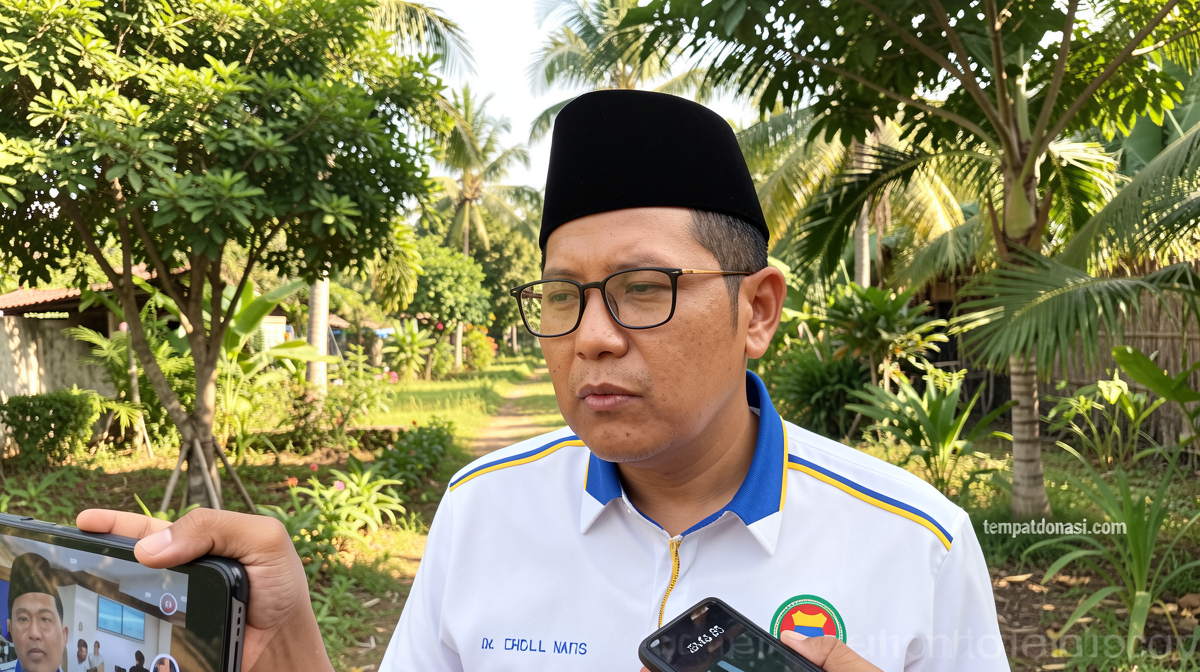
MUI Advocates for Return to Core Islamic Principle in Hajj Financing
Tempatdonasi.com – The Indonesian Ulema Council has issued a formal recommendation urging government authorities to reconsider the proposed Hajj financing structure. According to the religious body, the current proposal deviates from the foundational Islamic concept of manistah’a ilaihi sabl, which establishes that pilgrimage obligations fall upon those who possess the means to undertake the journey. This position emerges following a recent announcement by the Ministry of Hajj and Umrah regarding the proposed Hajj Accommodation and Operational Costs, known as BPIH. The ministry has set the total cost at Rp107.34 million per pilgrim for the upcoming season. To address affordability concerns, officials proposed a mechanism wherein the Hajj Financial Management Body would utilize optimization yields to cover 60 percent of expenses, leaving pilgrims responsible for the remaining 40 percent.
MUI’s Perspective on Financial Capability
KH Cholil Nafis, serving as Deputy Chairperson of MUI, emphasized that the Hajj obligation applies exclusively to Muslims demonstrating financial, physical, and mental capability, a condition referred to as istithaa’ah in Islamic jurisprudence. He expressed concern that the proposed indirect subsidy arrangement potentially obscures this essential prerequisite.
People who go on the Hajj are those who are manistah’a ilaihi sabl, so there is actually no such thing as a subsidy, and it should be returned to those who are capable since Allah does not obligate those who are unable to perform the Hajj.
Cholil made these remarks during an interview with MUI Digital, which published the statement on July 11, 2026. He clarified that characterizing part of the Hajj expenses as a subsidy represents a misunderstanding that warrants correction. The funds in question originate not from government budgets or state assistance programs, but rather from investment returns generated by the initial deposits contributed by all pilgrims, including the millions currently awaiting their turn in the registration queue. According to Cholil, artificially reducing travel expenses by drawing upon accumulated benefits meant for other prospective pilgrims constitutes an injustice. This approach, he argued, contradicts the fundamental principle of istithaa’ah that has guided Islamic pilgrimage financing for centuries.
Government’s Proposed Framework
Prior to MUI’s response, the Ministry of Hajj and Umrah presented its comprehensive financing framework for the 1448 Hijri year, corresponding to the 2027 Hajj season. Under this proposal, the direct costs borne by pilgrims would decrease to 40 percent of the total, while the remaining 60 percent would be financed through optimization yields overseen by BPKH. Dahnil Anzar Simanjuntak, who serves as Deputy Minister of Hajj and Umrah, explained that this arrangement functions as governmental support designed to prevent cost adjustments from creating additional financial strain for pilgrims.
So, if the total reaches Rp107 million, it means the pilgrims will pay roughly Rp42.8 million, while the portion covered by the BPKH optimization yields will amount to around Rp64.2 million.
Dahnil delivered this explanation during the 23rd Al Washliyah Congress, held at the Class I Hajj Dormitory in Jakarta on Wednesday, July 8, 2026. His official statement was subsequently released to the public.
Historical Context and Feasibility
The proposed financing model represents a significant departure from the structure employed during the previous Hajj season. In the last pilgrimage cycle, pilgrims directly covered approximately 62 percent of the total costs, while BPKH optimization yields contributed roughly 38 percent. Dahnil indicated that increasing the optimization yield allocation to 60 percent for the upcoming year remains highly achievable. This feasibility stems from current calculations regarding Hajj fund management, which factor in the substantial accumulation of managed resources. These resources grew considerably during 2020 and 2021 when pilgrim departures were suspended due to the global pandemic, and were further bolstered by the restricted departure schedules implemented throughout 2022. The ongoing discussion highlights the intersection of religious principles and modern financial management in ensuring equitable access to one of Islam’s five pillars. Stakeholders continue to evaluate how best to honor both the spiritual requirements of istithaa’ah and the practical needs of a growing Muslim population seeking to fulfill this sacred obligation.