Indonesia Denies State-Decreed LGBTQ Discrimination: What’s the Truth?
Indonesian Government Clarifies Stance on LGBTQ Regulation: Not Discrimination, But Cultural Protection Indonesia Denies State Decreed LGBTQ Discrimination
Indonesian Government Clarifies Stance on LGBTQ Regulation: Not Discrimination, But Cultural Protection
Tempatdonasi.com – The Indonesian administration has firmly rejected accusations that its recent regulatory framework targets LGBTQ individuals for discrimination. Despite officially classifying the proliferation of lesbian, gay, bisexual, transgender, and queer culture as a “non-military threat” through Presidential Regulation 111/2025, officials maintain this designation serves protective rather than punitive purposes.
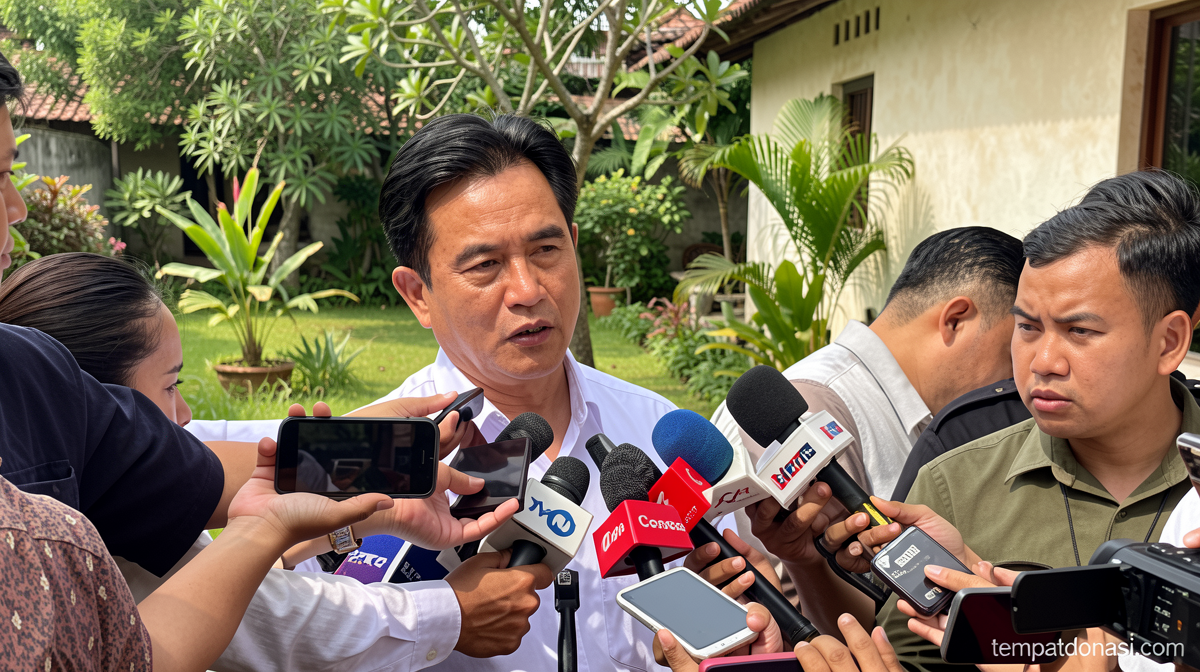
President Prabowo Subianto formally enacted this policy on October 24, 2025. Following its implementation, Coordinating Minister for Legal Affairs, Human Rights, Immigration, and Corrections Yusril Ihza Mahendra addressed public concerns regarding potential discriminatory implications. The minister explicitly stated that the regulation does not authorize or legitimize prejudice against the LGBTQ community.
Legal Protections Remain Intact
Yusril emphasized that the new framework operates within established legal boundaries. He clarified that every citizen, regardless of sexual orientation or gender identity, retains full access to legal protections and fundamental human rights. The minister’s position centers on the idea that the regulation addresses cultural preservation rather than individual rights deprivation.
It should not be interpreted as if the government is welcoming people to persecute, commit acts of violence, or threaten LGBT individuals.
This statement, delivered via WhatsApp on Thursday, July 9, 2026, sought to reassure both domestic and international observers that the policy would not encourage mob violence or systematic persecution.
Understanding the “Non-Military Threat” Classification
To comprehend the government’s rationale, one must examine how “non-military threat” functions within Indonesia’s national security framework. According to Yusril, this terminology categorizes various risks that could undermine national resilience beyond traditional military concerns.
Within the socio-cultural dimension—where LGBTQ cultural expansion falls under official classification—”resilience” encompasses multiple interconnected elements. These include the ethical foundations of younger generations, family structures, digital environments, and broader social cohesion mechanisms. The government views these components as essential pillars supporting Indonesian society.
Officials express concern that unchecked LGBTQ cultural dissemination might gradually transform Indonesia’s traditional marital and familial values. These values, the government argues, remain deeply rooted in religious norms that have shaped Indonesian identity for generations. Yusril explained that what concerns authorities is not the existence of LGBTQ individuals, but rather organized campaigns, propaganda efforts, and active dissemination of LGBT behaviors specifically designed to shift cultural values away from established national morality.
What the government perceives as a threat is the campaign, propaganda, and dissemination of LGBT behavior aimed at altering the values that align with the nation’s culture and morality.
The minister further noted that Indonesia’s commitment to Pancasila and the 1945 Constitution remains unwavering. In this view, LGBTQ culture presents an inconsistency with Pancasila’s foundational values and encounters rejection from Indonesia’s recognized religious institutions. Consequently, the regulation represents state intervention intended to balance cultural preservation with legal governance.
The approach taken remains within the legal corridor, respects the dignity of every citizen, and considers the social, cultural, and religious values that exist among Indonesian society.
Critical Response from Human Rights Organizations
Despite official assurances, several prominent human rights organizations have voiced strong opposition to Presidential Regulation 111/2025. Amnesty International Indonesia stands among the most vocal critics, arguing that the policy contravenes fundamental constitutional guarantees and international legal obligations.
The organization identifies multiple rights potentially compromised by the regulation. These encompass privacy rights, freedom of expression, freedom of assembly, and protection against discrimination. Amnesty warns that categorizing the LGBTQ community as a national threat constitutes dehumanization—a classification that could provoke widespread public hostility toward sexual minorities.
Furthermore, the human rights group contends that the regulation undermines Indonesia’s ratification of the International Covenant on Civil and Political Rights (ICCPR). Under this covenant, the Indonesian state bears responsibility for protecting all citizens irrespective of sexual orientation or gender identity. Critics argue that the new policy creates legal ambiguity that could enable authorities and certain societal groups to justify persecution of LGBTQ individuals under the banner of national defense.
Placing a sexual minority group in the same category as terrorism, separatism, and radicalism not only institutionalizes discrimination against marginalized groups, but also shows how low the quality of the political elite in our nation is.
Usman Hamid, Amnesty International Indonesia’s Executive Director, delivered this assessment on Wednesday, July 8, 2026. His commentary highlights concerns that the regulation not only legitimizes discrimination but also reflects broader deficiencies in political leadership and human rights advocacy within Indonesia.
As debates continue, the Indonesian government maintains that its approach balances cultural preservation with legal protection, while critics insist that the regulation fundamentally contradicts Indonesia’s commitments to universal human rights and constitutional guarantees for all citizens.