Indonesians Increasingly Afraid to Talk Politics, SMRC Says
Indonesians Increasingly Afraid to Talk Politics, SMRC Says Indonesians Increasingly Afraid to Talk Politics - According to a recent analysis by Saiful Mujani
Indonesians Increasingly Afraid to Talk Politics, SMRC Says
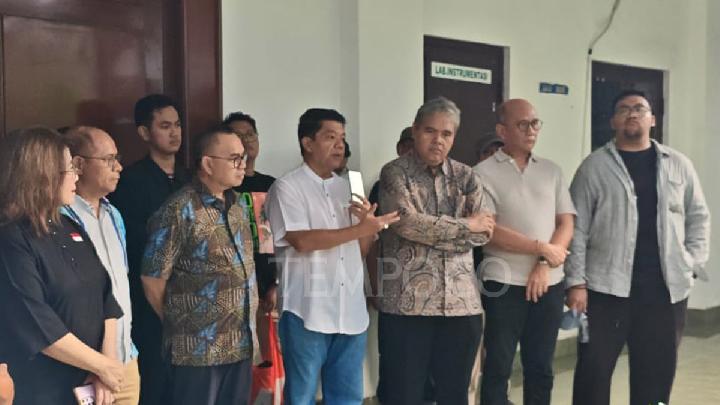
Tempatdonasi.com – According to a recent analysis by Saiful Mujani Research and Consulting (SMRC), there is a growing sense of apprehension among Indonesians when it comes to openly discussing political matters during the tenure of President Prabowo Subianto. This trend, highlighted during the Republic Conference in Cikini, Central Jakarta, on Sunday, June 28, 2026, suggests that political discourse is becoming more constrained than it was in the early years of Indonesia’s post-Suharto Reformation era.
Survey Reveals Sharp Decline in Political Freedom
The survey conducted by SMRC in March 2026 measured public perception of fear surrounding political conversations. The findings indicated a significant drop in confidence compared to the past. Saiful Mujani, the founder of SMRC, remarked during the conference that the current score on a scale from 0 to 10 stands at just three, contrasting sharply with the earlier seven recorded at the dawn of the Reformation. “At the beginning of the reformation, the score was seven. Now, it has dropped to only three,” he explained, emphasizing the shift in attitudes toward political expression.
“So, from a seven, the score has now averaged out to four across all of these indicators,” Saiful observed, underscoring the erosion of civic freedoms in recent years.
Saiful attributed this decline to a combination of factors, including heightened scrutiny of public speech and a growing perception that political discussions carry risks. He argued that the freedom to debate politics openly is no longer as protected as it once was, with citizens increasingly wary of potential repercussions. This sentiment, he noted, reflects a broader trend of restriction in political discourse, which has been evident since Prabowo assumed the presidency in October 2024.
Freedom of Expression Metrics Show Deterioration
To contextualize the findings, Saiful referenced the Varieties of Democracy (V-Dem) index, a global measure of political freedom and expression. The index evaluates how governments respect citizens’ rights to communicate and engage in political activity. SMRC’s analysis aligns with V-Dem’s historical data, which shows Indonesia’s freedom score fluctuating around seven between 2000 and 2010. However, by 2025, that score had fallen below five, indicating a notable weakening of political liberties.
Saiful pointed out that the decline in Indonesia’s political freedom score is not isolated to one factor but is a cumulative effect of policies and practices that limit open dialogue. “The government’s respect for political expression has diminished over time,” he said, adding that the data highlights a troubling pattern of restriction. This analysis, he claimed, reinforces the idea that public fear of political discussion is intensifying, with citizens now more cautious about expressing their views.
“Freedom of expression measures the government’s respect for its citizens’ rights to express themselves, including both political freedom and academic life,” Saiful explained, drawing attention to the interconnectedness of political and intellectual freedoms.
Republic Conference Shift Sparks Debate
The Republic Conference, which brought together diverse voices from civil society, was originally planned to be held at the UI Campus in Salemba. However, the event was abruptly moved to Cikini, Central Jakarta, following administrative complications. Saiful Mujani delivered his remarks at the relocated venue, where participants included figures such as Sudirman Said and Yanuar Nugroho. The conference aimed to address the state of political freedom in Indonesia, but its location change raised questions about the ease with which civic events can be reshaped.
According to SMRC’s reports, the public’s perception of fear has steadily increased since Prabowo took office. In the early months of his administration, 51 percent of respondents believed that people were hesitant to engage in political conversations. By March 2026, this figure had risen to 53 percent, signaling a more pronounced sense of unease. Saiful argued that this rise in fear is not merely a statistical anomaly but a reflection of a deeper societal shift toward self-censorship and caution in public discourse.
Broader Implications for Democracy
Saiful highlighted the broader implications of this trend, warning that the decline in political freedom could have long-term consequences for Indonesia’s democratic processes. He emphasized that the fear of arbitrary actions by state institutions and constitutional violations is becoming more pervasive. “The public is not only afraid of discussing politics but also of the potential consequences of doing so,” he stated, noting that this climate of fear could stifle dissent and limit the diversity of political opinions.
His remarks were supported by a series of national surveys conducted by SMRC and the Lembaga Survei Indonesia (LSI), which have tracked public attitudes toward political expression over time. These surveys reveal a consistent pattern of decreasing confidence in political discourse, with citizens increasingly associating it with risk. Saiful suggested that this fear is not just about personal safety but also about the broader implications for democratic participation and governance.
“This fear must be challenged, as it threatens the very foundation of a vibrant democracy,” Saiful asserted, calling for greater awareness and action to restore public confidence in political expression.
Contextualizing the Trend in Political Discourse
Before the Republic Conference, Saiful Mujani had already shared these insights on the Political Review program, which aired on SMRC TV’s YouTube channel on April 30, 2026. The program provided a platform for discussing the evolution of political attitudes in Indonesia, with Saiful using data from multiple surveys to illustrate the trend. He noted that while the early post-Suharto era was marked by optimism and a desire for open dialogue, the current administration has introduced new challenges to that freedom.
The SMRC report also draws comparisons between the past and present, suggesting that the fear of political discussion has become more entrenched than it was during the initial Reformation period. Saiful argued that the government’s approach to political expression has evolved, with a focus on maintaining control through subtle but effective measures. This has created an environment where citizens are less likely to voice their opinions freely, fearing both retribution and the consequences of dissent.
Additionally, the analysis points to a growing divide in public perception. While some citizens may still feel confident in discussing politics, others are increasingly influenced by the dominant narrative of caution. Saiful suggested that this trend could be exacerbated by the government’s use of media and legal tools to shape discourse. “The fear of arbitrary actions by state apparatuses is a key driver of this change,” he said, highlighting the need for a more inclusive and open political environment.
Future Outlook and Calls for Action
Despite the challenges, Saiful remained hopeful that the situation could be reversed. He emphasized the importance of civil society in advocating for political freedom and urged citizens to remain vigilant in protecting their rights. “The current climate is a wake-up call,” he said, “but it also presents an opportunity to challenge the status quo and restore trust in democratic institutions.”
His comments reflect a broader concern among Indonesian analysts and activists about the trajectory of political discourse under Prabowo’s leadership. While the survey data provides a clear indication of public sentiment, it also raises questions about the effectiveness of current policies in fostering open dialogue. Saiful called for a more transparent approach to governance, arguing that increased civic engagement is essential to maintaining a healthy democracy.
As the Republic Conference drew to a close, attendees and observers were left with a shared understanding of the challenges facing political freedom in Indonesia.