
Jatiwaringin Landfill Fire: Walhi Slams Systemic Failures
Jatiwaringin Landfill Fire: Walhi Criticizes Systemic Failures Jatiwaringin Landfill Fire - The Indonesian Forum for the Environment (Walhi) has condemned the
Jatiwaringin Landfill Fire: Walhi Criticizes Systemic Failures
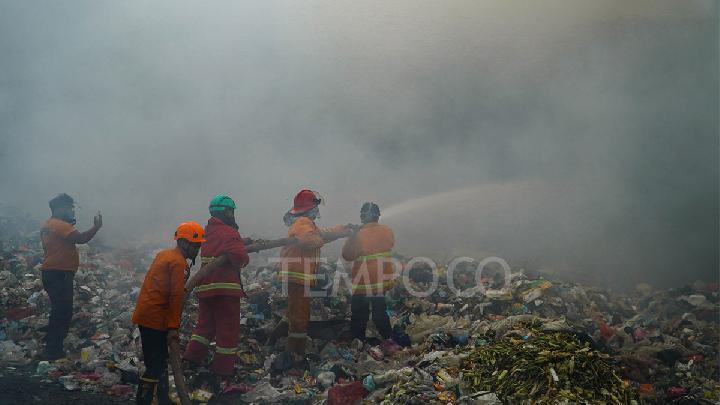
Tempatdonasi.com – The Indonesian Forum for the Environment (Walhi) has condemned the recent fire at the Jatiwaringin Landfill in Tangerang Regency, asserting that it is not a mere accident but a symptom of deeper flaws in the nation’s waste management framework. The blaze, which lasted from June 30 to July 2, 2026, scorched more than 15 hectares of land and led to 154 reported cases of severe respiratory infections. Walhi argues that this disaster underscores a pattern of neglect, highlighting the urgent need for systemic reform to prevent similar crises in the future.
Systemic Failures in Waste Management
According to Walhi, the Jatiwaringin incident is a direct result of persistent shortcomings in how waste is handled across the region. The landfill processes between 1,366 and 2,700 tons of garbage daily, which amounts to 498,590 to 985,500 tons per year. Despite these figures, the facility only manages about 59% of the total waste generated in Tangerang Regency, placing significant strain on its infrastructure. This overburdening has created a volatile environment, where inadequate management practices compound the risks of ecological catastrophe.
“Systemic failures in waste management have made this fire inevitable,” said Wahyu Eka Styawan, a Waste Justice Campaigner at Walhi National. “The crisis is not isolated but part of a broader collapse in how we handle waste across multiple regions.”
Wahyu emphasized that the Jatiwaringin fire is interconnected with other landfill issues. For instance, the closure of the Cipeucang Landfill in South Tangerang has forced waste to be redirected, contributing to the overload at Jatiwaringin. Additionally, recent landslides at the Cipayung and Bantargebang landfills further illustrate the instability of the current system. These events collectively point to a failure in both planning and execution, leaving communities vulnerable to recurring disasters.
The Human Cost of the Crisis
Wahyu pointed out that the fire’s effects extended beyond environmental damage. In 2023, a series of major landfill fires, including those in Sarimukti (Bandung Regency), Rawa Kucing (Tangerang City), and Suwung (Denpasar), displaced over 13,000 residents. These blazes released toxic smoke containing harmful chemicals like dioxins and furans, exacerbating health problems and disrupting livelihoods. The recurring nature of such incidents confirms that the problem is no longer confined to environmental concerns—it has become a serious threat to public health.
“This is not just an environmental issue; it’s a humanitarian crisis,” Wahyu stated. “When open dumping systems mix organic waste with non-organic materials, methane accumulates, creating highly flammable conditions. The combination of poor waste management and climate extremes, such as heat waves, turns this into a predictable disaster.”
The environmental impact of these fires is compounded by the climate crisis. Rising temperatures and prolonged dry spells increase the likelihood of combustion, while the buildup of methane gas—generated from decaying organic matter—adds to the explosive potential. Wahyu noted that the Jatiwaringin fire is a clear example of how these factors interact, creating a cycle of environmental and health risks that are difficult to break without structural changes.
Government Accountability and Policy Criticisms
Wahyu criticized the central and local governments for failing to enforce the mandates of Law Number 18 of 2008, which required open dumping to be phased out by 2013. “The same problems we face today are the result of policies that were supposed to be implemented years ago,” he said. The current approach, he argued, relies on emergency responses rather than long-term solutions, leaving the system in a state of perpetual crisis.
“The fire at Jatiwaringin is a reminder that unless we address the root causes—such as excessive waste generation and inefficient sorting—landfills will continue to be ticking time bombs,” Wahyu warned. “Focusing on downstream technologies like incineration does not solve the problem; it only shifts attention away from the upstream failures that create the conditions for disaster.”
He also highlighted the limitations of current firefighting strategies. While water bombing and ground operations are commonly used to extinguish landfill fires, these methods are insufficient to tackle the deep-seated issue of methane accumulation. “Water cannot reach the hotspots beneath the surface where organic waste continues to burn,” Wahyu explained. “To truly address the problem, we need to smother waste piles with soil, cutting off oxygen and preventing methane release.”
A Call for Systemic Change
Walhi’s analysis suggests that even with improved tactics, the core issue remains unresolved. The organization warns that without reducing waste at the source and implementing effective sorting systems, landfills will persist as hazardous zones. “Waste-to-energy projects, while promising, are not a panacea,” Wahyu said. “They divert attention from the real challenge: managing the massive volume of waste generated daily and ensuring it is processed safely.”
The Jatiwaringin fire serves as a stark warning to policymakers. Wahyu stressed that the crisis demands more than temporary fixes—it requires a complete overhaul of waste management practices. “Until we prioritize upstream solutions, such as organic waste processing and methane capture, we will keep facing the same disasters,” he concluded. “The state must act decisively to prevent future outbreaks of toxic smoke and ensure the health and safety of its citizens.”
As the smoke from Jatiwaringin continues to linger, the call for systemic reform grows louder. With over 15,000 tons of waste processed daily, the region’s landfills are at a breaking point. The fire has exposed the fragility of the current system, urging authorities to take immediate and sustained action. Without it, the threat of ecological and health crises will only intensify, leaving communities in perpetual harm. The Jatiwaringin incident is not just a local problem—it is a national warning that demands urgent attention and comprehensive change.