JCI and Rupiah Close Lower on Monday, What’s Behind It?
ecline on Monday: Factors Behind the Movement JCI and Rupiah Close Lower on Monday - The Jakarta Composite Index (JCI) ended the trading session on Monday
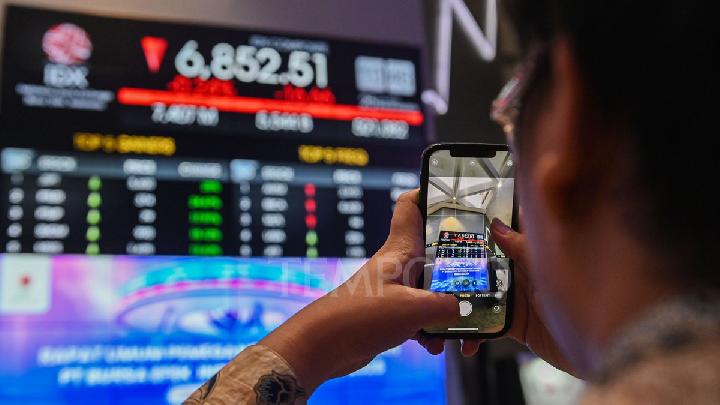
JCI and Rupiah Decline on Monday: Factors Behind the Movement
Tempatdonasi.com – The Jakarta Composite Index (JCI) ended the trading session on Monday, June 22, 2026, with a 0.98% drop to 6,116.69. This decline followed a day of cautious trading, as market participants anticipated key developments in the coming days. Analysts noted that the index’s performance was shaped by a combination of domestic and international influences, with 221 stocks rising, 445 falling, and 147 remaining unchanged. The total volume of shares traded reached 22.51 million, generating a turnover value of Rp13.48 trillion. Transaction activity recorded 1.73 million instances, reflecting a moderate level of investor engagement.
Phintraco Sekuritas’ research team attributed the JCI’s downward trend to investor behavior influenced by uncertainty surrounding upcoming market reviews. The team highlighted the anticipation of the Morgan Stanley Capital International (MSCI) Annual Market Classification Review, scheduled for June 24, 2026, as a primary driver. “The wait-and-see attitude among investors has created a more defensive stance, dampening buying momentum,” the analysts observed. They also pointed to the ongoing debate around the Law on Financial Sector Development and Strengthening (P2SK) as a contributing factor. The law’s provisions, which aim to modernize Indonesia’s financial framework, have sparked concerns about regulatory clarity and its potential impact on market stability.
“The P2SK law’s provisions have introduced a layer of uncertainty, as stakeholders await its final implementation and implications for sector-specific regulations,” the team explained in their assessment.
Parallel to the JCI’s movement, the Indonesian rupiah weakened slightly against the U.S. dollar, closing at Rp17,843 per dollar. This depreciation aligns with broader trends in Asian currencies, which have shown similar declines in recent sessions. Phintraco Sekuritas noted that the rupiah’s performance is tied to a mix of domestic and global economic signals, with inflationary pressures and trade dynamics playing critical roles.
PT Traze Andalan Futures’ director, Ibrahim Assuaibi, provided additional context on the rupiah’s movement, linking it to Bank Indonesia’s (BI) inflation forecasts. He stated that the central bank’s prediction of rising inflation, driven by recent adjustments to non-subsidized fuel prices, has affected market sentiment. “These adjustments have increased operational costs for businesses, leading to a more cautious outlook,” Assuaibi explained. He further emphasized that BI’s concerns about El Nino’s impact on agricultural output and food supply chains have amplified inflationary risks.
“The combination of fuel price hikes and climate-related disruptions is creating a dual pressure on the currency, as investors weigh economic stability against external shocks,” Assuaibi added.
On the global stage, Ibrahim highlighted the influence of the U.S. dollar index on the rupiah’s performance. He cited the market’s reaction to U.S. President Donald Trump’s warning to Iran about potential military action, which unsettled investors. “Trump’s statements raised concerns about geopolitical risks, particularly in oil-producing regions, and pushed the dollar higher,” he said. This shift in U.S. dollar strength has had a ripple effect across Asian currencies, including the rupiah.
Despite the initial volatility, Ibrahim noted that recent diplomatic efforts between the U.S. and Iran have provided some relief. “The talks in Switzerland, where Tehran secured exemptions for oil and petrochemical exports, have eased fears of supply chain disruptions,” he remarked. This development has tempered the dollar’s upward trajectory, offering a potential reprieve for the rupiah. However, the long-term effects of these negotiations remain to be seen, with analysts closely monitoring the outcome of the MSCI review.
Indonesia’s financial markets are currently navigating a delicate balance between domestic policy debates and global macroeconomic forces. The JCI’s decline reflects a temporary pause in bullish momentum, with investors prioritizing risk management over aggressive gains. Meanwhile, the rupiah’s weakness underscores the interplay between inflationary pressures and international trade conditions. These factors collectively shape the market’s trajectory, prompting a closer examination of both local and global economic indicators.
The MSCI review, set for June 24, 2026, is a pivotal event for Indonesia’s equity market. A potential downgrade to frontier status could signal reduced foreign investment inflows, while a positive outcome might bolster investor confidence. Phintraco Sekuritas’ analysis suggests that the review will serve as a catalyst for market participants, with its results expected to influence trading activity in the weeks ahead.
Looking ahead, the market’s performance will depend on how effectively policymakers address the P2SK law’s implementation and manage inflationary expectations. The central bank’s role in maintaining currency stability through monetary policy adjustments will also be crucial. Investors are likely to remain on edge, with decisions influenced by both the MSCI announcement and the broader economic climate.
As the week progresses, the focus will shift to key economic data releases and geopolitical developments. The JCI’s movement and the rupiah’s performance are not isolated events but part of a larger narrative involving regional and global economic trends. Market participants will need to closely monitor these dynamics to anticipate future volatility and strategic opportunities.
The situation highlights the interconnectedness of financial markets, where domestic policies and international events can simultaneously impact investor behavior and currency movements. With the MSCI review and the P2SK law as central themes, Indonesia’s markets are poised for further adjustments. The coming days will reveal whether these factors will drive continued caution or spark renewed optimism among traders and investors.
In summary, the JCI and rupiah’s decline on Monday reflects a combination of domestic regulatory uncertainty and global macroeconomic forces. While the immediate outlook remains cautious, the resolution of these factors could shape the market’s direction in the near term. Investors are advised to stay informed and adaptable as they navigate this evolving landscape.
Market Outlook and Strategic Implications
Analysts suggest that the JCI’s movement and the rupiah’s depreciation are temporary, with underlying fundamentals still supportive of long-term growth. The P2SK law’s implementation, though uncertain, offers potential for structural reforms that could enhance market efficiency. Meanwhile, the U.S.-Iran negotiations provide a glimmer of hope for stabilizing global energy markets, which in turn may ease pressure on the rupiah.
For investors, the week ahead presents a critical opportunity to reassess their portfolios. The MSCI review could act as a tipping point, influencing capital flows and market sentiment. If the review leads to a positive outcome, it might unlock new investment avenues, particularly in sectors deemed resilient to inflationary pressures. Conversely, a downgrade could necessitate a more conservative approach, with investors seeking safe-haven assets.
The central bank’s strategies will also play a significant role in shaping the market’s trajectory. BI’s ability to manage inflation through interest rate adjustments and liquidity controls will determine the rupiah’s resilience. Additionally, the impact of El Nino on agricultural production and food prices remains a key concern, with potential ripple effects on the economy.
Ultimately, the interplay between domestic policy, global economic signals, and investor psychology will define Indonesia’s market performance in the coming weeks. While the immediate outlook is mixed, the market’s adaptability and the resolution of key uncertainties could pave the way for a more stable and dynamic environment.