
JCI, Rupiah Weaken Ahead of MSCI Decision
Rupiah Weaken Ahead of MSCI Decision JCI Rupiah Weaken Ahead of MSCI - On June 23, 2026, the Jakarta Composite Index (JCI) experienced a slight decline
JCI, Rupiah Weaken Ahead of MSCI Decision
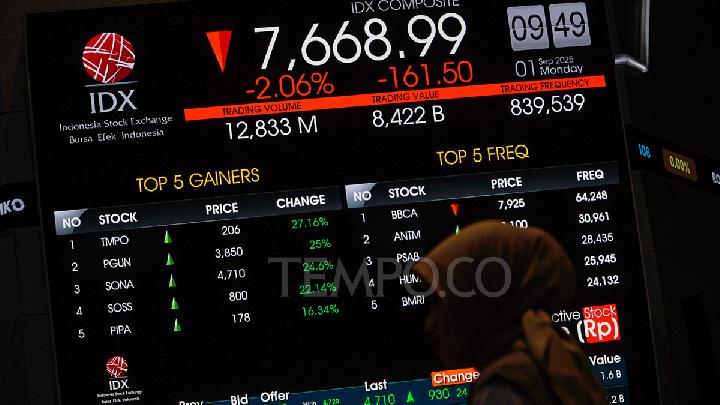
Tempatdonasi.com – On June 23, 2026, the Jakarta Composite Index (JCI) experienced a slight decline, falling 0.25% to 6,101 during afternoon trading. This movement followed a broader trend of uncertainty as market participants anticipated the upcoming decision from the Morgan Stanley Capital International (MSCI) regarding Indonesia’s capital market classification. The stock market saw 282 companies increase in value, 373 experience declines, and 160 maintaining their previous levels. The total market capitalization for the day stood at Rp10.711 trillion, reflecting a cautious mood among investors.
MSCI Review and Investor Sentiment
Analysts from Pilarmas Investindo Sekuritas highlighted that the JCI’s performance was influenced by multiple factors, with MSCI’s potential decision looming large. The firm noted that the index’s movements were partly driven by news that some major Japanese automakers might shift production facilities from Indonesia to Vietnam. This development raised concerns about Indonesia’s ability to retain foreign investments in the manufacturing sector. “The global index provider Morgan Stanley Capital International (MSCI) is set to evaluate whether Indonesia’s capital market should be reclassified as a frontier market,” the analysts explained. “Such a downgrade could lead to a notable outflow of foreign capital, as investors may perceive the market as less attractive.”
“Meanwhile, the global index provider Morgan Stanley Capital International (MSCI) is scheduled to conduct a review this week regarding the possible downgrade of Indonesia’s capital market status to a frontier market, which could trigger a significant outflow of foreign capital,” they said in their analysis on Tuesday, June 23, 2026.
The MSCI evaluation has become a focal point for market observers, as the outcome could reshape investor confidence. Pilarmas emphasized that the decision will depend on assessments of market depth, transparency, and the ability to absorb shocks. “Indonesia’s economy is vulnerable to external pressures, and a downgrade could amplify this risk,” the team added. The market’s anticipation of the MSCI decision has created a ripple effect, influencing not only stock prices but also currency values.
Rupiah Exchange Rate Declines
Alongside the JCI’s dip, the Indonesian rupiah faced pressure, closing 16 points lower at Rp17,859 per US dollar. This decline underscores the interconnectedness of financial markets and investor sentiment. Director of Traze Andalan Futures, Ibrahim Assuaibi, noted that the rupiah’s weakness is closely tied to the MSCI review. “The rupiah’s recent movement reflects broader anxieties about Indonesia’s economic prospects,” he stated in a written statement. “Investors are closely watching the MSCI evaluation to gauge the market’s stability.”
“He mentioned that the market was pressured after MSCI lowered the rating for Indonesia’s information flow last week,” Ibrahim said in a written statement on Tuesday, June 23, 2026.
The downgrade of Indonesia’s information flow rating last week added to the uncertainty, further weakening investor appetite. Ibrahim explained that the MSCI assessment evaluates a range of indicators, including the efficiency of financial systems, regulatory frameworks, and market openness. “A frontier market classification would signal that Indonesia’s economy is less developed compared to emerging markets, which could deter long-term capital inflows,” he warned.
Industry Challenges and Competitiveness Concerns
Analysts also pointed to ongoing challenges in Indonesia’s manufacturing sector as a contributing factor to the market’s cautious stance. These issues include production halts, employee layoffs, delayed salary payments, and a trend of relocating investments to other countries. Ibrahim Assuaibi stated that such developments are seen as signs of diminishing competitiveness in the domestic industry. “The shift in manufacturing operations from Indonesia to Vietnam highlights a growing preference for countries with lower production costs and more favorable trade policies,” he said.
Indonesia’s manufacturing sector has long been a key driver of economic growth, but recent setbacks have raised questions about its resilience. The relocation of Japanese automotive factories, for instance, has sparked debates about whether Indonesia can maintain its position as a regional industrial hub. “This trend could have long-term implications for local industries, especially if it leads to a sustained outflow of capital,” Pilarmas Investindo Sekuritas warned in their report.
Global Context and Market Outlook
The MSCI review comes at a critical time for Indonesia, as it seeks to strengthen its position in the global financial landscape. A frontier market designation would place Indonesia in a category of economies with lower market development and higher volatility compared to emerging markets like Malaysia or Thailand. Pilarmas Investindo Sekuritas highlighted that this reclassification could impact the inflow of foreign direct investment (FDI), which has been vital for Indonesia’s economic expansion.
Despite the current downward trend, some experts remain optimistic about Indonesia’s ability to recover. They argue that the government’s focus on infrastructure development, digital transformation, and trade agreements could mitigate the risks associated with a potential MSCI downgrade. “Indonesia’s strategic location and growing consumer base offer strong fundamentals that could attract renewed investment,” one analyst noted. However, the market’s reaction to the MSCI decision will depend on the specific criteria used in the evaluation and how investors interpret the results.
As the deadline for the MSCI decision approaches, market participants are closely monitoring economic indicators, including trade balances, inflation rates, and policy changes. The rupiah’s decline and the JCI’s weakness suggest that investors are favoring safer assets, such as currencies from more stable economies. “The outlook for Indonesia’s capital market will hinge on whether the MSCI evaluation highlights opportunities or risks,” Ibrahim Assuaibi concluded. “Either way, the decision will have far-reaching consequences for the nation’s financial landscape.”
The potential downgrade also prompts a reevaluation of Indonesia’s economic strategies. Policymakers may need to address structural issues in the financial sector, such as improving transparency and enhancing market efficiency, to retain investor confidence. Meanwhile, businesses in the manufacturing sector are urged to adapt to changing conditions by optimizing costs and diversifying export markets. “The coming weeks will be crucial for Indonesia’s economy as it navigates this pivotal moment,” Pilarmas Investindo Sekuritas added.
Related Articles and Further Reading
For more insights into the market’s performance, readers are encouraged to explore related articles. One such piece, “JCI and Rupiah Close Lower on Monday, What’s Behind It?” delves deeper into the factors affecting Indonesia’s financial markets. The article examines historical trends and market reactions to similar global assessments. “The current situation mirrors past scenarios where MSCI decisions triggered shifts in investor behavior,” it states. “Understanding these patterns is essential for predicting future market movements.”
Stay updated with the latest news from Tempo by visiting the Google News platform. The article’s analysis provides a comprehensive view of the economic dynamics at play, offering valuable context for investors and stakeholders. As the JCI and rupiah continue to reflect the uncertainty surrounding the MSCI decision, the focus remains on how these developments will shape Indonesia’s economic trajectory in the months ahead.