Komdigi Claims Gov’t Not Authorized to ‘Take Down’ News Content
Komdigi Claims Government Not Authorized to 'Take Down' News Content Komdigi Claims Gov t Not Authorized - In a recent statement, Alexander Sabar, Director
Komdigi Claims Government Not Authorized to ‘Take Down’ News Content
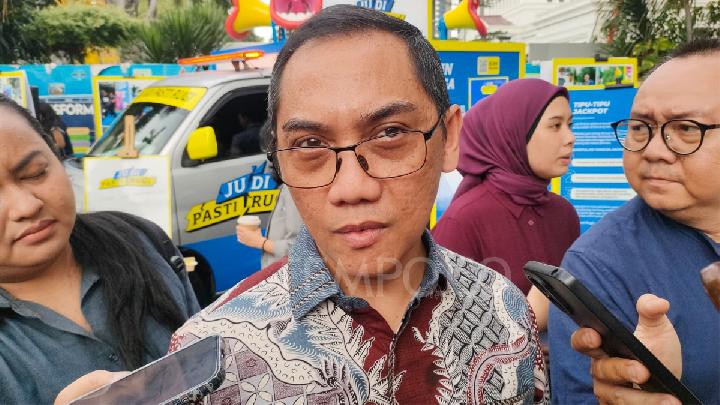
Tempatdonasi.com – In a recent statement, Alexander Sabar, Director General of Digital Space Supervision at the Ministry of Communication and Digital (Komdigi), asserted that the government cannot remove news content without the Press Council’s endorsement. This declaration came in response to Tempo’s article titled “The Difference Between Press Suppression Then and Now,” which was published on June 22, 2026. The piece marked the 32nd anniversary of a pivotal moment in Indonesian media history—the censorship of Tempo, Editor, and Tabloid Detik magazines by the New Order regime on June 21, 1994.
According to Sabar, the authority to regulate press materials lies under the Press Law, which establishes specific legal procedures for content control. “The power to handle press products is fundamentally rooted in the Press Law,” he explained during an interview with Tempo on June 22, 2026. This legal framework, Sabar argued, means that Komdigi lacks direct authority to censor news content. However, he acknowledged that the ministry may act if content is later classified as press material after being taken down, provided it aligns with the law’s provisions.
“The power to handle press products is fundamentally rooted in the Press Law,” said Alexander Sabar during an interview with Tempo on June 22, 2026.
The 1994 censorship event, which saw the revocation of the Publishing Business License (SIUPP) for Tempo, Editor, and Tabloid Detik, had a lasting impact on media operations in Indonesia. At the time, the Department of Information, under the New Order regime, used the SIUPP as a tool to control the press. Following Soeharto’s resignation in 1998, Minister Yunus Yosfiah removed SIUPP as a requirement, shifting the focus to legal entity status for press institutions. This change, Sabar noted, has streamlined the process for media companies, reducing the government’s ability to impose immediate restrictions on news content.
Despite these legal adjustments, press censorship persists in various forms. Bayu Wardhana, Secretary General of the Alliance of Independent Journalists (AJI Indonesia), highlighted this in a statement on June 21, 2026. He argued that media organizations are increasingly vulnerable to indirect pressures. “When pro-government entities become shareholders of a publication, they can influence editorial decisions,” Bayu explained. This phenomenon, he said, has created a scenario where media companies might prioritize alignment with political interests over independent reporting.
Bayu also pointed to the use of government advertising as a subtle method of control. “Public funding can shape the content media outlets choose to feature,” he said. By providing financial support, the government can encourage favorable coverage while discouraging critical reporting. This dynamic, he warned, pressures media to balance their commitment to truth with the need to maintain favorable relationships with authorities.
Legal Challenges and Self-Censorship
Another avenue for censorship involves civil or criminal lawsuits. Even though the Press Law offers legal protections, Bayu emphasized that the high costs of litigation often force media to self-censor. “Financial strain can lead to preemptive edits to avoid legal consequences,” he noted. This practice, he explained, is particularly common when content is perceived as challenging the government’s narrative or exposing corruption.
Bayu further argued that digital platforms have become new battlegrounds for press suppression. “The government, through Komdigi, can compel social media services to remove news articles,” he said. This ability, he claimed, allows authorities to quickly eliminate content that might spark public debate or dissent. The recent case involving Magdalene’s report on the acid attack against Andrie Yunus, a Kontras activist, exemplifies this trend. Published on March 30, 2026, the article was requested for removal by Komdigi, raising concerns about the influence of digital censorship on free speech.
Historical Context and Ongoing Struggles
The 1994 revocation of SIUPP licenses was a turning point in Indonesia’s media landscape. It symbolized the New Order regime’s efforts to curtail independent journalism and consolidate control over information. Tempo, Editor, and Tabloid Detik had been vocal critics of the government, and their suppression was a clear demonstration of the regime’s power to silence dissent. However, the subsequent removal of SIUPP as a mandatory permit in 1998 marked a shift toward a more liberalized press environment.
Despite this progress, the legacy of the 1994 censorship continues to shape contemporary media practices. The anniversary of the event, observed on June 21, 2026, prompted discussions about the evolution of press suppression over time. While legal frameworks have expanded, the methods of control have adapted to new technologies and platforms. “The tactics have changed, but the intent remains the same: to manage the flow of information,” Bayu remarked.
Compared to the past, modern censorship often operates through more covert means. Instead of outright bans, authorities may use legal loopholes, shareholder influence, or financial incentives to steer media narratives. This approach, Bayu argued, is harder to detect but equally effective in shaping public discourse. The government’s role in digital spaces, via Komdigi, has further complicated the issue, as online platforms are now key intermediaries in content moderation.
Bayu also addressed the debate over Komdigi’s authority. While Sabar claimed the ministry lacks direct power to remove news content, critics argue that the agency has increasingly leveraged its position to exert influence. “Komdigi’s actions demonstrate that the government can still control the narrative, even if not through traditional censorship,” he said. This duality—where legal protections exist but practical pressures persist—creates a complex environment for journalists and editors.
The case of Magdalene’s article on the acid attack highlighted how digital censorship can quickly disrupt media freedom. The report, which detailed findings from the Advocacy Team for Democracy, was taken down by Komdigi’s request, underscoring the agency’s role in shaping online discourse. Such incidents, Bayu noted, reflect the ongoing struggle between press independence and government intervention in the digital age.
In conclusion, the 32nd anniversary of the 1994 censorship served as a reminder of the challenges faced by media in Indonesia. While the legal landscape has evolved, the mechanisms of control have not disappeared. From the Press Council’s recommendations to the subtle pressures of government advertising, journalists continue to navigate a system that balances freedom with the risk of suppression. As the digital era progresses, the role of Komdigi in content moderation raises new questions about the future of press independence in the country.