
Mount Anak Krakatau Erupts Six Times in 10 Hours
ultiple Eruptions Mount Anak Krakatau Erupts Six Times - The Indonesian volcanic monitoring authority, known as PVMBG, has documented an increase in seismic
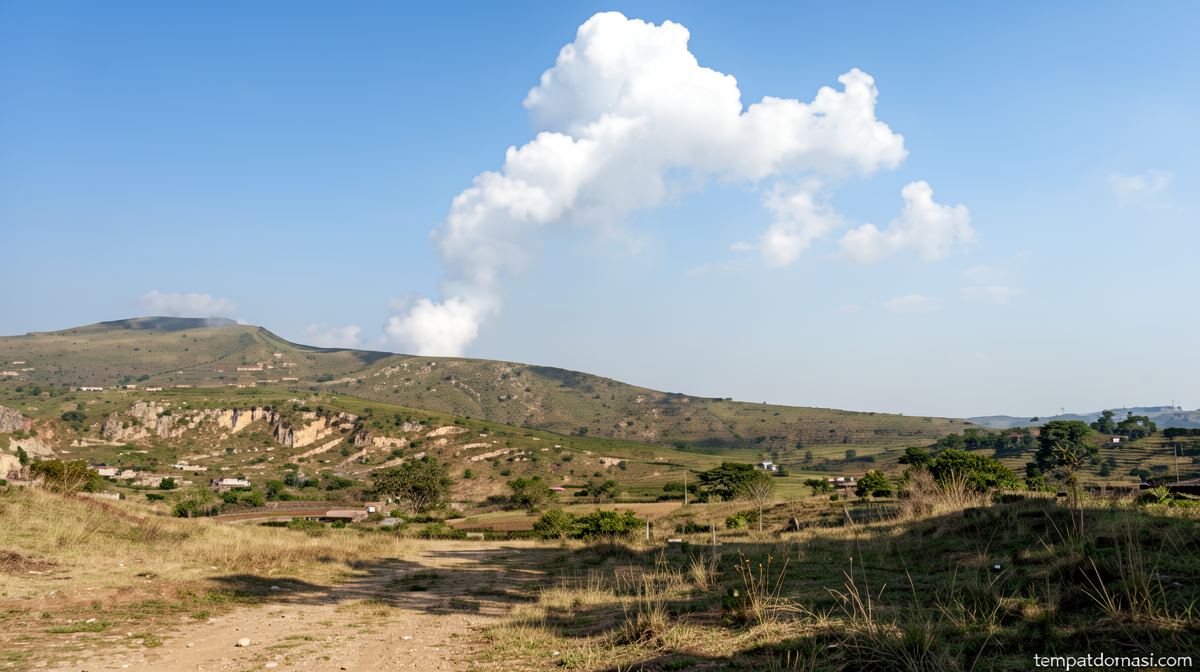
Volcanic Activity Intensifies at Anak Krakatau with Multiple Eruptions
Tempatdonasi.com – The Indonesian volcanic monitoring authority, known as PVMBG, has documented an increase in seismic activity emanating from Mount Anak Krakatau. According to their latest assessment released on Wednesday morning, July 8, 2026, the stratovolcano located within the Sunda Strait has experienced six distinct explosive events spanning a ten-hour window. The alert level remains elevated at Level III, designated as Siaga, representing the second tier in a four-stage warning system.
Chronology of Explosive Events
The sequence of eruptions commenced shortly after midnight when the first blast occurred at 12:11 a.m. WIB. Although atmospheric conditions limited clear visual confirmation of the eruption, seismographic equipment successfully captured the event. The recorded amplitude reached 24 millimeters, with the seismic activity persisting for forty seconds.
Volcanic activity intensified during the early morning hours. At 5:50 a.m. WIB, a substantial ash plume ascended approximately 250 meters above the mountain’s summit, placing it at an elevation of 407 meters above sea level. Observers noted that the ash column displayed varying shades ranging from gray through brown to black. Wind patterns carried this dense material toward the northern and northwestern directions. The seismograph registered this particular eruption with an amplitude of 26.1 millimeters over a forty-four-second duration.
Continuing the pattern of frequent activity, another eruption manifested at 7:11 a.m. WIB. This event generated a moderate to thick cloud composed of gray and black ash particles. The material rose 250 meters above the peak before being transported in a northwesterly direction. Seismic records indicate this eruption lasted thirty-one seconds with a maximum amplitude measurement of 44.4 millimeters.
The mountain’s restless behavior persisted through the morning. At 8:42 a.m. WIB, yet another explosive episode produced a dense black ash column extending 100 meters above the crater opening, equivalent to 257 meters above sea level. This dark ash cloud moved consistently toward the northwest quadrant. The corresponding seismographic recording showed a thirty-second duration with an amplitude of 35 millimeters.
Two additional eruptions followed in rapid succession. The fifth event at 9:35 a.m. WIB expelled ash reaching 200 meters above the summit, or 357 meters above sea level. This thick gray column also drifted northwestward over a twenty-seven-second period with an amplitude of 49 millimeters. The sixth and most recent eruption occurred at 9:54 a.m. WIB, producing a gray ash column approximately 100 meters above the summit at 257 meters elevation.
“This eruption was recorded on the seismograph with a maximum amplitude of 45 millimeters and a duration of 13 seconds,” stated Deny Mardiono, an officer stationed at the Anak Krakatau Volcano Observation Post, in his official report submitted to PVMBG on Wednesday.
Public Safety Recommendations
Despite the continuous series of eruptions throughout the day, authorities have not escalated the alert beyond Level III. PVMBG has issued comprehensive guidance for local communities, visiting tourists, and hiking enthusiasts. All individuals are advised to maintain a safe distance from Mount Anak Krakatau and refrain from conducting any activities within a three-kilometer radius surrounding the active crater zone.
Residents in nearby areas are encouraged to remain vigilant and regularly check official PVMBG communications for updates regarding potential changes in volcanic behavior. The monitoring station continues to track seismic patterns, ash dispersion, and other indicators that may signal further developments in the volcano’s activity cycle.
Volcanologists emphasize that while the current alert level indicates heightened activity, it does not necessarily predict an imminent major eruption. However, the frequency of recent explosions suggests that the volcanic system remains energetically active. Continued observation will provide valuable data for understanding the underlying geological processes driving these repeated explosive events at this historically significant Indonesian volcano.