Palace Probes Alleged Payoffs to UBK Student Leaders After Protest
Palace Probes Alleged Payoffs to UBK Student Leaders After Protest Palace Probes Alleged Payoffs to UBK Student - The Indonesian government's palace has
Palace Probes Alleged Payoffs to UBK Student Leaders After Protest
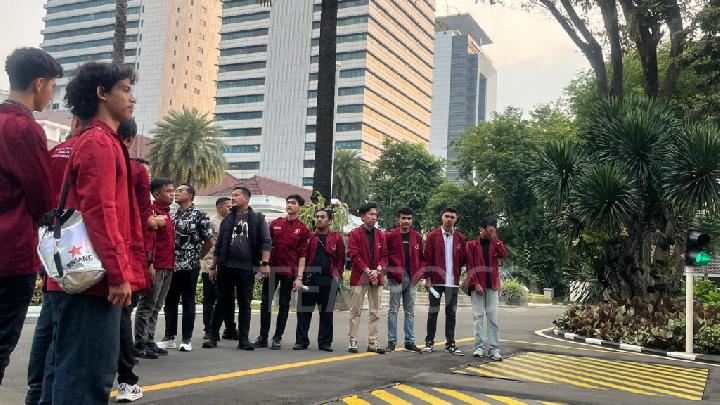
Tempatdonasi.com – The Indonesian government’s palace has launched an investigation into claims that student leaders from Bung Karno University (UBK) received financial incentives during a recent demonstration. Deputy State Secretary Bambang Eko Suhariyanto confirmed that he is still gathering information about the alleged transactions, which came to light after the head of the Faculty of Law’s Student Executive Board (BEM FH UBK) admitted to accepting money. The protest, held under the banner “Tata Ulang Indonesia” (Restructuring Indonesia), occurred on June 15, 2026, and drew attention to ongoing disputes over university policies and national governance.
Student Leader Confesses to Receiving Funds
Muhammad Abdimaludin, known as Abdi, confessed to receiving money during the protest while speaking at a UBK campus gathering. The confession, captured in a widely shared video on Instagram account @marhaenpress, revealed that he accepted funds to influence the movement of protesters. According to Abdi, the money was meant to prevent the crowd he was leading from advancing to the Horse Statue area in Central Jakarta, where tensions with law enforcement reportedly escalated.
“Regarding the issue being discussed, about the money, I did indeed receive it,” Abdi said in footage viewed by Tempo on June 23, 2026.
While the exact amount remains unspecified, Abdi stated that the funds he received accounted for approximately 20% of the total sum promised. He claimed the money was distributed among alumni, BEM FH UBK leaders, and the BEM Faculty of Economics (FE) at UBK. “2.5 million rupiah went to two alumni, 2 million to my Deputy, 2 million to Mubarak, and 2 million to the BEM FE UBK,” he detailed, highlighting the financial arrangement that allegedly undermined the protest’s independence.
Palace Officials Set to Investigate
Bambang Eko Suhariyanto, who was present at the Parliament complex on June 23, 2026, emphasized that the palace would first scrutinize the evidence before taking further action. “I will verify the news first to see if it is true,” he remarked, underscoring the government’s commitment to transparency. The allegations have sparked public debate, with critics questioning the role of external actors in shaping student-led movements. Social media platforms have amplified the controversy, with the video of Abdi’s confession gaining millions of views in a short span.
Abdi’s admission also raised concerns about the use of funds for personal expenses. He stated that the cash was allocated to cover his own costs and shared with other student leaders, suggesting a potential conflict of interest. The involvement of a police officer in facilitating the transfer of money has added to the scrutiny, as officials now seek to determine whether the payment was part of a coordinated effort to control the protest.
Protest Context and Demands
The demonstration on June 15, 2026, began at UBK’s Cikini campus and moved toward the Horse Statue area in Jakarta. Participants reportedly encountered minor clashes with police in the Tugu Tani district, where the protest’s trajectory shifted. After the event, Abdi and other student leaders were invited to meet with Vice President Gibran Rakabuming Raka, who hosted a 60-minute closed-door mediation session. During the meeting, the group discussed their grievances, which centered on the MBG (free nutritious meals) program and the Red and White Village Cooperative projects.
“The Vice President took note of our demands, which include the evaluation and overhaul of all the irregularities in the country today, such as the free nutritious meals (MBG) and the Red and White Village Cooperative,” Abdi stated following the mediation at the Vice President’s Palace on June 15, 2026.
The MBG program, designed to provide meals to underprivileged students, has been a focal point of criticism. Allegations of mismanagement and inefficiency have fueled student dissatisfaction, prompting calls for accountability. Similarly, the Red and White Village Cooperative, a student-led initiative, has faced scrutiny over its financial practices and transparency. Abdi’s team argued that these issues required urgent attention to ensure equitable resource distribution and student empowerment.
Threat of Continued Protests
Abdi warned that the group would not be deterred by the initial mediation. “If our demands are not fulfilled within 5×24 hours after the meeting, we will take to the streets with even greater numbers,” he declared on June 16, 2026, emphasizing the pressure on authorities to respond promptly. This statement has intensified the debate over the government’s handling of the students’ concerns, with some viewing the payoffs as an attempt to suppress dissent and others defending the actions as necessary for negotiation.
The protest’s timing and location are significant, as the Horse Statue area is a symbolic hub for political activism in Jakarta. The students’ march highlighted the growing influence of campus-based movements in shaping national discourse. Their demands reflect broader frustrations with institutional corruption and policy failures, which they claim have been ignored by officials despite visible public unrest.
Broader Implications of the Allegations
Analysts suggest that the alleged payoffs could indicate a pattern of influence peddling in university politics. With BEM FH UBK having historically played a key role in student advocacy, the accusation of financial ties has raised questions about the organization’s autonomy. Critics argue that the money was used to sway the protest’s outcome, potentially compromising its legitimacy. Meanwhile, supporters of the student leaders defend the actions as pragmatic steps to achieve tangible policy changes within a short timeframe.
The investigation may also extend to the Red and White Village Cooperative, which has been linked to similar funding disputes in other universities. If proven, these allegations could lead to reforms in how student organizations operate and interact with government officials. Additionally, the role of the police in distributing the funds has sparked discussions about the militarization of campus protests and the extent of their involvement in student affairs.
As the palace continues its probe, the situation remains under close watch. The government’s response will likely influence public perception of student-led movements and their ability to advocate for change. Meanwhile, the UBK students await clarity on whether their actions were justified or if they have crossed into the realm of political corruption. The outcome of this investigation could set a precedent for future protests and the accountability of those involved in them.
Andi Adam Faturahman contributed to this article.