Prabowo Blames Capital Outflows for Rupiah Weakness
Prabowo Blames Capital Outflows for Rupiah Weakness President Attributes Currency Decline to Persistent Wealth Drain Prabowo Blames Capital Outflows for
Prabowo Blames Capital Outflows for Rupiah Weakness
President Attributes Currency Decline to Persistent Wealth Drain
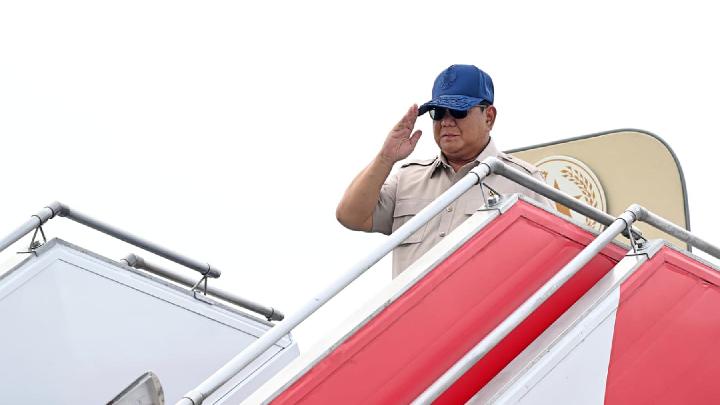
Tempatdonasi.com – Indonesian President Prabowo Subianto has emphasized that the rupiah’s decline against foreign currencies over the past few decades is primarily due to the ongoing outflow of the nation’s wealth. Speaking at the conclusion of the 2026 National Deliberation of Religious Scholars and the Grand Conference of Nahdlatul Ulama in Bangkalan, East Java, he drew a stark analogy to the body’s health. “If there are people claiming today that our rupiah is weak because of this and that, it’s because our wealth has been steadily flowing out,” he stated. “Imagine if our blood kept leaving our body every day—eventually, we would collapse.” Prabowo described the continuous loss of national wealth as a “net outflow of national wealth,” highlighting its detrimental impact on Indonesia’s economic stability. He argued that this phenomenon has eroded the country’s financial resilience, leaving it vulnerable to external pressures. The president’s remarks underscore a broader critique of Indonesia’s economic policies, which he believes have failed to retain domestic capital effectively.
Trade Surpluses Mask Capital Flight
While Indonesia has achieved a trade surplus for 17 of the last 22 years, Prabowo contended that these gains have not translated into strengthened currency. Instead, he pointed out that a staggering $436 billion in trade profits has been repatriated abroad, with approximately $343 billion allegedly lost through capital outflows. “Despite the surplus, the bulk of our earnings has been siphoned overseas,” he said. This discrepancy, he argued, reflects a systemic issue where the country’s economic resources are being drained rather than retained. The president stressed that this imbalance has limited the availability of real funds within the domestic economy. “What has happened in Indonesia is that the wealth of the Indonesian people has flowed out of the country,” he added. By highlighting this paradox, Prabowo sought to challenge the notion that external factors alone are to blame for the rupiah’s struggles. Instead, he framed the problem as a result of flawed economic mechanisms that prioritize foreign investment over local development.
Historical Context of Rupiah Fluctuations
The rupiah has faced significant volatility over the past two decades, with its value fluctuating against the US dollar. In the mid-2000s, the exchange rate stood at roughly Rp9,000 per US dollar, a relatively stable period. However, this stability was disrupted by a series of global events. The 2013 financial market turmoil, the outbreak of the COVID-19 pandemic, and recent geopolitical tensions have all contributed to the currency’s depreciation. These factors have pushed the rupiah beyond Rp18,000 per US dollar, marking one of its weakest points in history. Prabowo’s analysis connects these external shocks to the deeper issue of capital outflows. He suggested that while global events have certainly played a role, the root cause lies in the persistent drain of domestic resources. The president’s focus on this trend aligns with his broader vision to revitalize Indonesia’s economic framework. “We must address this flaw to safeguard national interests,” he reiterated, referring to his commitment to economic reforms.
Reforms Aimed at Stabilizing the Economy
Prabowo has long advocated for structural changes to Indonesia’s economic system, and his recent speech reaffirmed this stance. He argued that the current model has allowed excessive wealth to escape the country, weakening its ability to sustain growth. “Our goal is to protect the nation’s economic foundations,” he said, emphasizing the need for policies that prioritize local investment and reduce reliance on foreign capital. His reform agenda includes measures to attract and retain domestic funds, such as improving regulatory frameworks and fostering industries that generate long-term value. Prabowo also highlighted the importance of financial discipline, warning that unchecked capital outflows could jeopardize Indonesia’s economic future. “The wealth of our people must remain within our borders,” he asserted, underscoring the urgency of action.
Broader Implications for Economic Policy
The president’s critique of capital outflows has sparked discussions about the effectiveness of Indonesia’s economic strategies. While trade surpluses indicate strong export performance, the simultaneous outflow of capital suggests a gap between revenue generation and domestic reinvestment. Prabowo’s focus on this issue reflects a growing concern among policymakers about the sustainability of current economic practices. Analysts note that capital outflows are often driven by factors such as investment in foreign assets, debt repayment, and speculative trading. Prabowo’s emphasis on addressing these flows aligns with his vision of economic sovereignty. By retaining more of the nation’s wealth, he argued, Indonesia could better withstand external shocks and strengthen its domestic markets.
Call to Action for National Resilience
In his address, Prabowo called for a renewed sense of responsibility among economic leaders and citizens alike. “We must ensure that the wealth we generate stays within our economy,” he said. This, he claimed, would not only stabilize the rupiah but also empower Indonesia to achieve self-sufficiency. His speech resonated with many who have long criticized the country’s economic vulnerabilities, offering a clear roadmap for addressing them. The president’s remarks also reflect a shift in focus toward long-term stability rather than short-term gains. By framing the rupiah’s weakness as a symptom of broader economic inefficiencies, he aims to rally support for reforms that prioritize national interests. “Our wealth is the lifeblood of the nation,” he stated, urging policymakers to take decisive steps to reverse the trend.
Historical Events and Economic Challenges
The rupiah’s decline has been shaped by several pivotal moments in Indonesia’s economic history. The 2013 crisis, triggered by a combination of political uncertainty and global market volatility, marked a turning point. The currency’s value plummeted, reaching levels that raised concerns about the country’s financial health. The pandemic further exacerbated these challenges, as lockdowns disrupted trade and reduced investor confidence. More recently, geopolitical tensions such as the Russia-Ukraine war and the US-China rivalry have added to the pressure on the rupiah. Prabowo’s speech provides a retrospective analysis of these events, linking them to the systemic issue of capital outflows. He argued that the cumulative effect of these pressures has been a gradual erosion of Indonesia’s economic strength. By addressing this root cause, he believes the country can build resilience and avoid future crises.
Conclusion: A Path to Economic Revival
Prabowo’s focus on capital outflows highlights a critical challenge in Indonesia’s economic landscape. His call for reform underscores the need for policies that protect domestic resources and promote sustainable growth. While the rupiah’s fluctuations are often attributed to external factors, he insists that the solution lies in strengthening the internal economic system. “By stopping the continuous drain of our wealth, we can restore the rupiah’s strength and secure the nation’s future,” he concluded. His vision offers a compelling argument for prioritizing economic self-reliance, positioning Indonesia to navigate global uncertainties with greater confidence. Read: Prabowo Heads to East Java for NU Conference, Road Event Click here to get the latest news updates from Tempo on Google News.