Prabowo: ‘I Lost Four Times but Never Interfered With Elected Leaders’
Prabowo: 'I Lost Four Times but Never Interfered With Elected Leaders' Prabowo - On June 26, President Prabowo Subianto addressed a gathering of academic
Prabowo: ‘I Lost Four Times but Never Interfered With Elected Leaders’
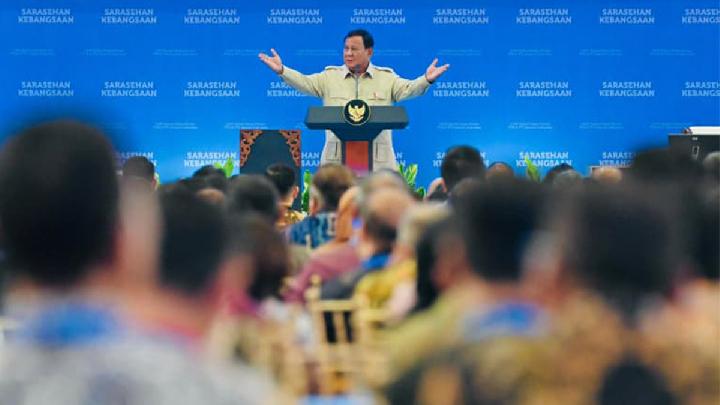
Tempatdonasi.com – On June 26, President Prabowo Subianto addressed a gathering of academic leaders at the Indonesian Convention on Science, Technology, and Industry in Jakarta, urging political figures to unite despite their competitive nature. The event, part of a three-day conference focused on economic self-reliance and prosperity, saw Prabowo highlight his personal journey as a testament to the value of collaboration in Indonesia’s democratic process.
Path to Victory
While acknowledging his repeated electoral setbacks, Prabowo emphasized that his commitment to peaceful politics remained unwavering. He shared his experience of losing four national elections, a narrative that underscored his belief in the importance of respecting democratic outcomes. “I have always pursued politics through dialogue and persuasion,” he stated, reinforcing the idea that leadership should be earned through public support rather than coercion.
“I lost four times, but I did not disrupt the leader who received the people’s mandate,” Prabowo said, reflecting on his journey from a candidate who failed to secure votes in the Golkar Party’s 2004 presidential convention to a president who finally claimed victory in his fifth bid.
Prabowo’s remarks included a review of his past electoral losses, such as his unsuccessful vice-presidential run in 2009 and his defeats in the 2014 and 2019 presidential elections. These experiences, he argued, were not setbacks but lessons in the resilience required to navigate Indonesia’s political landscape. His fifth attempt, which culminated in the current presidency, was a result of the people’s will, as he insisted that his success was grounded in democratic legitimacy.
Respect for Democracy
Prabowo also spoke about the emotional toll of losing, describing the process as “painful” yet necessary. He stressed that accepting election results is vital for maintaining stability in the country’s democratic system. “Losing is difficult, but I understand the alternatives,” he added, emphasizing that the path to peaceful governance requires humility and the willingness to step aside when the majority chooses a different leader.
“In a democracy, the people’s sovereignty is exercised through elections,” Prabowo asserted, underscoring the central role of popular choice in shaping Indonesia’s political future.
The retired Army general framed his approach as a model for political engagement, advocating for leaders to prioritize unity over conflict. His speech, delivered during a “National Dialogue” session, aimed to bridge gaps between different factions of the political elite. By focusing on collective action, Prabowo sought to address the nation’s pressing challenges, which he argued demanded a more cohesive strategy than individual ambition.
Political Philosophy
Prabowo’s message extended beyond personal reflection, offering a broader perspective on Indonesia’s democratic identity. He described the country’s system as rooted in the principle of popular sovereignty, where the will of the people is the ultimate authority. This philosophy, he suggested, should guide all political actors, regardless of their positions or ambitions. “The strength of our democracy lies in its ability to adapt and endure,” he noted, highlighting the importance of institutional integrity.
The convention, organized by the Ministry of Higher Education, Science, and Technology, brought together key figures in academia and governance. Among the attendees was Vice President Gibran Rakabuming Raka, who joined Prabowo in emphasizing the need for collaborative efforts. Cabinet Secretary Teddy Indra Wijaya also participated, underscoring the significance of the event as a platform for dialogue between different branches of government.
Context of the Event
The Indonesian Convention on Science, Technology, and Industry was designed to foster strategies for economic independence and growth. Its theme, “Strategies for Indonesia’s Economic Self-Reliance and Prosperity,” aligned with Prabowo’s vision of a stable political environment as a prerequisite for sustainable development. By addressing the audience of university leaders, he sought to rally intellectual support for policies that could drive the nation’s progress.
Prabowo’s speech resonated with themes of perseverance and respect for institutions. He acknowledged that while losing an election can be a bitter experience, it is a natural part of democratic competition. “The people’s voice must be the guiding force,” he said, advocating for leaders to act as stewards of public trust rather than as contenders for power.
His focus on non-interference in elected leaderships was particularly notable, given his history as a prominent figure in Indonesian politics. The Gerindra Party chair recalled how, even in moments of defeat, he remained steadfast in his approach. “I have never interfered with leaders chosen by the people,” he stated, a claim that has been central to his political narrative.
Implications for the Nation
Prabowo’s remarks at the convention offered a vision of Indonesia’s political future, where compromise and mutual respect are the cornerstones of governance. By sharing his own journey, he aimed to inspire a generation of leaders to embrace the democratic process as a shared endeavor. The audience, comprising rectors, deans, and lecturers, was likely encouraged to see his message as a call for renewed commitment to the ideals of democracy and collective responsibility.
The National Dialogue session, which preceded the convention, provided a space for open discussion among stakeholders. Prabowo’s participation underscored the government’s effort to engage with diverse voices, including those from the academic sector. This move was seen as a strategic attempt to build consensus and align the country’s leadership with the aspirations of its citizens.
As the convention progressed, the emphasis on economic self-reliance became a focal point for Prabowo’s address. He linked the nation’s prosperity to political stability, suggesting that the ability to work together is essential for long-term success. “Our democracy is not just about winning elections; it’s about creating an environment where progress can be achieved collectively,” he said, reinforcing the idea that political rivalry should not hinder national goals.
Prabowo’s speech also touched on the role of the media in shaping public perception. He had previously asked journalists to leave during a meeting with academics, an action that some interpreted as a desire to avoid external influence on his message. This decision, along with his focus on internal unity, highlighted his strategic approach to communication and leadership.
Legacy and Future
By framing his electoral losses as part of a larger narrative, Prabowo positioned himself as a unifying figure in Indonesian politics. His experience, spanning decades of competition, served as a reminder that democracy is a dynamic process, where outcomes are determined by the electorate’s will. “Every loss is a step toward understanding the people’s priorities,” he remarked, urging political leaders to see setbacks as opportunities for growth rather than reasons for division.
The convention, with its blend of academic and political leaders, was a microcosm of Indonesia’s broader societal efforts to reconcile competing interests. Prabowo’s emphasis on cooperation echoed the need for a more harmonious political climate, one where differences are managed through dialogue rather than confrontation. His words were met with nods of agreement, indicating that his message had struck a chord with the audience.
In conclusion, Prabowo’s address at the Indonesian Convention on Science, Technology, and Industry reinforced his commitment to democratic values and collective action. By recounting his personal struggles, he not only acknowledged the challenges of political leadership but also inspired others to persevere in the face of adversity. As Indonesia continues to navigate its path toward stability and growth, his vision of unity through democracy offers a compelling framework for future governance.
Read more: Prabowo Asks Journalists to Leave During Speech to Academics Click here to get the latest news updates from Tempo on Google News