Prabowo Plans to Cut 750 SOEs in Push to Reduce Costs
sh to Reduce Costs Prabowo Plans to Cut 750 SOEs - President Prabowo Subianto of Indonesia has announced his plan to reduce the number of state-owned
Prabowo Plans to Cut 750 SOEs in Push to Reduce Costs
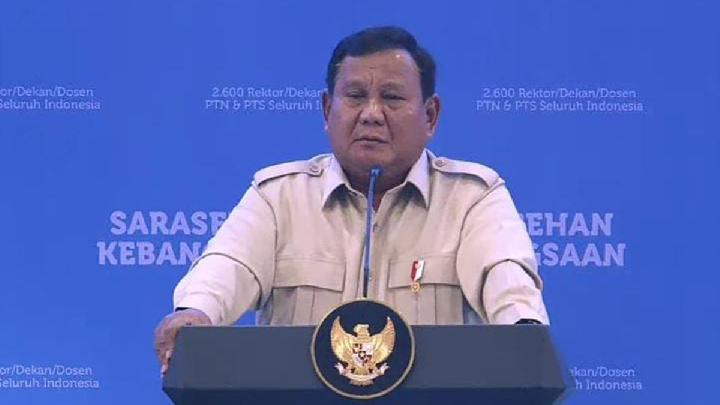
Tempatdonasi.com – President Prabowo Subianto of Indonesia has announced his plan to reduce the number of state-owned enterprises (SOEs) by 750 units by the end of 2026. The initiative aims to streamline public sector operations and cut down administrative expenses, particularly those tied to executive compensation. During a speech at the Science, Technology, and Industry Convention in Jakarta, Prabowo highlighted the need for fiscal discipline, emphasizing that high director salaries contribute significantly to the financial burden of these companies.
Streamlining the SOE Sector
According to Prabowo, the current count of SOEs surpasses 1,000, and the target is to shrink this number to around 250. “We want to be rational and efficient, and we will prove this through action,” he declared, addressing the audience at the Jakarta Convention Center on June 28, 2026. The reduction is framed as a necessary step to improve productivity and redirect resources toward more profitable ventures.
“We want to be rational and efficient, and we will prove this through action,” he said while attending the Science, Technology, and Industry Convention at the Jakarta Convention Center on Sunday, June 28, 2026.
Prabowo explained that overhead costs—such as salaries for directors and commissioners—are a major concern. These expenses, which are not directly tied to production, could be slashed by reducing the number of SOEs. He argued that many of these companies operate without generating substantial profits, yet continue to drain public funds through executive pay.
Cost-Saving Measures and Rationale
The former defense minister stressed that streamlining the SOE sector would not only lower operational costs but also enhance accountability. He envisioned a scenario where the closure of 750 enterprises would result in fewer chief executives and directors. “Imagine, if we close down over 750 SOEs,” Prabowo said, “750 chief executives, 750 directors multiplied by 4 or 5 (people), 750 commissioners multiplied by 10 (people). What will the overhead be like, and what will their salaries be like?”
Prabowo pointed out that some SOEs function as overheads rather than revenue generators. Their directors and commissioners receive salaries regardless of performance, which he sees as a waste of taxpayer money. By trimming the number of SOEs, he believes the government can reallocate funds to more impactful projects, such as infrastructure or technology development.
Event Context and Public Engagement
The Science, Technology, and Industry Convention (KSTI), which Prabowo attended, took place over three days from June 26 to June 28, 2026. The event brought together 2,600 participants, including professors, deans, and university rectors. Prabowo’s participation underscored his commitment to fostering collaboration between the private and public sectors.
During the convention, Prabowo delivered two major speeches. The first, at the opening ceremony on Friday, lasted nearly five hours, while the second, on Sunday, spanned almost four hours. The forum, titled “National Discussion,” was organized by the Ministry of Higher Education, Science, and Technology. It marked the second edition of the KSTI, an initiative launched by President Prabowo in August 2025.
Prabowo emphasized that the SOE reduction plan must be completed swiftly. “I demand that it must be completed within this year,” he stated, signaling his urgency to implement the changes. The timeline aligns with his broader economic agenda, which includes modernizing state enterprises to align with market demands.
Financial Implications and Public Funds
The president argued that public funds are finite, and their allocation to inefficient SOEs needs reevaluation. He noted that the salaries of board members and commissioners often exceed market rates, creating a financial strain on the national budget. By eliminating underperforming entities, he aims to ensure that the remaining SOEs operate with greater transparency and efficiency.
Prabowo also addressed the potential challenges of the reform. While some may view the cuts as a threat to job security, he framed the policy as a way to prioritize high-impact industries. “We are not closing doors to innovation,” he said, “but we are pruning the system to make it more sustainable.” The plan is expected to create a competitive environment within the SOE sector, encouraging better governance and performance.
Supporting the Initiative
Prabowo’s plan has garnered attention from both supporters and critics. Advocates argue that reducing the number of SOEs will free up resources for private sector growth and innovation. Others, however, warn that premature cuts could jeopardize key public services. Despite these concerns, Prabowo remains steadfast in his commitment to fiscal responsibility.
As part of the KSTI event, Prabowo highlighted the importance of scientific and technological advancements in driving economic growth. He urged academics to contribute ideas that could support the SOE reform, emphasizing the need for evidence-based policymaking. The convention, which concluded on Sunday, included discussions on topics ranging from digital transformation to green technology.
With the SOE reduction plan in motion, the government faces the task of balancing efficiency with stability. Prabowo has set a clear target, but the implementation will require careful planning to avoid negative impacts on employment and public services. The initiative is seen as a bold move to transform Indonesia’s economic landscape, positioning the country for long-term growth and competitiveness.
Read: Prabowo Mulls Research Funding From SOEs Click here to get the latest news updates from Tempo on Google News