Prabowo Says Law Must Not Be Used for Political Revenge
Prabowo Says Law Must Not Be Used for Political Revenge Prabowo Says Law Must Not Be Used - On Wednesday, Indonesian President Prabowo Subianto addressed the
Prabowo Says Law Must Not Be Used for Political Revenge
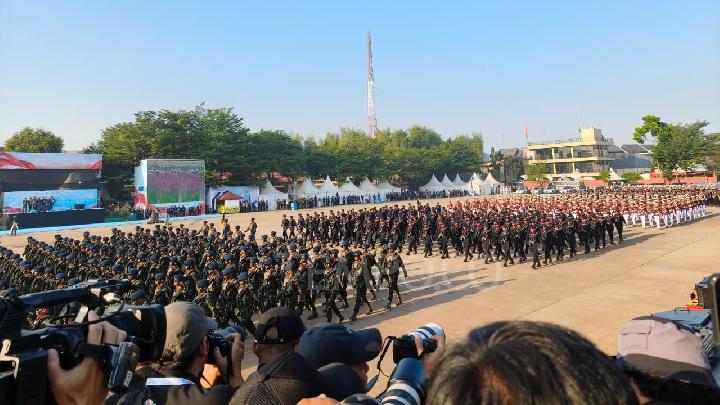
Tempatdonasi.com – On Wednesday, Indonesian President Prabowo Subianto addressed the nation during the 80th anniversary celebration of the Indonesian National Police, known as Bhayangkara Day, held at the Mobile Brigade Corps Police Training Center in Cikeas, Bogor. His remarks underscored his commitment to upholding the rule of law and critiqued its potential misuse for political motives. The event, themed “80 Years of Polri’s Service to the Community,” featured demonstrations by police units and showcased the collaborative efforts between the Indonesian National Police, the Indonesian Military (TNI), and partner organizations.
Call for Fair Legal Enforcement
Prabowo emphasized that the legal system should be applied impartially, rejecting any notion that it could be manipulated to benefit specific individuals or groups. He stated that laws must not be used as instruments of political retribution, a sentiment echoed by his assertion that the law should protect the public, especially those in vulnerable positions. “There should be no criminalization of individuals without just cause, and no one should be shielded from the consequences of their actions,” he said, highlighting the need for accountability.
“The law must not become a tool for those with money. The law must not become a tool for political revenge. The law must not be used for the interests of any group,” Prabowo declared during the ceremony, drawing attention to the disparity in legal treatment between the powerful and the ordinary citizen.
His comments touched on a commonly critiqued phenomenon in Indonesian society—the tendency for the legal system to impose harsh penalties on common people while overlooking the transgressions of the elite. Prabowo referred to this as the “sharp downward and blunt upward” principle, a phrase that has gained traction in discussions about justice. He explained that this concept reflects a situation where the law is applied more strictly to the less privileged, creating an imbalance in the justice system. “Indonesia is a state governed by the rule of law, and we must ensure that it serves all citizens equally,” he added.
Strengthening the Rule of Law
Prabowo, who also serves as the leader of the Gerindra Party, reiterated his belief in the importance of fair legal enforcement. He called for an end to the abuse of authority, asserting that no individual, regardless of their status or influence, should be above the law. “The legal system must be a refuge for the weak and a shield for the righteous,” he said, underscoring the role of law in safeguarding justice for all.
“There should be no abuse of authority, and no one should be immune from the law,” Prabowo stated, reinforcing his vision for a more equitable legal framework. His words resonated with attendees, many of whom were drawn to the event to witness the demonstrations of police and military capabilities.
The ceremony included tactical displays that highlighted the readiness and efficiency of the Indonesian National Police. Participants showcased vehicle convoys, parachute drops, and synchronized parades involving units from the police force, the military, and various partner organizations. These demonstrations served as a reminder of the critical role these institutions play in maintaining public safety and order. However, Prabowo’s speech added a layer of political commentary, linking the strength of these institutions to the fairness of the legal system they uphold.
Legacy and Future of Polri
The 80th anniversary of Bhayangkara Day marked a significant milestone for the Indonesian National Police, which has been instrumental in shaping the nation’s security landscape. Prabowo’s address highlighted the need to preserve the legacy of this institution while addressing contemporary challenges. He stressed that the law must remain a cornerstone of governance, ensuring that its application is not swayed by personal or political gains.
“The law should be a refuge for the weak. The righteous should feel safe, while the guilty should be held accountable for their actions,” he said, painting a picture of a legal system that prioritizes fairness and justice. His vision aligns with the broader goals of the Polri’s service theme, which emphasizes the organization’s dedication to protecting the community.
Prabowo’s critique of political revenge and the misuse of legal tools resonated with the theme of the day, which celebrated 80 years of the National Police’s commitment to public service. The event provided an opportunity for the president to connect with citizens and reinforce his message about the importance of an impartial legal system. By addressing the anniversary in this manner, Prabowo linked the past achievements of the police force to the future of legal justice in Indonesia.
His remarks also drew attention to the broader implications of legal fairness, particularly in the context of public trust. Prabowo argued that the rule of law is essential for maintaining the credibility of institutions and ensuring that all citizens, whether powerful or powerless, are treated equally under the law. This message is crucial in a nation where the legal system is often scrutinized for its ability to deliver justice without bias.
Prabowo’s focus on fairness and impartiality aligns with his leadership style, which has been characterized by a strong emphasis on transparency and accountability. By addressing the 80th anniversary of Bhayangkara Day with these principles in mind, he sought to reframe the narrative around the National Police’s role in the country’s governance. His speech also served as a reminder of the interconnectedness between law enforcement and the broader legal framework that supports it.
As the ceremony concluded, attendees were left with a renewed sense of purpose, inspired by Prabowo’s vision for a just and equitable legal system. The event not only celebrated the National Police’s 80-year legacy but also set the stage for future reforms aimed at ensuring that the law remains a tool for justice rather than a weapon for political control.