TII: 31 Indonesian Deputy Ministers Still on SOE Boards Despite Court Ban
TII: 31 Indonesian Deputy Ministers Still on SOE Boards Despite Court Ban TII - State-owned enterprises (SOEs) in Indonesia continue to have 31 deputy
TII: 31 Indonesian Deputy Ministers Still on SOE Boards Despite Court Ban
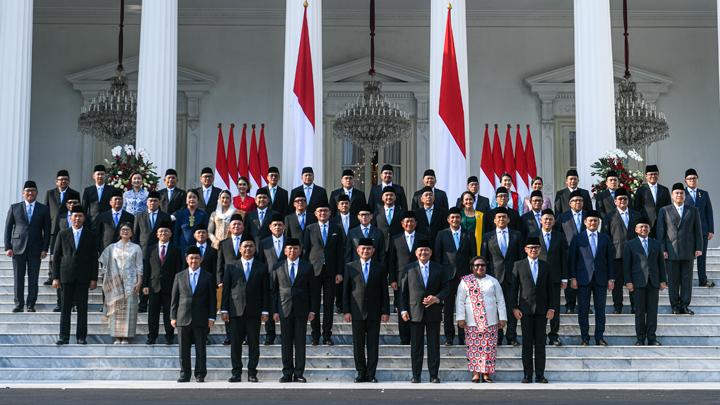
Tempatdonasi.com – TII – State-owned enterprises (SOEs) in Indonesia continue to have 31 deputy ministers serving on their boards, defying a Constitutional Court ruling that barred such dual roles, reports Transparency International Indonesia (TII). The decision, issued in August 2025, aimed to eliminate potential conflicts of interest by requiring deputy ministers to step down from positions on SOE boards. However, nearly a year after the ruling, only three of the 34 deputy ministers who previously held commissioner roles have left, according to TII’s latest findings.
Constitutional Court Mandate and Transition Period
The court’s ruling, numbered Decision No. 128/PUU-XXIII/2025, explicitly stated that deputy ministers must no longer occupy positions on SOE boards. This was done to prevent situations where officials could leverage their government roles to influence corporate decisions, often for personal or political benefit. The court granted the government a two-year transition window to phase out these dual appointments, a provision that was later codified into Indonesia’s 2025 SOE Law.
Despite this deadline, SOEs have largely retained deputy ministers in their leadership structures. TII researcher Ferdian Yazid noted that the government’s response has been slow, with little tangible progress reported. “SOEs are still maintaining boards that include deputy ministers,” Ferdian remarked in an interview with Tempo on June 30. He added that the continued presence of these officials in corporate roles undermines the intent of the Constitutional Court’s ruling, which seeks to streamline governance and reduce corruption risks.
“This sets a bad precedent and ignores the spirit of the Constitutional Court’s decision to reduce the risk of conflicts of interest as soon as possible,” Ferdian said.
Remaining Deputy Ministers on SOE Boards
According to TII data, the 31 deputy ministers currently serving on SOE boards include key figures across various sectors. These individuals hold positions such as president commissioners, deputy president commissioners, and regular commissioners in major companies like Pupuk Indonesia, GMF AeroAsia, Telkom Indonesia, and others. Notable names in the list are Sudaryono, Giring Ganesha, and Angga Raka Prabowo, who remain on the boards of companies like PLN, Bank Mandiri, and Pertamina Bina Medika.
Among the names, some have been associated with corruption scandals. For instance, Suahasil Nazara, a deputy minister at PLN, was recently linked to a probe into mismanagement in state energy projects. Similarly, Ahmad Riza Patria, a commissioner at Telkomsel, faces allegations of embezzlement. These cases highlight the challenges of ensuring accountability in the wake of the court’s directive.
Resistance to Reform in Key SOEs
Several SOEs have reportedly ignored the court’s order, retaining deputy ministers in their roles during recent shareholder meetings. At PLN, for example, shareholders voted to keep Bambang Eko Suhariyanto and Suahasil Nazara as commissioners despite the ruling. The same occurred at Telkom Indonesia, where Angga Raka Prabowo was reappointed as president commissioner during the June 8 annual general meeting.
“The decisions suggest the government has yet to act on the Constitutional Court’s ruling,” Ferdian emphasized. He argued that the persistence of deputy ministers on SOE boards weakens the legal framework designed to enhance transparency and prevent favoritism. “It sends a message that dual roles are still acceptable, even after a clear judicial mandate to eliminate them,” he added.
Implications for Corporate Governance
The continued presence of deputy ministers in SOE boards raises concerns about the separation of powers and the independence of state enterprises. Critics argue that these officials may use their dual positions to sway business strategies, procurement processes, or regulatory decisions in favor of political agendas. This could lead to inefficiencies or favoritism, especially in sectors where SOEs dominate the market.
“The ruling was meant to create a clearer distinction between political and economic roles,” said Ferdian. “But the slow implementation suggests that SOEs are not fully committed to this reform.” He pointed out that while the transition period has expired, some companies have extended the stay of deputy ministers through reappointment or restructuring, rather than fully removing them.
Indonesia’s SOEs, which control vital industries such as energy, telecommunications, and transportation, have historically been a point of contention in governance debates. The Constitutional Court’s decision was part of a broader effort to address corruption and improve transparency, but the lack of compliance by key entities has raised questions about the effectiveness of the reform. “This highlights a gap between legal mandates and administrative action,” Ferdian noted.
Examples from Specific Companies
At Telkom Indonesia, Angga Raka Prabowo’s reappointment as president commissioner in June 2025 has drawn criticism. His tenure has coincided with allegations of financial misconduct in the company’s operations, prompting calls for his removal. Similarly, in PLN, the retention of Suahasil Nazara and Bambang Eko Suhariyanto has been questioned, with activists arguing that their positions should be vacant to align with the court’s directive.
Other companies have also resisted changes. Pertamina Hulu Energi, for instance, continues to have Stella Christie on its board, while Semen Indonesia retains Christina Aryani. These cases illustrate the uneven implementation of the court’s ruling, with some SOEs moving swiftly to remove deputy ministers and others hesitating.
Public and Political Reactions
The situation has sparked public debate about the government’s commitment to reform. Activists and watchdog groups are urging the Presidential Palace to take decisive action, while some lawmakers have criticized the delay. “It’s a sign that the executive branch is still prioritizing political loyalty over institutional integrity,” said one analyst, though they acknowledged the complexity of transitioning large SOEs.
Tempo has sought comments from the Presidential Palace on the matter, aiming to understand the rationale behind the continued appointments. The response, expected to clarify the government’s stance, could influence future actions to enforce the court’s ruling. Meanwhile, the public remains divided, with some viewing the deputy ministers’ roles as necessary for policy continuity and others seeing them as a barrier to transparency.
The persistence of these dual roles underscores the challenges of implementing legal reforms in practice. While the Constitutional Court has set a clear precedent, the slow pace of change suggests that political and administrative inertia may still prevail. For TII, the situation highlights the need for stronger enforcement mechanisms and public pressure to ensure that the ruling is fully realized. “Until these appointments are reversed, the potential for conflicts of interest remains high,” Ferdian concluded.
As the government faces mounting pressure to act, the fate of the remaining deputy ministers on SOE boards will be a key indicator of its willingness to prioritize reform. The upcoming shareholder meetings and regulatory audits may provide further insight into whether this dual role will be phased out in the near future, or if it will continue to persist despite the court’s directive.