
What’s Behind Hamas’s Move to Dissolve Gaza Government
issolution Amidst Regional Uncertainty What s Behind Hamas s Move - Earlier this week, Hamas revealed plans to dismantle its governing body following nearly
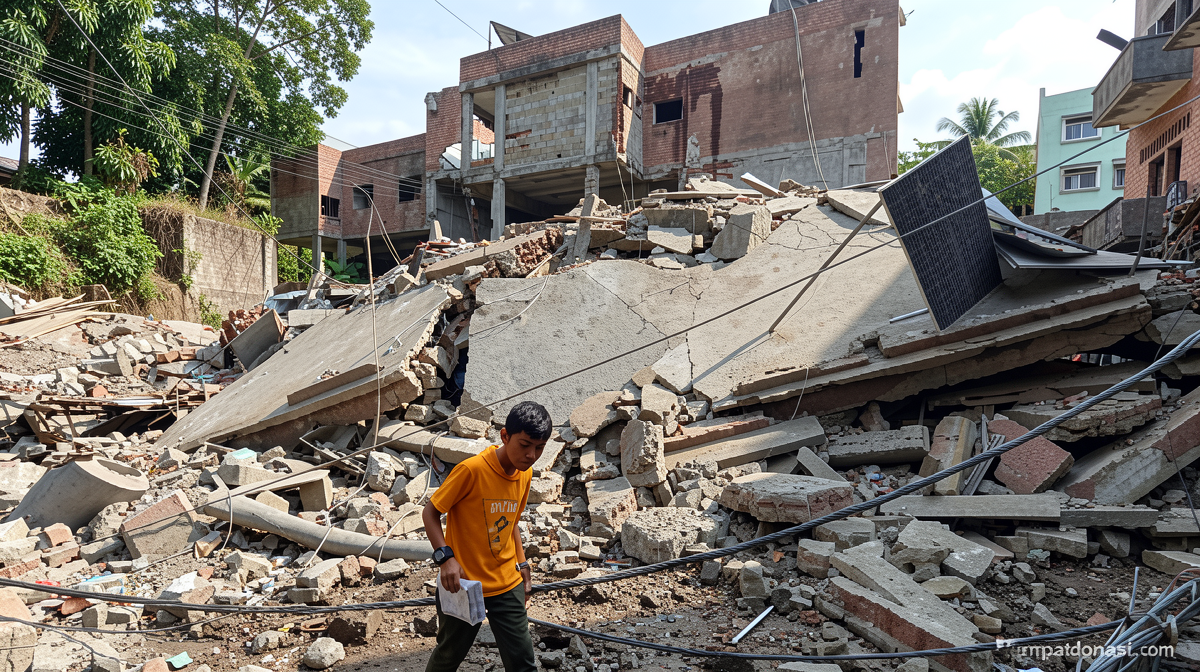
Hamas Announces Government Dissolution Amidst Regional Uncertainty
Tempatdonasi.com – Earlier this week, Hamas revealed plans to dismantle its governing body following nearly twenty years of control over the Gaza Strip. The militant organization stated this decision would facilitate the transition of administrative responsibilities to the National Committee for the Administration of Gaza, commonly known as NCAG. This committee is scheduled to assume civilian oversight as part of a peace framework negotiated by American diplomats, originally proposed in October 2025.
Despite the announcement, questions persist regarding whether this represents a substantive political shift or merely a symbolic gesture. Israeli Foreign Minister Gideon Saar expressed immediate doubt about the significance of the move. He emphasized that until Hamas surrenders its armaments, any civilian authority will likely follow Hamas’s lead. Saar noted that Germany, the European Union, the United States, and several other nations classify Hamas as a terrorist entity.
“As long as Hamas, which is classified as a terrorist organization by Germany, the European Union, the US, and other countries, retains its weapons, any civilian government will ultimately act according to Hamas’s directives.”
The NCAG and International Perspectives
The National Committee for the Administration of Gaza comprises Palestinian specialists selected by the Board of Peace, an entity created under former President Donald Trump. This transitional body commenced operations in January 2026, though its representatives continue to reside in Cairo, Egypt, pending authorization to travel into Gaza.
Many analysts interpret this development as neither purely ceremonial nor a complete surrender of authority. Instead, they view it as an effort to restart political negotiations that have been frozen for several months, without requiring Hamas to immediately disarm. The Washington Institute, a prominent policy research organization, observed back in February that transferring civilian duties to a technocratic administration was always embedded within the American peace proposal.
Expert Analysis on Hamas’s Strategy
Simon Wolfgang Fuchs, an Islamic studies academic at the Hebrew University of Jerusalem, provided insight into Hamas’s motivations. He suggested that the formal ending of the Hamas government matters less than the political signal it sends. According to Fuchs, Hamas adopted an unusually calm public demeanor to indicate that it should not bear responsibility for the prolonged political stalemate.
“With its unusually restrained public appearance, Hamas wanted to signal that the group was not to blame for the lack of political progress,” Fuchs told DW.
Fuchs further explained that Hamas avoided aggressive posturing, which contrasted with previous public statements. This approach aimed to demonstrate compliance with the American-mediated peace agreement and readiness to advance its implementation.
Contradictions in the Current Situation
The peace framework envisioned a technocratic administration beginning its functions alongside a gradual Israeli military pullout from Gaza. However, Fuchs pointed out that reality has unfolded differently. Israel currently exercises greater control over the territory than it did several months prior. Consequently, Hamas’s declaration appears designed to overcome this impasse and stimulate political momentum.
British newspaper The Guardian cited Middle East specialists Max Rodenbeck and Muhammad Shehada, who argued that Hamas seeks to eliminate Israel’s claim that reconstruction efforts are failing due to Hamas governance. Simultaneously, this move increases diplomatic pressure on both Israel and the United States. Rather than focusing on which entity rules Gaza, the central question has become the prerequisites for initiating reconstruction.
Unresolved Military Questions
Significant skepticism remains despite Hamas’s commitment to transferring civilian oversight. The organization has not extended this willingness to its military capabilities. Security Council Report, a think tank advising the United Nations Security Council, highlighted that the Board of Peace’s assessment outlines a fifteen-point strategy. This roadmap requires Hamas to surrender all military, police, and administrative roles, allowing a technocratic body to assume full control.
The Board of Peace’s plan envisions parallel progress in Hamas disarmament and Israeli troop withdrawal. However, Security Council Report notes that these interconnected measures have encountered difficulties, effectively halting the transition process. Fuchs maintains that the military dimension remains the critical test for any meaningful progress. While Washington may currently favor establishing civilian governance before demanding immediate Hamas disarmament, the fundamental challenge persists.