
Why Bogor Is No Longer as Cool as It Used to Be
s No Longer as Cool as It Used to Be Why Bogor Is No Longer as Cool - For decades, Bogor has been synonymous with a consistently cool climate, often dubbed
Why Bogor Is No Longer as Cool as It Used to Be
Tempatdonasi.com – For decades, Bogor has been synonymous with a consistently cool climate, often dubbed the “Rain City” due to its temperate weather. However, recent years have unveiled a noticeable transformation in the city’s climate patterns, prompting concerns among residents. Daytime temperatures, once mild, now frequently surpass 32-34 degrees Celsius, while rainfall has become less predictable, marking a departure from historical norms. This shift has sparked debates about whether the rising heat is a natural seasonal fluctuation or an early indicator of broader climate change impacts.
Global Climate Patterns and ENSO Influence
According to Givo Alsepan, a geophysics and meteorology lecturer at IPB University, Bogor’s temperature changes are influenced by a mix of global climatic factors and local environmental shifts. He noted that the city’s average air temperature typically hovers between 25.5 and 27 degrees Celsius, but this range has been disrupted by periodic climate anomalies, such as the El Niño-Southern Oscillation (ENSO). ENSO, a climate cycle driven by interactions between the ocean and atmosphere in the tropical Pacific, alternates between El Niño and La Niña phases, each with distinct effects on regional weather.
“Climatologically, the average air temperature in the Bogor region ranges from 25.5 to 27 degrees Celsius. However, during certain periods, these baseline conditions can shift due to the influence of global climate anomalies, particularly the El Niño-Southern Oscillation (ENSO),” Givo stated in a written statement on Thursday, July 2, 2026.
El Niño, one phase of ENSO, is characterized by unusually warm sea surface temperatures in the central and eastern Pacific, which alters atmospheric circulation patterns. This shift causes cloud formation to migrate eastward, reducing moisture availability over Indonesia and resulting in prolonged dry spells. Givo explained that the current El Niño phase, which has emerged in the tropical Pacific, is expected to persist until late 2026. This phenomenon has led to diminished cloud cover in the region, allowing more direct solar radiation to reach the Earth’s surface and intensifying heat buildup.
Urbanization and the Heat Island Effect
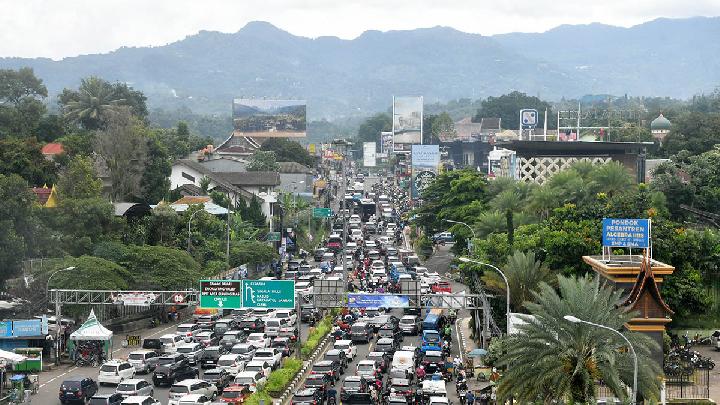
While global climatic factors like ENSO play a role, Givo highlighted the compounding effect of rapid urbanization. The conversion of natural landscapes into built-up areas has significantly altered the local environment, contributing to higher surface temperatures. This phenomenon, known as the urban heat island effect, occurs when concrete and asphalt absorb and retain heat more efficiently than vegetation, creating localized warming that exacerbates the city’s rising temperatures.
Data from a 2018 study by Nurwanda and Honjo reveals that Bogor’s urban expansion has accelerated dramatically, especially between 1997 and 2007. The research indicates a widening temperature disparity between the city center and its outskirts, with the gap growing from approximately 1.36 degrees Celsius in 1990 to nearly 2.26 degrees Celsius by 2017. Givo emphasized that these figures underscore the urgency of integrating green space preservation into urban development strategies.
“These figures prove that urban development lacking green space protections will only intensify the localized impacts of climate change. Therefore, preserving vegetation cover must be part of the city’s development strategy,” he concluded.
As the city’s built environment expands, the loss of open spaces has heightened the effects of heat retention. Givo warned that without deliberate measures to counteract this trend, Bogor’s already elevated temperatures will continue to rise. He also noted that climate change, a long-term process driven by rising greenhouse gas emissions, plays a critical role in this shift. Global warming has contributed to a steady increase in average annual temperatures across the region since the 1990s, aligning with international trends.
Combating the Heat: Strategies for a Cooler Future
Addressing Bogor’s warming challenge requires a multifaceted approach, involving both individual and institutional actions. Givo suggested that local communities can play a vital role by participating in greening initiatives, such as planting trees and incorporating heat-resistant materials in construction. These efforts can help reduce surface temperatures and improve air quality by absorbing pollutants and providing natural cooling.
Meanwhile, the government is urged to adopt climate-conscious spatial planning. Expanding green open spaces, implementing sustainable urban designs, and enforcing regulations to limit unchecked development are essential steps. Trees, in particular, are highlighted as a cost-effective solution to mitigate the urban heat island effect. By shading streets and buildings, they can lower ambient temperatures and enhance the city’s ecological resilience.
Despite the current El Niño phase acting as a temporary intensifier, Givo stressed that climate change remains the underlying cause of the sustained warming trend. He cautioned that without significant mitigation efforts—such as reducing carbon emissions and promoting renewable energy—Bogor’s climate will continue to evolve, potentially leading to more extreme heat events and reduced rainfall. This scenario could have far-reaching consequences for the city’s agriculture, water resources, and public health.
Looking ahead, the interplay between global and local factors will shape Bogor’s climate trajectory. While ENSO events provide a short-term explanation for recent heat spikes, the long-term trend is clear: the city is experiencing a warming climate that demands immediate action. Givo’s insights serve as a reminder that the fight against climate change requires coordinated efforts, blending scientific understanding with practical interventions to safeguard Bogor’s future.
The situation in Bogor is not isolated. Similar trends are being observed in other rapidly urbanizing regions, where the loss of natural landscapes and the intensification of global warming converge to create hotter, drier conditions. As the city grapples with these changes, it stands as a microcosm of the broader challenges facing urban centers worldwide. By prioritizing environmental sustainability in development, Bogor can mitigate the effects of climate change and reclaim its reputation as a cool, livable city.
Read: UNICEF: Climate Crisis Takes Toll on Children’s Mental Health Click here to get the latest news updates from Tempo on Google News