Why UI Canceled Republic Conference After Prabowo Talk
UI Canceled Republic Conference After Prabowo Talk Why UI Canceled Republic Conference After - On June 28, 2026, the Republic Conference Committee faced an
UI Canceled Republic Conference After Prabowo Talk
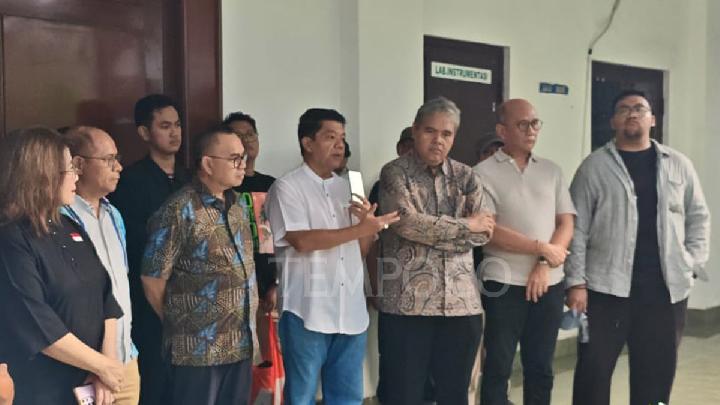
Tempatdonasi.com – On June 28, 2026, the Republic Conference Committee faced an unexpected setback when the University of Indonesia (UI) abruptly revoked approval for the National Consolidation Conference at its Salemba campus in Central Jakarta. Jaleswari Pramodhawardhani, a member of the committee, highlighted a growing perception that the government had become increasingly involved in the university’s operations, which she claimed contributed to the decision. “The tendency is there because UI was very welcoming at first,” she said during a press conference held at the campus that same day.
Administrative Procedures and Timing
The committee had secured the use of UI facilities earlier in the week, on June 24, 2026, through an official assignment letter. Jaleswari emphasized that the procedures were fully completed, yet UI’s stance shifted dramatically within days. “We interpreted the letter as accepted,” she noted, expressing confusion over the sudden reversal. The cancellation left the committee questioning whether the administrative process had been a pretext for political maneuvering.
“Yet, we have fulfilled the procedure,” Jaleswari said, pointing out the inconsistency between the documented steps and the abrupt ban.
According to the committee, the shift in UI’s position coincided with President Prabowo Subianto’s participation in a national discussion event titled “Sarasehan Kebangsaan: Strategi Kemandirian Ekonomi dan Kesejahteraan Indonesia” (National Discussion: Strategies for Indonesian Economic Independence and Welfare). The event took place at the JCC, Senayan, Jakarta, on June 26, 2026, where Prabowo addressed university rectors for five hours. However, the discussion turned private after just 30 minutes, raising questions about the purpose of the closed-door session.
External Pressures and Political Context
Several committee members suggested that Prabowo’s engagement with university leaders may have influenced UI’s decision. One insider claimed that Prabowo instructed rectors to prioritize campus stability, implying that the conference’s political undertones could pose a risk. “There are restrictions, there are cancellations; whether we like it or not, anyone would think that this is part of that order,” Jaleswari explained, linking the cancellation to the meeting.
“In the name of stability, in the name of security, in the name of development,” she added, underscoring the broader narrative of governance intervention.
Further evidence of external pressure emerged when a student representative on UI’s Board of Trustees, Razaan Bayu Rachman, confirmed that the university had received multiple calls from outside groups. While he could not identify the specific entities, he hinted at their unease with the conference’s agenda. “I suspect the external parties were uneasy because it was considered a mass consolidation and had strong political elements,” he stated at the Salemba campus on June 28, 2026.
Rector’s Role and Institutional Dynamics
The UI Rector, Heri Hermansyah, was reportedly consulted about the event. However, according to Razaan, Heri did not outright prohibit the conference but questioned its feasibility due to external inquiries. “The UI Rector only questioned it because there were many questions from external parties,” he said, noting the lack of direct orders. Yet, the Rector’s ability to manage the situation was limited by his need to travel abroad, creating an environment where external influence could take hold.
UI’s Director of Public Relations, Media, Government, and International Affairs, Erwin Agustian Panigoro, acknowledged the university’s plans to respond to the controversy. Meanwhile, State Secretary Minister Prasetyo Hadi had not yet commented on the matter, leaving the public to speculate on the role of higher authorities. The lack of transparency surrounding the decision deepened concerns about the influence of political forces on academic institutions.
Adapting to the Crisis
Despite the cancellation, the Republic Conference Committee resolved to continue the event. The decision was made to transition the forum to an online platform via Zoom, starting at 1 p.m. WIB on June 28, 2026. This move underscored the committee’s determination to maintain the conference’s momentum, even in the face of institutional resistance. “We had no choice but to adapt,” said Yanuar Nugroho, the General Secretary of the committee, who outlined the event’s structure.
The online format would allow the discussion to proceed, albeit in a different setting. Yanuar revealed that the conference would focus on foundational aspects of the movement, such as its core values, objectives, and future direction. “The first part will cover the movement’s foundation, including its values, goals, and trajectory,” he explained, emphasizing the need to reframe the narrative in the digital space.
Public Perception and Political Implications
The timing of the cancellation, following Prabowo’s engagement with university leaders, fueled speculation about the government’s role in shaping the event’s outcome. Jaleswari argued that the public would naturally associate the decision with the meeting, perceiving it as a coordinated effort to control the conference’s message. “Whether we like it or not, anyone would think that this is part of that order,” she reiterated, highlighting the political dimensions of the situation.
For the committee, the cancellation posed a challenge to their credibility and the Republic Conference’s visibility. Yet, they viewed the move as a strategic response, leveraging technology to sustain their platform. The event’s hybrid nature—originally planned as an in-person gathering but now adapted to online delivery—reflected the adaptability of the movement in the face of unexpected obstacles.
As the debate over the cancellation continued, the committee remained focused on its mission to unite various political and social groups. They emphasized that the event’s political content was inevitable, given its aim to address pressing issues such as economic independence and national welfare. “The Republic Conference is not just about discussion—it’s about building a collective vision for the future,” Yanuar stated, underscoring the event’s significance beyond its logistical challenges.
While the immediate cause of the cancellation was attributed to administrative oversights, the underlying motives suggested a broader strategy to influence the conference’s impact. The committee’s efforts to move the event online demonstrated their resilience, but the question of whether the cancellation was a necessary measure or a political move remained unanswered. As UI prepared its response, the Republic Conference continued to navigate the complexities of governance, public opinion, and institutional alignment.
Conclusion
The cancellation of the Republic Conference at UI on June 28, 2026, marked a pivotal moment in the movement’s trajectory. With the event now hosted online, the committee faced the challenge of maintaining engagement in a virtual environment. Yet, their decision to proceed highlighted their commitment to the cause, even as they grappled with the implications of government intervention. As the discussion unfolded, the Republic Conference would need to balance its political aspirations with the realities of institutional dynamics, ensuring its message reached the public despite the obstacles.