
IDX: Fewer IPOs Do Not Signal Declining Investor Confidence
tal Market Resilience: Why Declining IPO Numbers Tell a Different Story IDX - The Indonesia Stock Exchange has issued a reassuring assessment regarding the
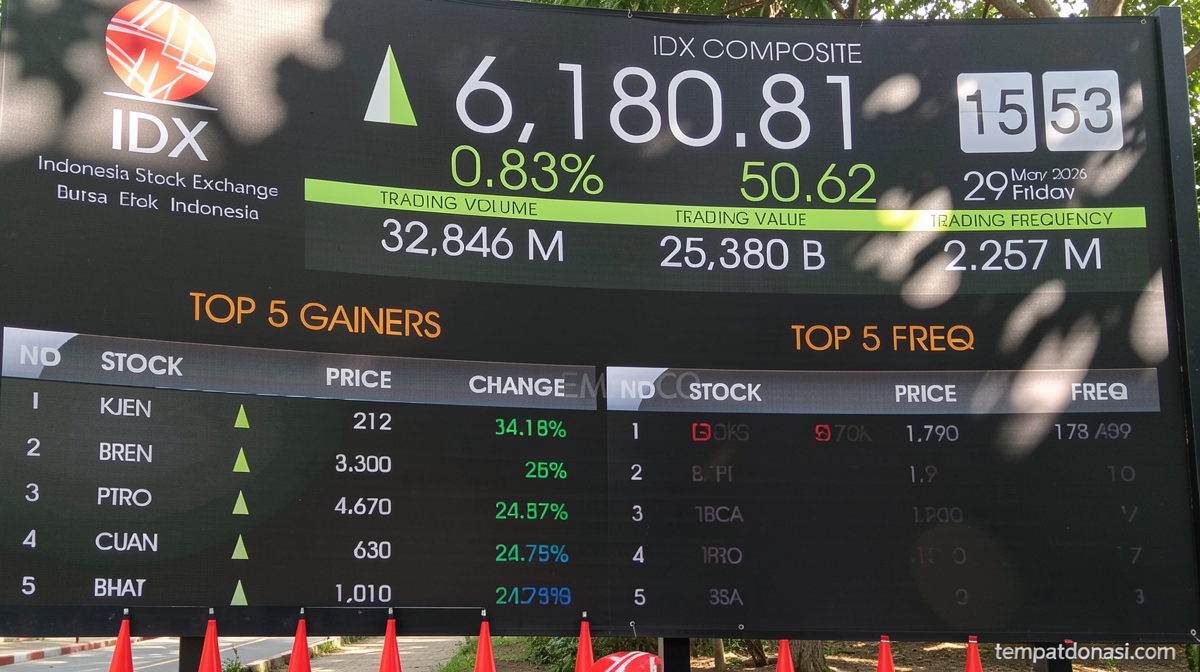
Capital Market Resilience: Why Declining IPO Numbers Tell a Different Story
Tempatdonasi.com – IDX – The Indonesia Stock Exchange has issued a reassuring assessment regarding the recent reduction in initial public offerings. According to the exchange, this downward trend in new listings does not automatically indicate weakening confidence among investors or prospective companies seeking to enter the capital market.
Saidu Solihin, who serves as the IDX Director of Corporate Assessment, clarified that the volume of general stock registration statement applications has remained stable. Rather than fewer companies wanting to list, several factors have caused delays or cancellations. Some prospective issuers have chosen to postpone their listing plans, while others are still awaiting final approval from the exchange.
These delays stem from multiple considerations including financial conditions, operational aspects, legal requirements, and business sustainability concerns. Despite the apparent slowdown in IPO activity, Saidu highlighted an important counter-trend.
“Nevertheless, the issuance of bonds and/or sukuk as well as other securities instruments on the exchange has increased,” said Saidu to Tempo on Monday, July 13, 2026.
He elaborated that this growth in alternative financing instruments demonstrates that companies continue utilizing the capital market for funding purposes. The key difference lies in their selection of instruments based on specific organizational needs.
The decision to pursue a public listing involves numerous strategic considerations. Internally, organizations must ensure readiness across financial performance metrics, organizational structure, and compliance with requirements established by both the Financial Services Authority and the IDX. External influences include industry conditions, global and domestic economic developments, interest rate movements, inflation trends, government policies, and geopolitical dynamics.
Interestingly, despite fewer IPOs occurring, the total capital raised has grown significantly. In 2025, twenty-six companies collectively raised approximately Rp18.1 trillion through initial public offerings. This represents a substantial increase compared to the Rp14.3 trillion secured by forty-one companies during 2024.
Saidu noted that this pattern suggests listed companies are accessing larger funding scales. Consequently, the IDX evaluates capital market success through multiple dimensions beyond simply counting new IPOs. Quality of issuers matters equally alongside quantity.
Regulatory Enhancements and Market Education
To improve issuer quality, the IDX implemented revisions to Regulation Number I-A regarding the Listing of Shares and Equity-Like Securities Other than Shares during March 2026. This regulatory update aims to strengthen corporate governance standards and enhance investor protection mechanisms.
Beyond regulatory improvements, the exchange maintains active educational initiatives. Programs such as the Go Public Seminar, coaching clinics, masterclasses, and individualized meetings help prepare potential companies for public listing. Additionally, a dedicated webpage provides comprehensive information about the IPO process and preparation requirements.
Market expert Lucky Bayu Purnomo, founder of LBP Enterprises and recognized Capital Market Specialist, offered complementary perspectives on these developments. He characterized the sustainability of IPO activity as a positive qualitative indicator of the broader investment climate.
“In principle, this is correct, but it needs to be looked at proportionally. Data shows that as of July 9, 2026, only six companies have realized new IPOs out of the target of 50 companies in IDX’s 2026 RKAB,” said Lucky to Tempo on Sunday, July 12, 2026.
Lucky observed that this pattern continues a structural slowdown in IPO activity. The number of IPO issuers declined from seventy-nine in 2023 to forty-one in 2024, and further reduced to twenty-six in 2025. He attributed much of this trend to global volatility and uncertainty influencing corporate timing decisions.
From a quantitative medium-term perspective, the Indonesian capital market has experienced moderated expansion in terms of new issuer numbers. However, investor confidence metrics reveal more nuanced patterns. The current pipeline composition features predominantly large-asset-scale companies, with healthcare emerging as the most prominent sector.
This sectoral distribution represents positive market signals. Investors increasingly prioritize cash flow certainty over speculative growth narratives. The combination of stronger fundamentals among remaining issuers and expanded alternative financing options suggests the capital market remains robust despite surface-level declines in IPO frequency.