
Iran’s Oil Supply Threat Extends Beyond Strait of Hormuz
bility Grows as Conflict Spreads Beyond Traditional Waterways Iran s Oil Supply Threat Extends - The escalating tensions between Washington and Tehran have
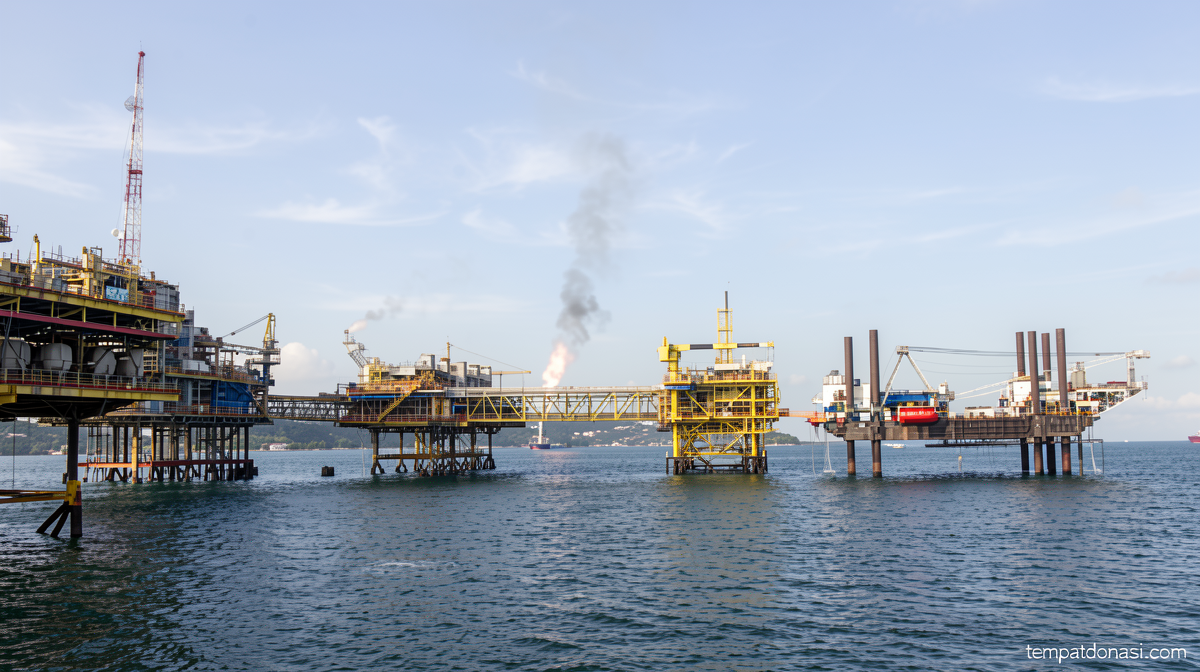
Regional Oil Vulnerability Grows as Conflict Spreads Beyond Traditional Waterways
Tempatdonasi.com – The escalating tensions between Washington and Tehran have reignited concerns about Gulf energy exports. Both nations recognize that dominance over the Strait of Hormuz represents a strategic priority. According to Guntram Wolff, who serves as a senior fellow at the Bruegel think tank and teaches economics at Brussels’ Free University, Iran has demonstrated its capacity to either control or significantly disrupt maritime traffic through this critical passage.
Wolff noted that despite months of aerial bombardment, Tehran maintains its ability to influence the strait’s operations. This persistence presents ongoing challenges for American forces seeking to establish superiority in the region. Recent developments have seen maritime activity in the strait nearly halt as Iranian forces targeted commercial tankers while launching drones and missiles against military installations in Bahrain, Kuwait, and Jordan.
In response, the United States has intensified its strikes against Iranian targets and resumed naval blockades around Iranian ports. Additionally, Washington terminated a sanctions exemption that had permitted Iran to conduct open oil sales, a practice that generated crucial revenue for the Iranian economy.
Historical Significance of the Maritime Passage
Before hostilities commenced on February 28, the Strait of Hormuz functioned as an international waterway without tolls. The International Energy Agency reported that approximately twenty percent of worldwide liquefied natural gas passed through this channel. Furthermore, roughly twenty percent of global oil production traveled through the Persian Gulf via this waterway, ultimately reaching the Arabian Sea and international markets. Asian nations received the largest portion of these shipments.
Over recent years, the U.S. Energy Information Administration documented an average daily throughput of approximately twenty million barrels. However, during the first quarter of the current year, this figure dropped to around fourteen point six million barrels daily. The decline accelerated as the conflict intensified.
A preliminary ceasefire agreement between the United States and Iran, concluded on June 17, initially provided some relief for commercial shipping operations. Nevertheless, this arrangement has since lapsed. During recent weeks, American military forces have struck hundreds of Iranian military installations across the region.
Infrastructure Vulnerabilities and Alternative Routes
Industry experts caution that additional Iranian attacks might trigger retaliatory measures targeting Gulf energy infrastructure. Such responses could damage refineries, ports, and pipeline networks, creating substantial economic consequences throughout the region while potentially generating oil supply deficits.
“The limited progress achieved following the June ceasefire has now effectively unraveled,” warned Greek maritime risk-management firm MARISKS after the escalation in the region. “The likelihood of further escalation remains very high.”
Early in the conflict, reports indicated that Iran imposed a fee of two million dollars per vessel for passage through the waterway. More recently, Tehran has required ships to utilize a northern route traversing Iranian territorial waters. Meanwhile, the U.S. Navy has been providing escort services for vessels navigating a southern corridor along Oman’s coastline on the opposite side of the strait.
Currently, five nations—Iran, Iraq, Kuwait, Qatar, and Bahrain—depend on the Strait of Hormuz for the majority of their petroleum exports. While maritime transport remains the most economical method for moving crude oil, vessels find themselves caught between competing interests. Energy producers are consequently exploring alternative transportation corridors.
Certain countries, including Saudi Arabia through its East-West Pipeline system and the United Arab Emirates via its Abu Dhabi Crude Oil Pipeline, already possess export routes circumventing the strait. However, the International Energy Agency estimates that these existing pipelines can redirect a maximum of eight point eight million barrels of oil daily.
Emerging Challenges for Energy Exporters
Since current pipeline infrastructure cannot fully substitute for normal Hormuz volumes, expanding new capacity represents one of the primary options available to Gulf exporters. These projects typically require multiple years and billions of dollars in investment. Furthermore, if new routes connect to the Red Sea, they may face similar security threats as the conflict expands beyond the traditional strait boundaries.
Saudi Arabia’s East-West Pipeline links the Abqaiq facility on the eastern Gulf coast with the Yanbu port situated on the Red Sea. However, vessels departing from Yanbu must navigate the Bab el-Mandeb Strait to access Arabian Sea markets and Asian destinations. This narrow waterway presents additional vulnerabilities, as Yemen-based Houthi forces, backed by Iran, have demonstrated their capability to launch attacks against commercial shipping.
Beyond disrupting maritime traffic, these attacks could potentially establish a secondary conflict zone, compelling vessels destined for the Suez Canal to undertake lengthy detours around Africa’s southernmost point. Despite these complications, the United Arab Emirates continues investing heavily in alternative infrastructure. Reports indicate that the UAE plans to expand existing facilities while constructing new port and container terminals along its eastern coastline.
Additional pipeline projects across Iraq, Jordan, Kuwait, and Turkey are either operational or under construction. Nevertheless, their combined capacity remains limited, and they cannot fully compensate for potential disruptions to the critical Strait of Hormuz corridor.