Trump Visits Ireland, Says Unification Would Be ‘Fantastic’
US President Donald Trump said he would welcome the eventual unification of Ireland during a weekend visit that combined official meetings in Dublin with
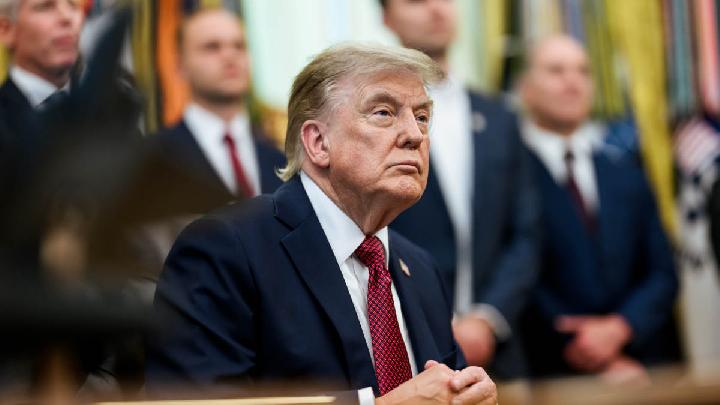
Trump Backs Irish Unity During Dublin Visit
Tempatdonasi.com – US President Donald Trump said he would welcome the eventual unification of Ireland during a weekend visit that combined official meetings in Dublin with attendance at the Irish Open golf tournament on the country’s Atlantic coast.
Trump, who owns the course hosting the tournament, met Irish President and Taoiseach Micheal Martin before addressing reporters on issues ranging from Ireland’s constitutional future to the war in Iran and trade tensions with Canada.
Comments on Northern Ireland
Following his meeting with Martin in Dublin, Trump said he favored bringing the Republic of Ireland and Northern Ireland together, while acknowledging that the British government would have a decisive role in any future change.
“Well, I don’t want to cause any problems, but I will tell you, I’d love to see it unified,”
He described reunification as an outcome he believed could occur over time.
“The way I look at it, it’s going to happen eventually … I think it would be a fantastic thing.”
Trump added that Britain would have its own position on the matter, but maintained that unity would be positive for the island.
“Now the UK will have something to say about it … but I think it would be a great thing.”
The question remains politically sensitive. Northern Ireland is part of the United Kingdom, while the Republic of Ireland is an independent European Union member state. Any constitutional shift would carry major political, legal and social consequences for communities on both sides of the border.
The British government responded quickly. Prime Minister Andy Burham’s office said there was no current majority public support for holding a referendum on Irish unity and that another vote would not be held unless that situation changed.
US presidents have generally treated the issue cautiously because of Northern Ireland’s history. The region endured decades of deadly sectarian conflict during the 20th century, with disputes over national identity, political authority and the future status of Northern Ireland at the center of the violence. The subject continues to require careful handling despite the progress made since that period.
Iran Conflict and Oil Prices
Trump also offered an upbeat assessment of the US war with Iran, which began on February 28. He said he expected the conflict to conclude soon, repeating a prediction he has made previously even though an end has not yet materialized.
He linked a possible conclusion of the fighting to global energy markets, saying oil prices—already sharply higher because of the war—would fall rapidly once hostilities ended.
At the same time, Trump strongly defended his decision to launch the military operation. He argued that the action was necessary to prevent Iran from obtaining a nuclear weapon.
“Iran cannot have a nuclear weapon.”
Trump said Iran had been only two weeks away from acquiring such a weapon and presented that assessment as the central justification for the US campaign.
“If they had it, they would have blown up Israel, they would have blown up the Middle East, and they would have hit some […] in my opinion, [of] Europe’s cities and beyond cities, and they would probably hit us soon before we put out the fire. But they cannot have a nuclear weapon.”
The conflict has faced opposition within the United States. A majority of Americans do not support the war, particularly given Trump’s earlier campaign pledges to avoid prolonged overseas military engagements often described as “forever” wars.
His remarks underscored the tension between those promises and his administration’s current military policy. They also highlighted the wider economic effect of the conflict, as higher oil prices can affect transport, household costs and businesses far beyond the immediate theater of war.
Prospects for a Canada Trade Agreement
On trade, Trump struck a similarly confident tone about negotiations with Canada. He said Ottawa was eager to reach an agreement and suggested a deal could arrive in the near future.
“Canada wants to make a deal very badly,”
The president again accused Canada of treating American farmers unfairly through tariffs, making agricultural access a key part of his public argument for a new arrangement.
“Canada has to treat our farmers better. They can’t charge our farmers tariffs.”
Trump said a settlement could be reached relatively quickly.
“You’ll probably see a deal with Canada fairly soon.”
His comments placed three difficult international questions—Irish unity, the Iran war and North American trade—alongside a visit centered in part on golf. While the subjects differ sharply, Trump’s message in each case was one of anticipated movement: reunification in Ireland over the longer term, a near-term end to the Iran conflict, and a possible trade deal with Canada.
Related Reading
Frequently Asked Questions
What is Trump Visits Ireland Says Unification Would?
Trump Visits Ireland Says Unification Would is the main topic of this guide. The article explains the context, practical details, and next steps readers should understand.
Why does Trump Visits Ireland Says Unification Would matter?
Trump Visits Ireland Says Unification Would matters because readers are looking for a useful answer, not just a short summary. Good content should match search intent and help them decide what to do next.