Hungary’s President Signs Amendment Ending His Own Term
Hungarian Leader Concludes Presidency Through Constitutional Amendment Hungary s President Signs Amendment Ending - On Saturday, Hungarian President Tamas
Hungarian Leader Concludes Presidency Through Constitutional Amendment
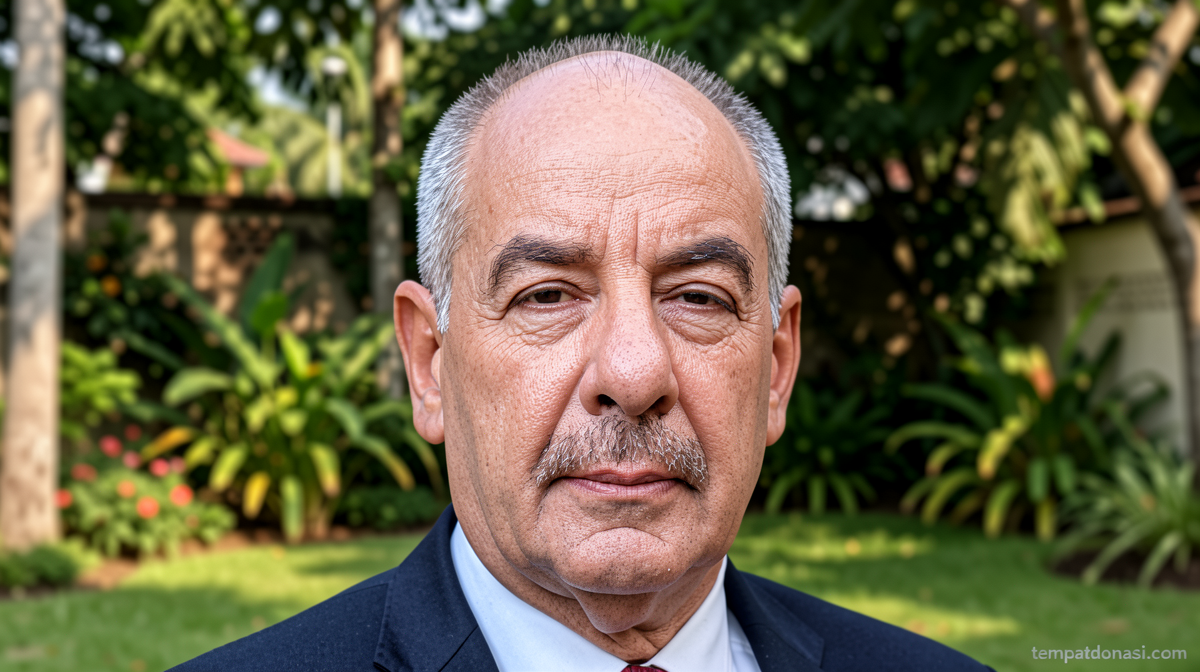
Tempatdonasi.com – On Saturday, Hungarian President Tamas Sulyok made the announcement that he would immediately sign a constitutional amendment, effectively bringing his presidential tenure to a close. Prime Minister Peter Magyar subsequently verified that the signing had indeed taken place. Sulyok, who has maintained a close relationship with Viktor Orban—the nationalist former prime minister who served Hungary for an extended period—explained his decision by stating, “I am fulfilling my obligation under the Fundamental Law [Hungary’s constitution] after carefully weighing my legal options and my conscience.”
The legislative change, which received approval on Monday through Magyar’s governing Tisza party, represents a broader initiative to eliminate remaining elements of Orban’s right-wing political apparatus. This effort gained momentum following the April elections, in which Hungarian voters removed Orban and his Fidesz party from their positions of authority.
For some time, Sulyok had firmly opposed demands from Magyar and his pro-European political movement to relinquish his office. His resistance was based on two primary arguments: first, that the electorate had not expressed diminished confidence in his leadership, and second, that he had been actively preventing obstacles to important national developments.
“I am fulfilling my obligation under the Fundamental Law [Hungary’s constitution] after carefully weighing my legal options and my conscience.”
Ultimately, Sulyok concluded that he had no alternative but to endorse the legislation. While accepting the amendment, he offered criticism, characterizing it as establishing a “negative precedent that inflicts a deep wound on the constitutional values of democracy, the separation of powers and the rule of law.” These particular concerns had previously drawn substantial criticism and even sanctions from Brussels during the period when Orban and Fidesz held power.
The center-right Tisza party, led by Magyar, achieved a decisive electoral triumph in April. Their victory secured a two-thirds majority in parliament, built upon commitments to implement significant “regime change” following sixteen years of Fidesz governance.
Sulyok’s official presidential term will conclude at midnight on Sunday. At that moment, Agnes Forsthoffer, who currently serves as the speaker of Hungary’s parliament, will assume the presidential duties temporarily. She will remain in this capacity until the parliamentary body selects a permanent successor, who may serve for a maximum duration of five years. The selection of a new president is anticipated to occur within the following thirty days.
“the final obstacle to our joint decisions taking effect has been removed.”
Beyond addressing the presidency, the newly enacted amendment introduces several additional provisions. It establishes a twelve-year maximum term for all members of parliament and mandates that justices on Hungary’s Constitutional Court must retire upon reaching seventy years of age. This retirement requirement will necessitate the removal of Peter Polt, an ally of Orban, from his role as president of the court.
As Sulyok characterized Magyar and the Tisza party as violating “the fundamental values of a free society,” Orban expressed an even stronger perspective. He declared that “tyranny is no longer a threat… but a reality.”
Magyar responded positively to the news regarding Sulyok’s eventual departure from office. He remarked, “the final obstacle to our joint decisions taking effect has been removed.” The prime minister continued, explaining that “With these decisions,” they are “restoring something that the Orban regime tried for many years to take away … the certainty that power can be limited, that public assets can be recovered, and that the state can once again serve its citizens.”
Although corruption was widely perceived as pervasive throughout Orban’s administration, not every critic embraced the new legislation. Human Rights Watch, for example, described the amendment as “reminiscent of the Fidesz era,” suggesting continuity rather than complete transformation.
The political transition in Hungary continues to unfold as various stakeholders assess whether the changes represent genuine democratic renewal or merely a shift in personnel while maintaining similar structural patterns. The coming weeks will reveal how the new leadership implements its promises and whether the constitutional amendments achieve their intended purposes.