Singapore Open to Legal Action Against Firms Over Indonesian Haze
Singapore is examining whether it can pursue legal action against companies linked to fires in Indonesia after smoke drifting across the region drove
Singapore Weighs Legal Options as Indonesian Haze Pushes Air Quality Into Very Unhealthy Range
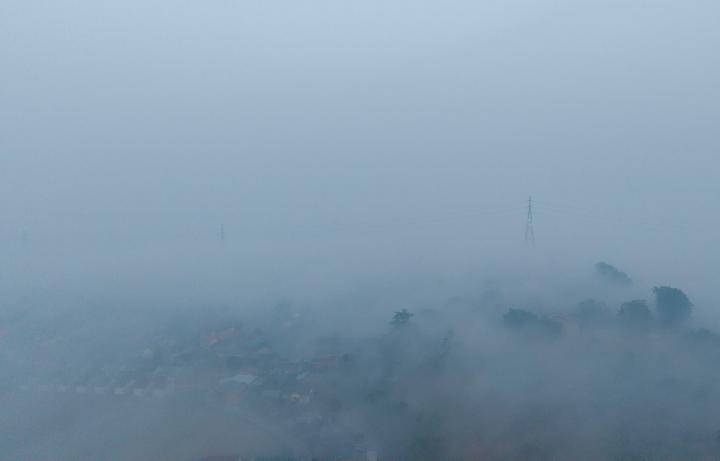
Tempatdonasi.com – Singapore is examining whether it can pursue legal action against companies linked to fires in Indonesia after smoke drifting across the region drove pollution levels sharply higher, especially in the western part of the city-state.
The renewed haze episode has put Singapore’s Transboundary Haze Pollution Act back in focus as residents contend with deteriorating air conditions, growing demand for protective equipment and expanded public-health measures. Sustainability and Environment Minister Grace Fu said on Wednesday, October 14, that officials were gathering information while keeping available legal avenues under review.
The legislation was designed to make companies answerable when fires they start, permit or fail to prevent cause haze in Singapore. Its application depends on evidence connecting the fires to the pollution crossing national borders, a process that requires detailed environmental and weather analysis.
Pollution Reaches a Critical Category
At 9 p.m. on Wednesday, the 24-hour Pollutant Standards Index in western Singapore climbed to 203. It was the first time during the current haze period that the area entered the “very unhealthy” classification.
By 11 a.m. on Thursday, October 15, readings across the island stood between 127 and 211, with the western region again recording the highest figure. A PSI reading from 201 to 300 is classified as very unhealthy. Readings above 300 fall into the hazardous category and may lead to school closures.
Singapore’s haze law, introduced in 2014, can be used when haze causes the PSI to remain within the unhealthy range for at least 24 hours. The current conditions have met that threshold on several occasions since September 4, prompting fresh attention to possible enforcement.
Authorities use satellite images, wind patterns and meteorological information to assess whether smoke from fires may have travelled into Singapore. The analysis is significant because haze can be influenced by shifting weather systems, the location of fires and the intensity of burning over large areas.
Heavy Fines Are Possible, but Enforcement Is Complex
Companies convicted under Singapore’s haze legislation can face penalties of up to S$100,000 per day, subject to a maximum fine of S$2 million. The law is intended to discourage companies from tolerating land-clearing fires or other burning practices that create cross-border pollution.
Yet turning the law into successful enforcement has been challenging. Singapore used the legislation after severe smog in 2015, but officials later acknowledged difficulties in obtaining corporate information from Indonesian authorities in cases involving suspected illegal burning. Four companies remain under investigation.
The issue illustrates the limits of managing transboundary pollution through one country’s domestic legislation alone. Identifying the responsible operators, gaining access to records and establishing a clear connection between individual fires and haze experienced elsewhere can require cooperation across borders.
Fu said Singapore hoped Indonesia would be able to bring the fires under control amid dry weather linked to the El Niño phenomenon.
“We hope that the Indonesian authorities are able to contain the fires. It’s a very difficult year because of El Nino.”
“The weather has been very dry and we know that the issues are very complex. We wish them well and we stand ready to assist them where we can.”
Singapore has offered assistance to Jakarta, although Fu said there had not yet been an update on what form of support Indonesia might seek. She also stressed the need for a regional response through the Association of Southeast Asian Nations, reflecting the fact that haze routinely affects more than one country when conditions allow smoke to travel.
Masks and Clean-Air Spaces for Vulnerable Residents
As pollution intensified, Singapore moved forward its distribution of N95 masks to vulnerable groups on October 14. The decision came as levels of PM2.5, fine particulate matter that can be inhaled deeply into the lungs, rose substantially in several areas.
Those eligible for the masks include older residents, pregnant women, children, teenagers and people with medical conditions such as asthma. The early distribution is intended to help groups who may be more affected when pollution remains elevated.
Authorities are also making air-conditioned areas available at community clubs and selected residents’ committee centres, offering residents temporary respite from outdoor haze. Such spaces can be especially relevant for people without easy access to indoor cooling or air filtration during prolonged pollution episodes.
Singapore’s haze task force is working with retailers to replenish supplies of masks and maintain public availability. Officials have said that retailers and the government hold adequate stocks, even as demand increases.
The haze has also prompted a surge in purchases of air purifiers and face masks. Some purifier models from brands including Xiaomi and Dyson have been marked unavailable online, while appliance retailer Gain City said sales of air purifiers had risen to roughly nine times normal levels since the haze season began in August.
Daily Life Affected as Haze Persists
The impact is extending beyond household purchasing decisions. Some lawmakers have cancelled constituency visits while pollution levels remain high, underscoring the disruption that prolonged haze can cause to ordinary public activity.
For residents, the PSI offers a practical guide to the severity of conditions, while PM2.5 levels highlight the fine-particle pollution that is a major health concern during haze events. People in sensitive groups may need to reduce exposure when conditions worsen, particularly during periods when the index reaches the very unhealthy category.
The latest episode has again highlighted the region’s recurring challenge: fires that begin beyond Singapore’s borders can quickly become a public-health and policy issue within the city-state. Singapore’s legal framework provides a potential route for accountability, but its effectiveness will depend on evidence, cross-border cooperation and the ability to identify businesses connected to the fires.
Related Reading
Frequently Asked Questions
What is Singapore Open to Legal Action Against?
Singapore Open to Legal Action Against is the main topic of this guide. The article explains the context, practical details, and next steps readers should understand.
Why does Singapore Open to Legal Action Against matter?
Singapore Open to Legal Action Against matters because readers are looking for a useful answer, not just a short summary. Good content should match search intent and help them decide what to do next.