Trump Calls Off Livestream of Fort Hood Shooter’s Execution
U.S. President Donald Trump has abandoned a proposal to livestream the execution of Nidal Hasan, the former Army psychiatrist sentenced to death for the 2009
Trump Withdraws Plan to Stream Fort Hood Shooter’s Execution
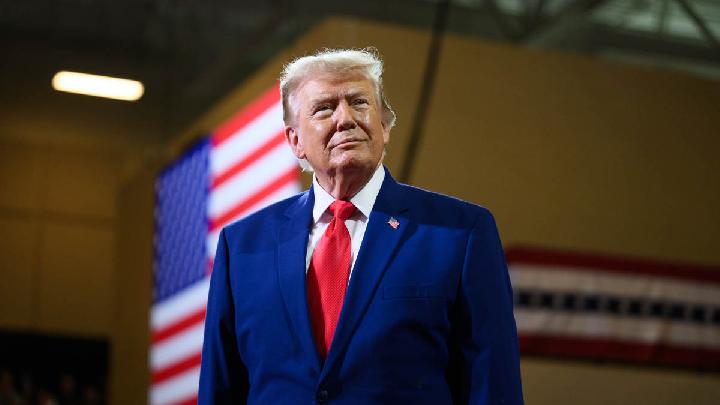
Tempatdonasi.com – U.S. President Donald Trump has abandoned a proposal to livestream the execution of Nidal Hasan, the former Army psychiatrist sentenced to death for the 2009 Fort Hood attack that killed 13 soldiers and injured 32 others.
Hasan is still set to be executed by firing squad on December 3. The change affects only the planned online broadcast, which had triggered sharp objections across the political spectrum and from the Catholic Church.
Trump announced the decision on Thursday in a Truth Social post. He said he had considered a public broadcast a possible warning to others, but acknowledged that many people did not want to see the execution through an online stream or another visual medium.
“I think streaming the execution for all to see might have been a strong deterrent for the World to witness how America deals with Terrorists and SCUM like Hasan, but many very good and well meaning people would rather not watch him die, through streaming, or through any other visual device,” Trump wrote.
“He will die, as scheduled, by firing squad, but this event will not be streamed,” he added.
Execution Remains Scheduled
The cancellation of the livestream does not alter the execution date or method. Hasan remains scheduled to die by firing squad, a development that would mark the first execution carried out by the U.S. military in more than six decades if it proceeds as planned.
Trump said relatives of those killed and wounded would retain the opportunity to attend the execution in person. His statement focused on the families’ interest in seeing the sentence carried out after years of legal and public attention surrounding the case.
“They deserve to witness JUSTICE!” Trump wrote.
The issue has drawn particular attention because military executions are rare in the United States and because the proposed livestream would have placed an execution before a potentially vast online audience. While Trump initially supported showing the event publicly, the idea raised questions about whether the government should turn a military death sentence into a broadcast event.
Criticism came from Republicans and Democrats as well as the Catholic Church. The objections reflected concerns over the purpose and consequences of televising or streaming an execution, even in a case involving an attack that shocked the military community and the country.
Debate Began After Hegseth Announcement
Defense Secretary Pete Hegseth announced plans last week to livestream Hasan’s execution. That announcement quickly fueled discussion about the limits of public access to military justice proceedings and the difference between allowing victims’ relatives to be present and making an execution available online.
Vice President JD Vance also questioned whether the broadcast would ultimately happen. He said he would not watch it, adding another prominent voice to the debate before Trump withdrew the plan.
Supporters of a public broadcast had argued that it could demonstrate the consequences of acts of terrorism and violence. Critics, however, objected to the prospect of an execution being presented as online viewing. Trump’s final decision leaves the execution itself unchanged while removing the most controversial part of the proposal.
The Fort Hood Attack
Hasan, a former U.S. Army officer and psychiatrist, opened fire at Fort Hood in Texas in November 2009. The attack targeted unarmed soldiers at the military installation. Thirteen people were killed, and 32 others were wounded.
The shooting remains one of the deadliest attacks on a U.S. military base. Its impact extended beyond Fort Hood, affecting the families of those killed, survivors, fellow service members and the broader military community. The case also became a long-running symbol of the vulnerabilities faced by troops on domestic installations.
A military court convicted Hasan and imposed a death sentence in 2013. His case has remained within the military justice system, which operates separately from state criminal courts and handles offenses involving members of the armed forces.
The scheduled firing-squad execution would therefore be historically significant as well as emotionally consequential. The U.S. military has not carried out an execution in over 60 years, making the planned action an unusually rare event in modern military justice.
What the Decision Means
Trump’s reversal narrows the public dimension of the planned execution without changing its central outcome. Members of the victims’ families may still witness the event directly, but the general public will not be able to access a livestream.
The decision also ends, for now, a debate over whether publicly broadcasting an execution could serve as deterrence or would instead create a troubling spectacle. Trump maintained that he saw a potential deterrent value in streaming the event, while saying he had taken account of the views of people who did not want to watch.
For the families and survivors connected to the Fort Hood attack, the scheduled execution remains the defining issue. The removal of the livestream means the final proceeding will not unfold as a shared online event, even as it remains one of the most consequential and unusual military justice cases in decades.
Related Reading
Frequently Asked Questions
What is Trump Calls Off Livestream of Fort?
Trump Calls Off Livestream of Fort is the main topic of this guide. The article explains the context, practical details, and next steps readers should understand.
Why does Trump Calls Off Livestream of Fort matter?
Trump Calls Off Livestream of Fort matters because readers are looking for a useful answer, not just a short summary. Good content should match search intent and help them decide what to do next.